
Ordering a beer in Australia is more complicated than it sounds. "A glass of beer, please" won't cut it. In Sydney you order a schooner, in Melbourne a pot, in Perth a middy. The very same 425ml glass changes its name the moment you cross a state border — and in Adelaide, that name points to an entirely different size.
This is not mere slang. Australia's beer glass names compress a century of liquor law, the switch to the metric system, and the history of pub cultures that evolved independently, state by state.
Same Volume, Different Name
The core rule of Australian beer glasses is simple: the volume in millilitres is near-identical across the country, but the name for that volume changes from state to state.
A 285ml glass is a pot in Victoria, Queensland, and Tasmania, but a middy in New South Wales, the ACT, and Western Australia. Same glass, different word. The 425ml size, by contrast, is called a schooner almost everywhere — which is why it has become Australia's de facto standard pour today.

The same golden lager, but in Australia the "name" of the glass depends on which state you are standing in. Identical volume, different word — Wikimedia Commons
| Volume | Common name | Notes |
|---|---|---|
| 140ml | pony | The smallest glass. Now nearly extinct |
| 285ml | pot (VIC·QLD·TAS) / middy (NSW·ACT·WA) | Roughly a half pint |
| 425ml | schooner | Australia's de facto standard |
| 570ml | pint | Based on the imperial pint (568ml) |
| 1140ml | jug | A pitcher to share |
How It Got This Way — the 'Six O'Clock Swill' and State Liquor Law
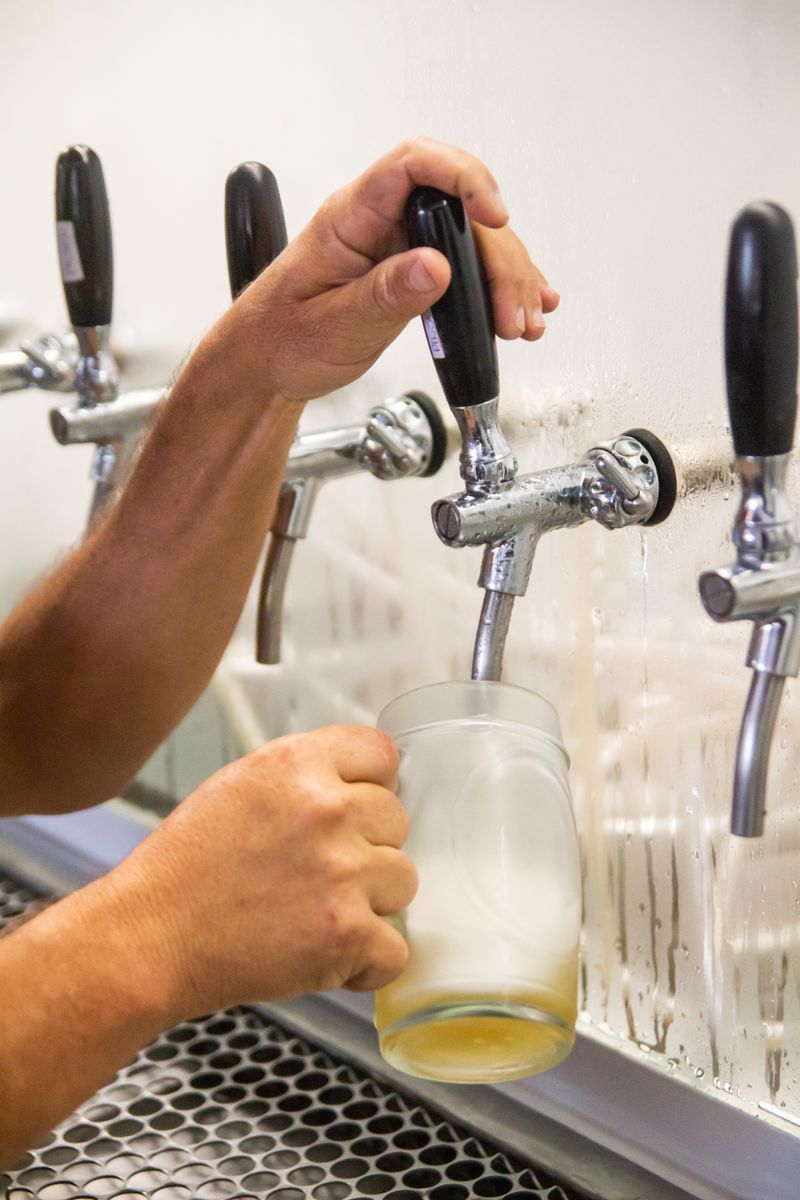
A pub culture forced to serve drinks fast before a 6pm close hardened both Australia's glass system and its drinking habits — Photo: Vinícius Caricatte / Pexels
The chaos has two roots. First, even after Federation in 1901, Australia left liquor licensing and trading regulation to each state to administer independently. The glass standards — and the words for them — set separately, state by state.
Second, the strange phenomenon known as the 'six o'clock swill.' Wartime temperance and control during the First World War forced pubs in several states to close at 6pm from around 1916. Drinkers crowded the bar trying to down as much as possible in the hour or two after work, and bartenders had to pour fast and move people out fast.
These restrictions lasted until 1955 in New South Wales, 1966 in Victoria, and 1967 in South Australia. For nearly half a century a culture of drinking "fast and efficiently" took hold, and it left its mark on glass sizes, on how beer was poured, and even on what the glasses were called.
South Australia, the Outlier
Every rule has an exception, and in Australia that exception is South Australia (SA). The naming system the other states largely unified, SA twists on its own.
- What other states call a middy / pot (285ml), SA calls a schooner.
- What other states call a schooner (425ml), SA calls a pint.
- What other states call a pint (570ml) is, in SA, an imperial pint.
So if you order a "schooner" at a bar in Adelaide, you'll get a glass one size smaller than the one you'd receive in Sydney. It is the single point that trips up travellers the most.
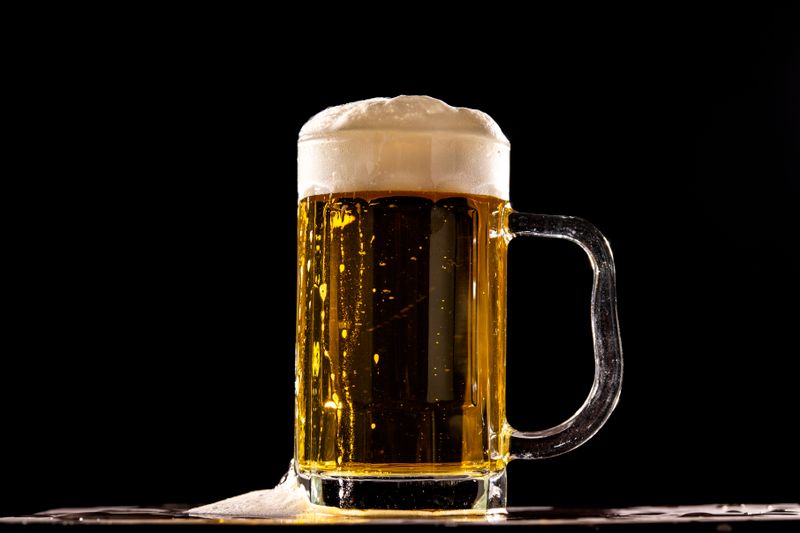
Cross a state border and the very same glass shifts one notch up the naming ladder. SA's 'schooner' is the 285ml that other states call a 'middy' — Photo: Engin Akyurt / Pexels
What Metrication Changed
In the early-to-mid 1970s Australia converted from imperial units to the metric system. Beer glasses were relabelled from ounces to millilitres. Ten ounces settled at about 285ml, fifteen ounces at about 425ml, and twenty ounces (the imperial pint) at about 570ml. That is why 570ml — practically the same as the British pint of 568ml — became the benchmark for the Australian pint.
The biggest casualty of the switch was the pony (140ml). Once common, the little glass all but vanished, squeezed out by a general preference for larger pours. Today it survives only rarely, in a handful of Victorian pubs, as a "just one mouthful" measure.
Today — the Age of the Schooner, and the Craft Backlash
The most universal pour in Australia today is the schooner (425ml). For those who find a pint too big and a middy or pot too small, 425ml is the comfortable middle. In states such as New South Wales, the schooner has become the default order.
There is an interesting backlash, too. As craft beer — stronger and more characterful — spread, demand grew for tasting several styles in small amounts rather than drinking a lot of one. As a result the 285ml pot and middy, and in-between variants such as the "schmiddy," are drawing attention again. Glass size, in the end, follows the drinking habits of its era.
In Summary
Australia has the world's most confusing system for ordering a beer, but the confusion is no accident. Regulation that ran state by state under a federal system, a drinking culture born of wartime temperance, and the metric conversion each left their trace in the names of the glasses.
There is only one rule for ordering a beer in Australia: work out which state you're in first. A Sydney schooner and an Adelaide schooner are the same word for a different glass.
Draft beer poured in a pub — Darlene Alderson / Pexels (Free License) · Full pint glass — Wikimedia Commons · Pouring from the tap — Vinícius Caricatte / Pexels (Free License) · Glass of beer close-up — Engin Akyurt / Pexels (Free License)
Comments
Be the first to leave a comment.