
The counterfeit whisky glass market is not small. Glencairn copies with a pressed-on logo sell on AliExpress for two or three dollars apiece. Chinese machine-pressed glass dressed up as vintage Riedel appears on eBay. Crystal pieces imitating the Baccarat Harcourt pattern turn up at antique markets.
The problem is that the quality of these fakes improves every year. They are difficult to distinguish in photographs, and not always easy to identify on first handling. Knowing the criteria in advance is what matters.
Why the Counterfeit Market Exists
Simple economics create the counterfeit market. A genuine Glencairn retails at around £12–15 in the UK. The manufacturing cost of a copy is a fraction of that. This gap is the motivation for counterfeit distribution.
Premium lines are more extreme. A genuine Riedel Sommeliers glass is £50–100 per piece. A Baccarat Harcourt glass is £120 and above. When a copy that looks similar from a distance sells for £10–15, it is a compelling proposition for buyers who do not know the difference.
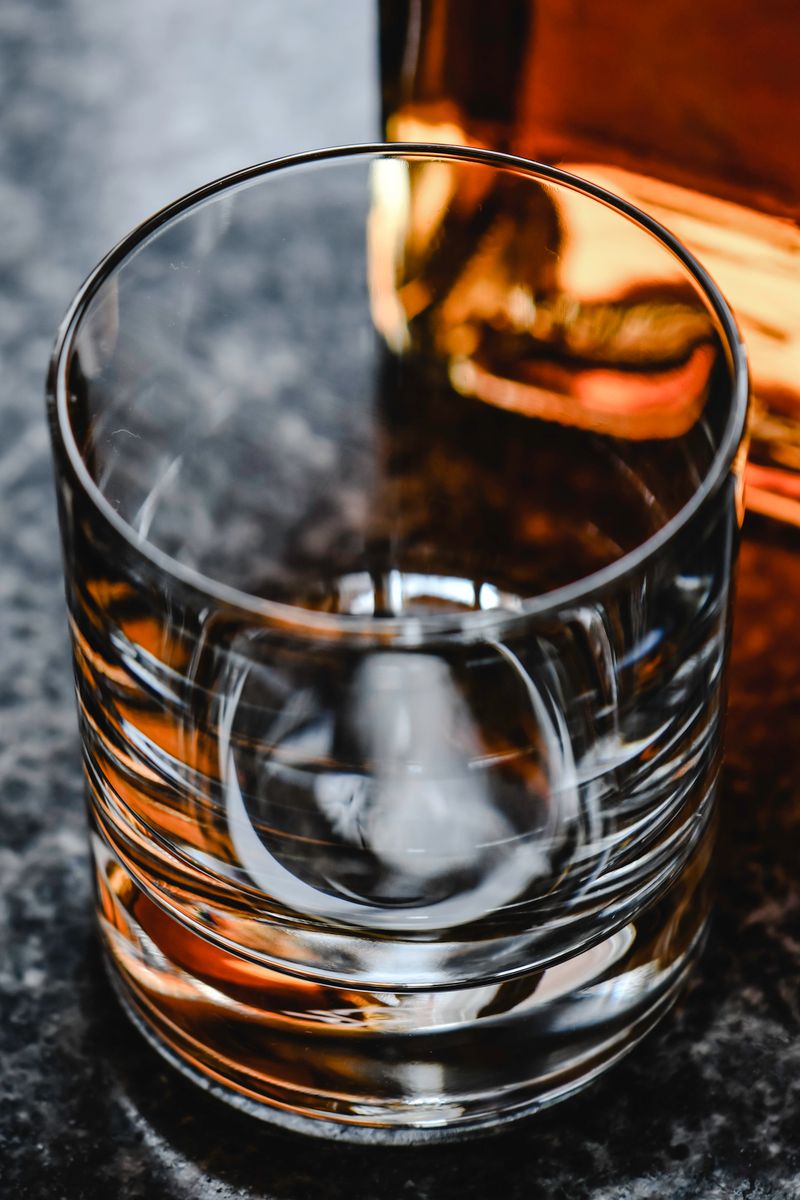
The key characteristics of a genuine whisky glass are glass clarity and consistent wall thickness. Counterfeits often show a faint green or grey tint under direct light, or uneven wall thickness. The difference is invisible in product photographs — Photo: Eva Bronzini / Pexels
Counterfeits circulate through three main channels. AliExpress and Alibaba — direct B2C channels from Chinese manufacturers with the lowest prices. Amazon third-party sellers — listings that appear legitimate but require checking seller location and review patterns. eBay used market — where fakes disguised as vintage pieces appear most frequently.
How to Authenticate a Glencairn Glass

The genuine Glencairn Glass, manufactured by the Glencairn Company Ltd. in Clarkston, Scotland. A laser-engraved Glencairn logo on the base, rim thickness under 1mm, and complete colourless clarity are the defining marks of the authentic glass — Wikimedia Commons (CC BY-SA 3.0)
Check the base engraving: A genuine Glencairn has a Glencairn logo laser-engraved into the base. The engraving is fine and precise — clearly visible when held to the light. Counterfeit engravings are heavier or blurred, and the logo is often off-centre.
Measure the rim thickness: The rim of a genuine Glencairn — the very edge where lips touch — is 1mm or under. Most counterfeits are 2mm or more. Press the rim lightly between thumb and finger to feel the thickness, or invert the glass under a bright light to see the cross-section.
Glass clarity: A genuine Glencairn is completely colourless. Hold the glass against a bright white light source — there should be no colour cast of any kind. Counterfeits frequently show a faint green (a characteristic of soda-lime glass) or grey tint.
The tap test: Lightly tap the bowl of the glass with a finger. A genuine glass produces a clear, brief ring. A counterfeit gives a dull, flat sound. This reflects the difference in glass composition.
Where to buy: Genuine Glencairn is available only through the official Glencairn website and authorised retailers — Master of Malt, The Whisky Exchange, and similar specialist retailers. A Glencairn sold through AliExpress or an Amazon third-party seller carries no authenticity guarantee.
How to Authenticate Riedel Glassware
Country of manufacture: Riedel's Sommeliers series and other premium lines are produced in Austria or Germany. A Made in Austria or Made in Germany mark is engraved or printed on the base or foot of the glass. Made in China does not exist on genuine Riedel premium lines.
The Riedel logo engraving: Genuine pieces carry a Riedel logo in the company's distinctive typeface. On the Sommeliers series — which is hand-blown — the engraving may show very slight irregularity. Machine-production lines (Veritas, Veloce) have more uniform engravings.

The Riedel Glass headquarters and factory in Kufstein, Austria. The Sommeliers series and other premium Riedel lines are mouth-blown at this factory. Any Riedel premium line without a Made in Austria engraving is not a genuine Riedel product — Wikimedia Commons (CC BY-SA 3.0)
The most important indicator when authenticating Riedel is wall thickness. The Sommeliers series has extraordinarily thin walls — handling them with care is necessary. Counterfeits mimic the external shape but have noticeably thicker walls and feel heavier in the hand. For the same form, the genuine Riedel is the lighter glass.
Riedel does not use a serial number system that allows individual verification. Purchasing through authorised retailers — the Riedel official site, Crate & Barrel, John Lewis — is the most reliable approach.
How to Authenticate Vintage Baccarat and Waterford Crystal

Quality control inspection at the Waterford Crystal factory. Each piece of genuine lead crystal is checked by hand for wall thickness, cut sharpness, and clarity before leaving the factory. Vintage crystal counterfeits bypass this process, showing uneven walls and blurred cutting — Geograph.org.uk / Wikimedia Commons (CC BY-SA 2.0)
Vintage Baccarat and Waterford lead crystal is the most actively counterfeited category at antique markets. The fastest field test is the tap test. Lightly tap the bowl with a finger. Genuine lead crystal produces a clear, sustained ring. A soda-lime glass copy gives a dull, brief thud.
Weight comparison: Lead crystal is approximately 20–30% heavier than soda-lime glass of the same size. Holding two glasses of the same form side by side makes the difference physically apparent. A counterfeit with a crystal-cut pattern on ordinary glass will be noticeably lighter.
Maker's marks and engravings: Genuine Baccarat pieces carry a Baccarat France engraving or acid-etching on the base or foot. Waterford used different marks by period — WATERFORD in the 1950s, WATERFORD CRYSTAL thereafter. Any piece without these marks, or with marks in an unusual typeface, cannot be trusted.
Cut sharpness: Genuine lead crystal hand-cutting produces sharp, deep facets that reflect strong diamond-bright light. Machine-cut copies on ordinary glass have blunted edges and flat, dull reflections. The difference is immediately visible when comparing the two directly under light.
How to Authenticate Edo Kiriko
Edo Kiriko is a traditional craft produced only at designated workshops in Tokyo's Sumida and Koto districts. Genuine pieces come with the traditional craft designation mark — a red diamond containing the character 伝 — attached to the piece or its packaging, or a workshop-specific certificate of authenticity. Any "Edo Kiriko-style" piece without this mark or certificate is either an uncertified factory product or an overseas copy.
Checking the colour overlay (iro-kabuse glass): Edo Kiriko's colour is achieved by applying a colour glass layer over clear glass and cutting through it to reveal the pattern. When held to the light, the boundary between the colour layer and the clear glass beneath should be clearly visible. On copies, the entire glass is made from tinted soda-lime glass — there is no colour boundary to see.

The iro-kabuse (colour overlay) technique that defines Edo Kiriko: a colour glass layer is applied over clear glass, and the pattern is revealed by cutting through it. When held to light, the boundary between the colour and clear layers must be distinctly visible. If no such boundary exists, the glass is a low-cost copy — Wikimedia Commons (CC BY-SA 3.0)
Cut precision: Complex Edo Kiriko patterns such as nanako consist of hundreds of uniform circular cut elements. In genuine pieces, each element is consistent in size and spacing, with sharp-edged facets. In copies, element sizes are uneven and spacing is irregular. A smartphone macro lens or a loupe makes the difference immediately apparent.
Purchasing genuine Edo Kiriko directly from certified Sumida or Koto workshops, or through verified sellers on Yahoo! Auctions Japan, is the most reliable approach.
How to Buy Safely
The most effective protection against counterfeits is purchasing through authorised retailers. Official brand sites and authorised dealers guarantee authenticity.
Price as a signal: Any piece selling at less than half the genuine retail price is highly likely to be a counterfeit. A Glencairn at three dollars is impossible. A Riedel Sommeliers glass at twenty dollars is a copy.
When buying on the secondary market: On eBay and resale platforms, check the seller's feedback score, sales history, and the engraving visible in the photographs. Requesting additional photographs of the base engraving is reasonable — a genuine seller will comply.
If you have purchased a glass of uncertain authenticity, check three things immediately upon receipt: base engraving, rim thickness, and the tap test. If two or more of these raise concerns, begin the return process.
Whisky glass close-up — Eva Bronzini / Pexels (Free License) · Glencairn Glass — Wikimedia Commons (CC BY-SA 3.0) · Riedel Kufstein factory — Wikimedia Commons (CC BY-SA 3.0) · Waterford Crystal quality control — Geograph.org.uk / Wikimedia Commons (CC BY-SA 2.0) · Edo Kiriko cut glass — Wikimedia Commons (CC BY-SA 3.0)
Comments
Be the first to leave a comment.