Take one bottle of whisky and pour it two ways — once into a heavy crystal tumbler, once into a thin nosing glass. Many people will tell you the two taste different. We tend to wave this away as imagination, but it is in fact a measurable phenomenon, and its stage is not the tongue but the brain. The glass begins tuning your perception long before the whisky reaches your lips.
Same Whisky, Different Glass, Different Taste
The Oxford experimental psychologist Charles Spence gave the study of this phenomenon a name: gastrophysics. His core claim is simple. What we call "taste" is not a single sensation that ends in the mouth, but something the brain constructs by weaving several senses together.
The sweet, sour, and bitter the tongue registers are only part of it. Aroma (smell), the weight of the glass (touch), the colour of the spirit (sight), the sound of the pour and the clink (hearing), and above all the expectation that "this glass must be premium" are all added in. The glass is the first gateway through which every one of these non-taste signals enters the brain. That is why the same whisky becomes differently "delicious" in a different glass.
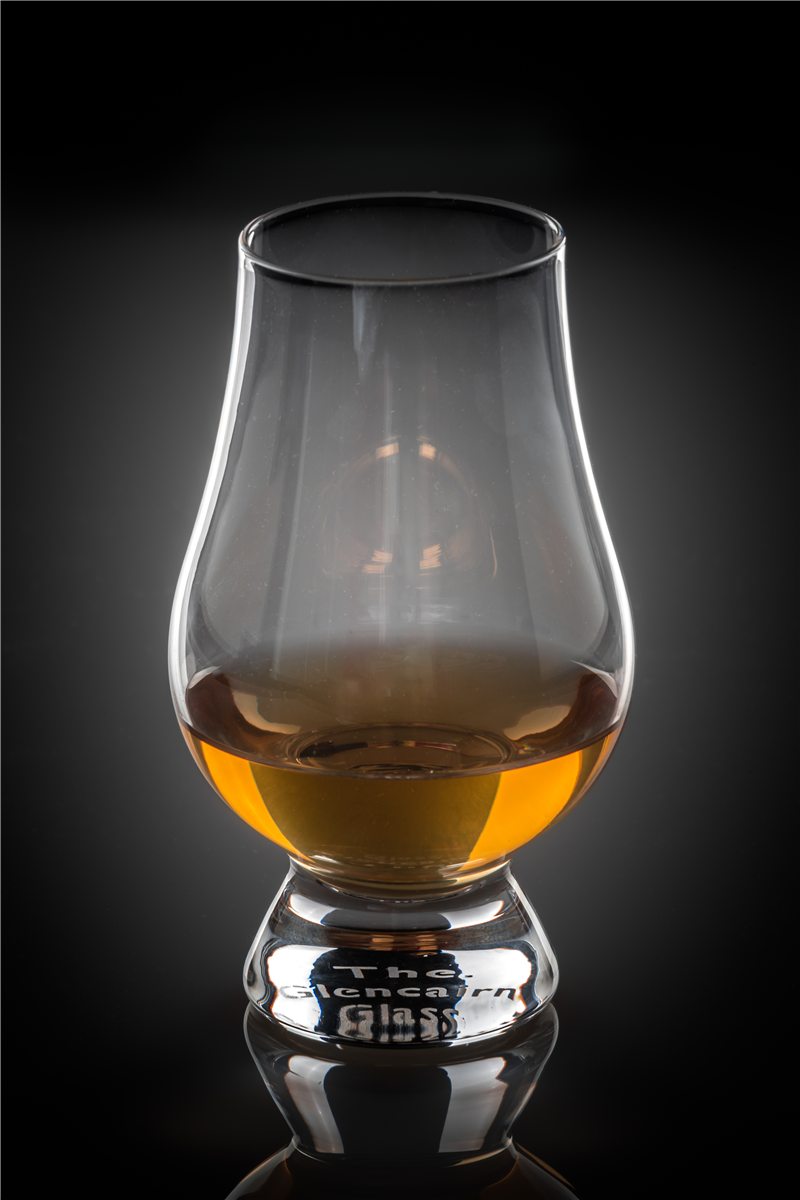
A tulip glass built for serious nosing. But aroma is not the only thing a glass changes (photo: Pjt56, CC BY-SA 4.0)
Flavour Is Made in the Brain, Not the Mouth
"Flavour" and "taste" are not the same thing. Taste is only the five qualities the tongue's buds detect (sweet, sour, salty, bitter, umami). Whisky's complex flavour — vanilla, honey, peat, sherry, leather — comes almost entirely from smell. And even smell, once it reaches the brain, is integrated with sight, touch, and sound into a single "flavour image."
The mechanism at work here is sensation transference. Discovered by the marketing researcher Louis Cheskin in the 1940s, it is the tendency for the feelings people have about a container or package to be unconsciously transferred to its contents. When a glass is heavy and finely made, that "luxury" transfers to the flavour of the spirit. The brain does not score the glass and the whisky separately. It evaluates them together, as one experience.
Weight — The Hand Judges Before the Tongue
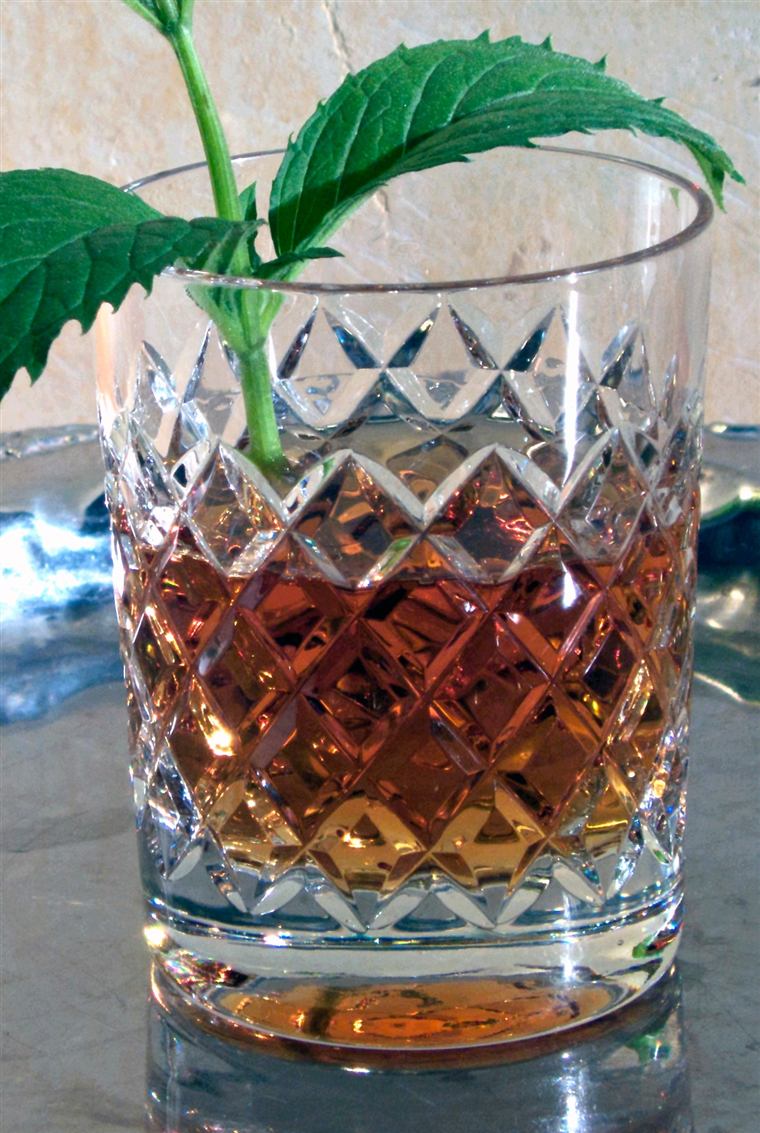
A thick, heavy crystal glass creates the expectation of "premium" the moment you lift it (photo: Th. Voekler, CC BY-SA 3.0)
Studies by Spence and colleagues consistently show the same thing: people rate food and drink served in heavier vessels and cutlery as more intense, more premium, and more expensive. The same dessert on a heavier plate tastes better and earns a higher price tag.
The whisky glass is no different. The heft in your hand lays down a frame in the brain — "this is a serious drink" — before any taste information arrives. The reason the same whisky feels cheap in a flimsy disposable cup is not that the spirit changed, but that the first signal, weight, was impoverished. The hand reaches a verdict before the tongue, and faster.
Colour — The Eye Deceives the Tongue
Vision is the most dominant of the senses. The colour of whisky creates powerful expectations. A deep amber promises an "old, sherry-cask, rich, sweet, heavy" spirit; a pale colour suggests something "light and fresh." The problem is that this expectation is often wrong.
Whisky's colour can be freely adjusted with caramel colouring (E150a) and depends on cask type, and does not necessarily match quality or flavour. In a classic wine experiment, when an odourless red dye was added to a white wine, even experts described it in the language of red wine. A single colour cue overwrote the judgement of the nose. This is why serious blind judging sometimes uses opaque glasses that hide colour. A clear glass pushes this powerful cue straight into your eyes.

From pale to deep amber — line them up and colour becomes expectation. Yet that colour comes not only from age but from caramel dye
Sound — The Ring of Crystal
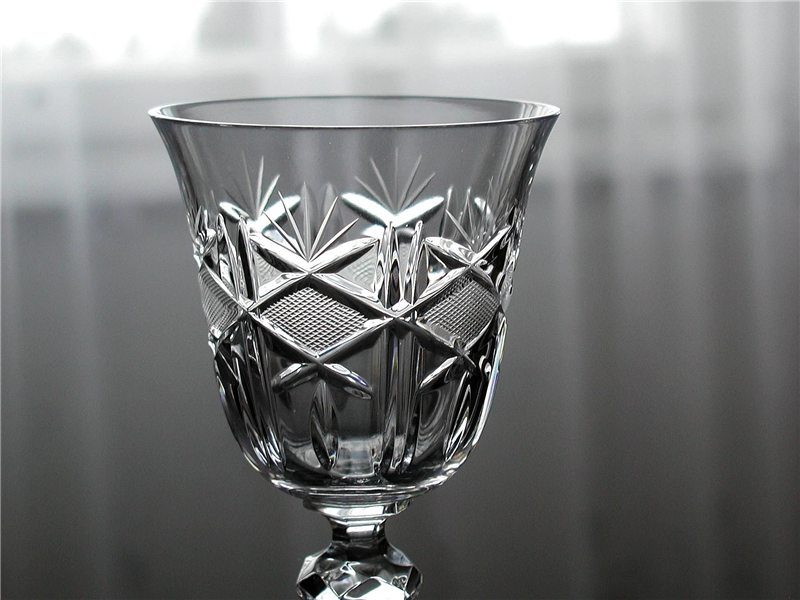
The clear, lingering ring of lead crystal reads, in itself, as a signal of quality (photo: Paolo Neo, Public Domain)
Sound changes taste too. Spence's research on sonic seasoning shows that particular sounds actually shift the perceived sweetness or bitterness of the same food. In the world of the glass, that auditory cue is the sound it makes when struck.
Cheap glass gives a dull "clunk," but good lead crystal gives a long, clear "ring." That resonance is unconsciously read as the signal of a "thin, refined, expensive glass." The bright sound of a toast, the clink of ice against the glass, even the sound of the pour — all of this auditory information lifts the expectation of the first sip. The glass speaks not only through the eye and the hand, but through the ear.
Shape and Rim — Just Before It Touches the Lips
The last moment is when the glass meets the lips. The thickness of the rim makes a surprisingly large difference. A thin rim lets the spirit flow smoothly onto the tongue and conveys "refinement" through touch. A thick, blunt rim does the opposite. The same spirit feels different when the lips meet a different edge.
Shape works in two directions. One is physics — a narrowing mouth concentrates aroma molecules, a flared mouth disperses them (this effect is real and independent of expectation). The other is psychology — an elegant stemmed glass and a heavy rocks glass wrap the same spirit in different "stories." Many studies show the same drink is rated differently from differently shaped glasses. The form of the glass is both a channel for aroma and a frame for expectation.
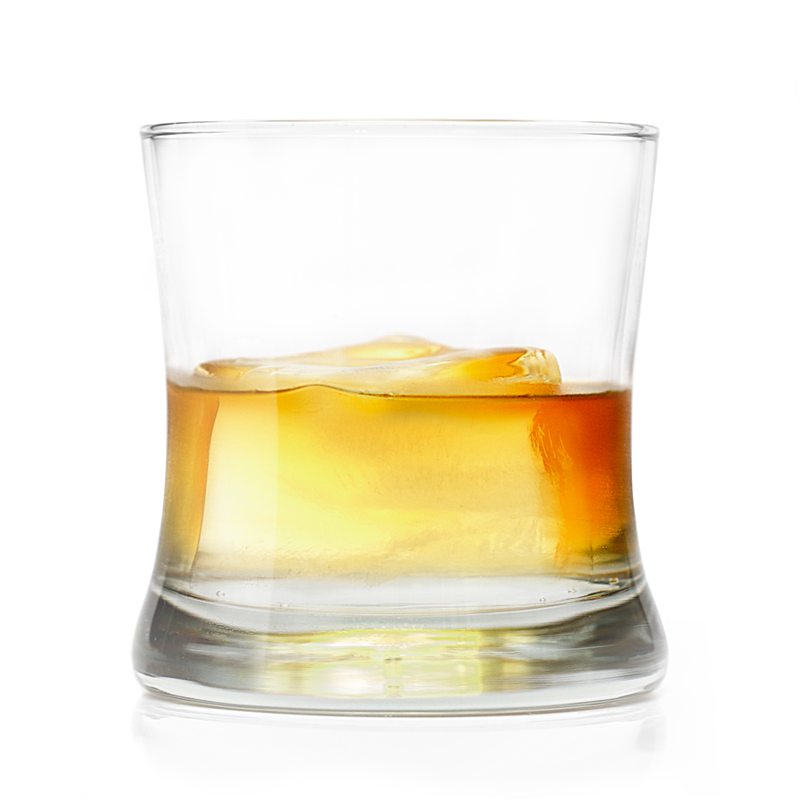
A wide-rimmed rocks glass and a narrow-rimmed nosing glass differ in everything from lip feel to how aroma gathers (photo: Benjamin Thompson, CC BY 3.0)
So What About Blind Tasting?
Here we should be honest. Some of the glass's effects are physics, and some are psychology. A tulip mouth gathering aroma molecules toward the nose is a real effect that does not vanish when you cover your eyes. The "luxury" created by weight, colour, sound, and brand, on the other hand, works through expectation — so it shrinks considerably when that information is removed.
Indeed, when people cannot see the colour and shape of the glass, or are controlled with identical black glasses, the "the expensive glass tastes better" gap narrows. But that does not make the effect "fake." At the moment you actually drink, you see the glass, hold it, clink it, and feel it on your lips. The state in which all of those cues are switched on is exactly what a "real" drinking experience is. To the brain, expectation is not an illusion — it is an input.
Conclusion — The Glass Sets the Taste Before the First Sip
Choosing a whisky glass is not merely choosing a tool that concentrates aroma well. It is designing the signals the brain will receive before you even drink. Seriousness through weight, colour through clear glass, resonance through crystal, refinement through a thin rim — the glass speaks to all five senses at once.
So the answer to "does the glass really change the taste" is clear. It does. Not by changing the spirit, but by changing the brain that receives it. Flavour is not completed in the mouth. It begins the moment you lift the glass.
Glencairn nosing glass — Pjt56 / Wikimedia Commons (CC BY-SA 4.0) · Crystal tumbler — Th. Voekler / Wikimedia Commons (CC BY-SA 3.0) · Cut crystal glass — Paolo Neo / Wikimedia Commons (Public Domain) · Rocks glass — Benjamin Thompson / Wikimedia Commons (CC BY 3.0)
Comments
Be the first to leave a comment.