There is a moment when you wipe a glass clean, place it on the shelf, and decide it will not be drunk from. From that moment on, the glass is no longer a vessel for spirits. It becomes something else. That is when collecting begins.
A drinking glass and a collectible glass may look like the same object, but they are evaluated in entirely different languages. When choosing a nosing glass, you consider bowl shape, rim thickness, and aroma concentration. When a collector examines a glass, different words appear — rarity, age, provenance, condition. This article is about that second language.
Two Uses, Two Sets of Criteria
When a whisky glass is seen purely as a drinking tool, evaluation centres on function. How well does the bowl's curvature disperse ethanol vapour? How does rim thickness affect the sensation on the lips? What does the weight of the glass add to the experience of holding it?
By these criteria, a £10 ISO 3591 official tasting glass can express whisky better than a £400 Baccarat crystal piece. When it comes to flavour delivery, form matters more than material, and price is a distant third.

Bristol blue glass manufacture, England. Hand-blown glass allows thinner walls and greater freedom in bowl shape than machine-pressed glass. Subtle variations in wall thickness are evidence of hand manufacture — something collectors actively seek out
The collector's evaluation makes function secondary. How rare is it? Who made it? When was it made? What condition is it in now? These four questions form the collector's vocabulary.
There are cases where the two sets of criteria overlap. A glass that excels in both form and craftsmanship — a Copita-shaped piece in hand-blown Waterford crystal from the 1960s, for instance — can satisfy both the drinker's and the collector's standards. Yet when both are met at once, most people place that glass on the shelf.
The Collector's Four Criteria
Rarity — How Hard Is It to Find?
Rarity is the most direct basis for collectible value, but it has layers.
Limited editions: Products where the manufacturer intentionally restricted quantity. Certain annual Baccarat crystal releases and Riedel's master craftsman-signed series fall here. Rarity is built in from the moment of production.
Regional exclusives: Products sold only in specific markets. Japan-only Edo Kiriko collaboration lines, or glasses available exclusively at particular distillery visitor centres, belong to this category.
Discontinued lines: Products no longer in production. This is the most common source of rarity. The Glencairn smoke colourway, early Bohemian-factory Riedel Sommeliers runs, 1970s fine glassware. Once discontinued, secondary market premiums form quickly.
Age and Provenance — When and By Whom?

A glass blower at Waterford Crystal, Ireland. Founded in 1783, Waterford became synonymous with lead crystal. Vintage pieces produced before EU lead regulations now trade at several times their original retail price
The year 2000 marks a sharp dividing line in European crystal. Following tightened EU lead content regulations, Baccarat, Waterford, Zalto, and other major crystal houses transitioned to lead-free crystal. Modern lead-free crystal is technically excellent, but it cannot fully replicate the weight and resonance characteristics unique to lead crystal.
This is why collectors seek out pieces from the 1970s through 1990s. Waterford's Lismore pattern, Baccarat's Harcourt line, and Stourbridge workshop pieces from this era frequently trade at two to five times their original retail prices on eBay and at specialist auction houses.
The fastest field method for verifying provenance is the tap test. Lightly tap the bowl with a finger: lead crystal produces a clear, sustained ring. Soda-lime glass gives a dull thud that cuts off quickly. Not a perfect method, but a reliable first filter.
Maker's marks are equally important for dating. Waterford products from the 1950s carry only a WATERFORD mark; later pieces add WATERFORD CRYSTAL. Knowing these mark variations allows experienced collectors to estimate age from auction photographs alone.
Craftsmanship — How Was It Made?
Method of manufacture: Hand-blown glass shows subtle variations in wall thickness when held to the light. This is not a defect — it is a mark of hand manufacture, and collectors prefer it over the uniformity of machine-pressed glass.
Cutting technique: Hand-cut surfaces are slightly irregular in polish but deeper and crisper. Machine-cut surfaces are uniform but comparatively flat in their reflections.
Condition — What State Is It In?
Condition determines at least half of collectible value. Defects to watch for:
- Chips: Minute nicks on the rim or base. Run a finger carefully around the rim to check.
- Cracks: Internal fractures visible under direct light. The tap test will not produce a normal tone.
- Sick glass: Devitrification of lead crystal. The surface appears hazed, as if fogged — caused by harsh detergents or dishwasher use. Advanced devitrification is irreversible.
- Calcium deposits: White mineral residue from hard water. Removable with vinegar or citric acid; little impact on collectible value.
The Golden Age of Lead Crystal and Its Legacy
From the 1950s through the early 2000s was the golden age of European crystal. Lead crystal technology reached its peak, and Waterford, Baccarat, Spiegelau, Zalto, and the Stourbridge workshops competed to produce their finest work.
Weight and balance: Lead crystal is approximately 20–30% heavier than lead-free crystal of the same thickness. This weight manifests as a sense of density and stability in the hand. Among whisky collectors, "the feel of lead crystal" is often described with something close to nostalgia.
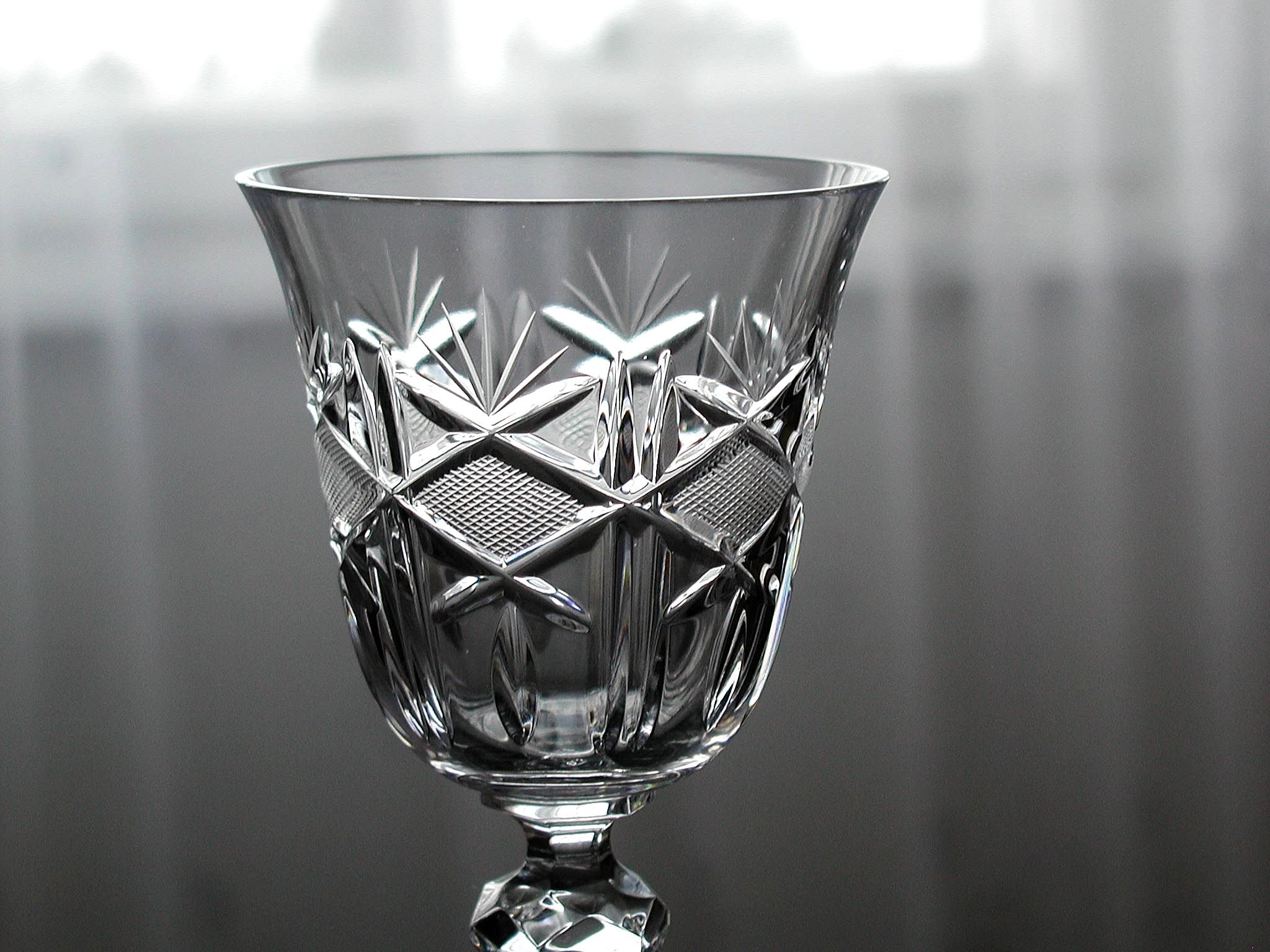
A cut glass made from lead crystal containing at least 24% lead oxide (PbO). Lead crystal produced before EU regulations differs demonstrably from modern lead-free crystal in weight, resonance, and cut expression
Resonance: Lead oxide lowers the elastic modulus of glass, creating a lower and more sustained ring when tapped. This is a direct consequence of the material's physics, and cannot be replicated in lead-free crystal.
Cut expression: Lead crystal's superior workability enabled sharper, deeper cutting. Craft specialists note that the crispness of hand-cut work from the 1970s and 1980s remains difficult to match with contemporary techniques.
One note of caution: acidic liquids left in contact for extended periods can leach lead. Collectors generally avoid using vintage lead crystal pieces as decanters or leaving whisky in them for prolonged periods.
Edo Kiriko — Where the Drinking Glass and the Display Piece Meet
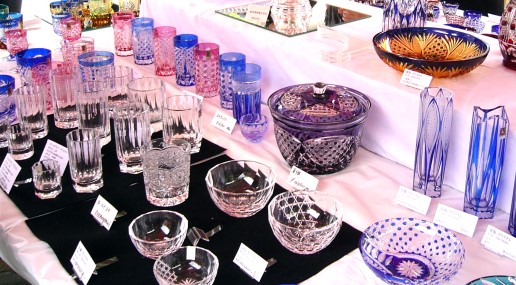
Edo Kiriko, the traditional cut glass craft of Tokyo's Sumida and Koto districts, dating to the Edo period. Designated a Tokyo Metropolitan Traditional Craft in 1985 and a National Traditional Craft in 2014
Edo Kiriko is among the most interesting whisky glasses from a collector's perspective. These glasses were made to be used — to hold whisky, to be held, to be drunk from. Yet at the hands of a master craftsman, Edo Kiriko reaches a level where using it freely feels like a waste.
The core criteria in Edo Kiriko collecting are pattern complexity and the craftsman's years of experience. Yarai ¥15,000–30,000, Kikutsunagi ¥50,000–100,000, Nanako ¥200,000 and above — the precision of the pattern determines the price.
One more critical variable: iro-kabuse glass — the coloured overlay through which Edo Kiriko's distinctive colours are achieved by cutting away to reveal clear glass beneath. The thickness of this colour layer and the depth of the colour determine the crispness of the cut pattern. Collectors compare colour quality carefully even across pieces with identical patterns. The main secondary market for Edo Kiriko is Yahoo! Auctions Japan.
Where Collectors Find Their Glasses
Online auction platforms: eBay is the world's largest secondary market for vintage European crystal. Yahoo! Auctions Japan is the core platform for Edo Kiriko and Japanese crystal.
Specialist dealers and antique markets: London's Portobello Road and Paris's Marché de la Porte de Vanves are the offline centres for vintage lead crystal. Specialist dealers can provide additional provenance information that auction photographs cannot.
Distillery visitor centres and whisky events: Some Scottish distillery visitor centres sell distillery-exclusive glassware in limited quantities. Laphroaig, Glenfarclas, and reopening commemorative Brora glasses are among the examples that later attract secondary market premiums.
Information asymmetry exists in the collector market. The price difference between someone who knows a glass's value and someone who does not can be substantial. Building deep knowledge of a specific category is the most important early investment in collecting.
Where to Start
There is one rule for starting to collect: begin with a single category. If you decide on Edo Kiriko, spend the first six months on Edo Kiriko alone. If you decide on vintage lead crystal, choose one of Waterford, Baccarat, or Stourbridge first. Scattered collecting scatters knowledge along with it.
The second rule is more important: only collect what you find beautiful. If you bought something because the price seemed likely to rise but placing it on the shelf brings no pleasure, you will eventually sell it. The durability of collecting comes from the enjoyment the collection gives.
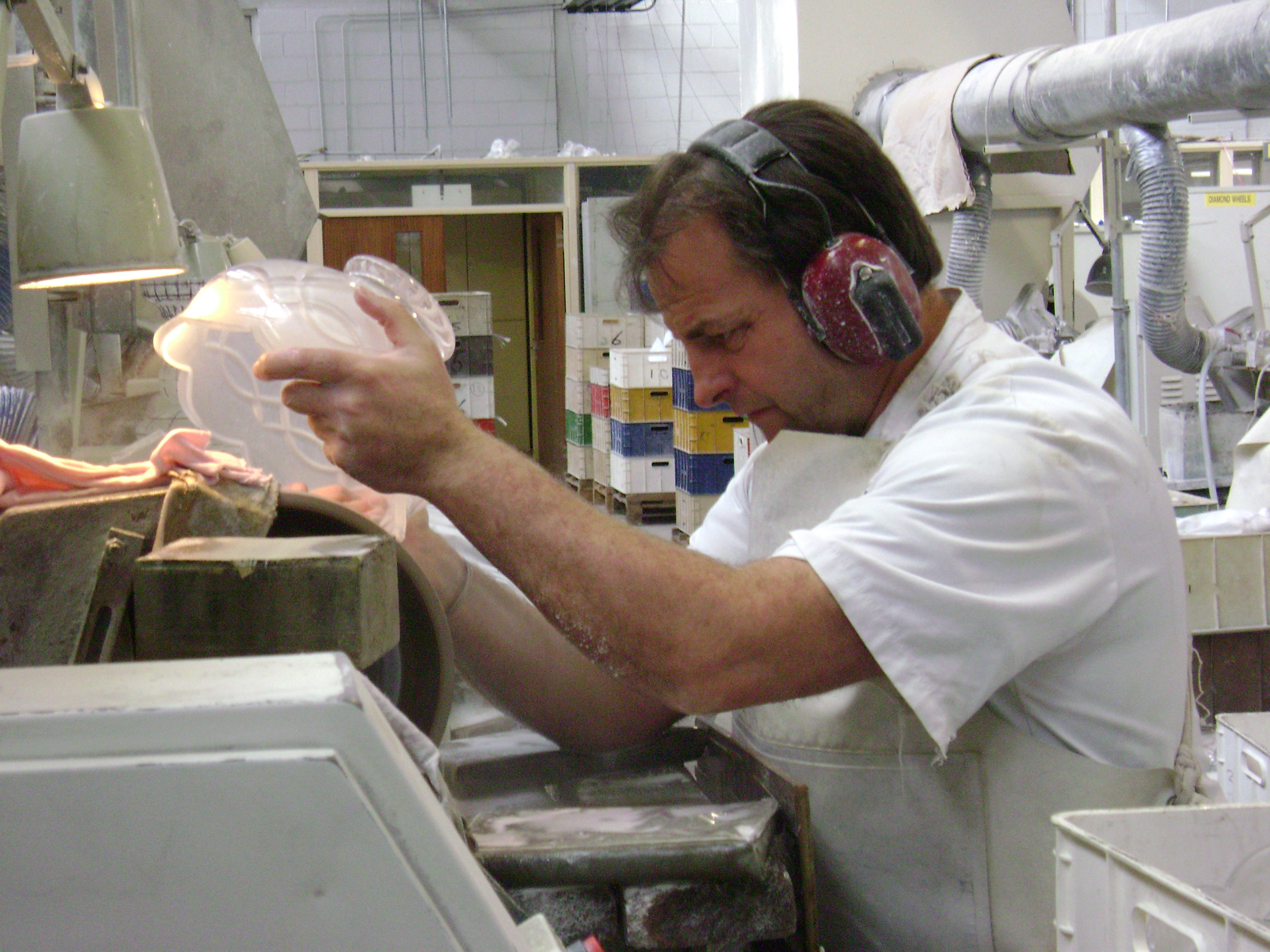
A hand-cutter at Waterford Crystal. Starting with a single category is the most efficient approach — learn the price history and quality benchmarks before expanding
The criteria you apply when choosing a drinking glass differ from those you apply when choosing a collectible. But in both cases, the sensory response you feel in front of the glass comes first. Rarity, age, and craftsmanship all come after.
Bristol blue glass manufacture — Arpingstone, Wikimedia Commons (public domain) · Waterford Crystal glass blower — Wikimedia Commons (CC BY-SA 3.0) · Lead crystal cut glass — Wikimedia Commons (CC BY-SA 3.0) · Edo Kiriko glassware — Wikimedia Commons (CC BY-SA 3.0) · Glass cutter at Waterford Crystal — Wikimedia Commons (CC BY-SA 3.0)
Comments
Be the first to leave a comment.