Caol Ila
Islay's biggest distillery, long overlooked — a lighter, cleaner peat than Lagavulin or Laphroaig.
The first thing to settle about Caol Ila is that it's the biggest distillery on Islay. And yet its name stayed quiet for a long time. The reason is simple: much of what it makes flows into blends like Johnnie Walker. As the workhorse behind the blend's smoky backbone, it rarely got the chance to put its own name on a bottle. Islay's largest producer and one of its last to be widely known — that is where Caol Ila sits.
Its flavour is a little different from its Islay neighbours, too. Where Lagavulin or Laphroaig run to dense, oily, medicinal smoke, Caol Ila's is lighter and cleaner. Fresh smoke carries lemon, brine and an olive-like saltiness, and the texture is oily yet fresh, distinctly coastal. That makes it easier on anyone new to peat — which is why it's so often recommended as a first glass of Islay.
The name comes from the spot itself. Caol Ila is Gaelic for "Sound of Islay," and in 1846 Hector Henderson built the distillery near Port Askaig, looking out over that strait. The sea on its doorstep is often tied, at least in the telling, to the salty, oily grain of the spirit.
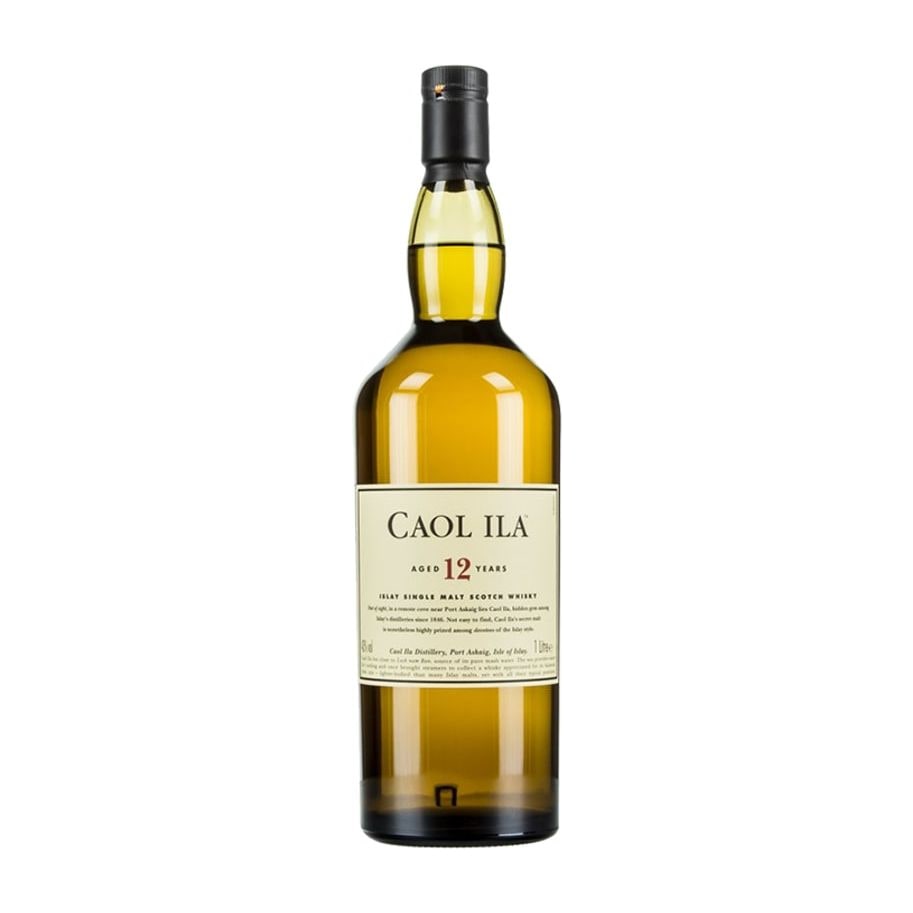
For a first bottle the 12yo is close to the right answer. It's reasonably priced for an Islay malt, with fresh smoke balanced by lemon and brine. If you want a layer of sherry sweetness there's the Moscatel-finished Distillers Edition; if you're curious about Caol Ila's body without the smoke, look for the unpeated limited that comes out each year.
Caol Ila's value lies less in scarcity than in its position: it makes the most whisky on Islay yet delivers its most approachable peat. As the workhorse propping up Johnnie Walker it was long underrated, but as a single malt it has settled into the standard Islay entry point.
Prices are approximate retail / duty-free · limiteds are volatile — not a personal tasting score
Caol Ila distils peated malt in tall stills. Even on Islay it stands apart: where Lagavulin and Laphroaig run to dense, oily, medicinal smoke, Caol Ila's is lighter and cleaner. Fresh smoke carries lemon, olive and brine, over an oily but fresh coastal texture. Because the distillery is so large, most of the spirit flows into blends like Johnnie Walker, and only some is bottled as single malt. Releasing an unpeated spirit separately each year is another of the distillery's habits.
Caol Ila was founded in 1846 by Hector Henderson, near Port Askaig on a site looking out over the Sound of Islay — 'Caol Ila' is Gaelic for 'Sound of Islay.' For most of its life the distillery existed to supply malt for blends rather than single malt, and it served in particular as the workhorse behind Johnnie Walker's smoky backbone. That is why Islay's largest distillery stayed hidden for so long as a single malt. Today, under Diageo, the 12yo anchors it as a standard entry point to Islay.
Among enthusiasts Caol Ila is often called a good place to start with Islay peat. For anyone who finds Lagavulin or Laphroaig's dense medicinal side too much, its lighter, cleaner smoke and its lemon and brine build a bridge. In other markets, too, it is steadily becoming the name peat beginners reach for before moving on to Ardbeg or Laphroaig.
The smoke is light and the brine and lemon are fresh, so it calls for an aroma-gathering tulip glass — a Glencairn or copita — while a big lump of ice shuts the fresh smoke down. Most sit around 43%, so water is rarely needed, though a single drop opens up the lemon and brine in cask strength. Hold it by the base and roll that oily-but-fresh coastal texture slowly across the palate.
Sources · Production & range — malts.com · History — Diageo · Product image — Caol Ila