Glenfiddich
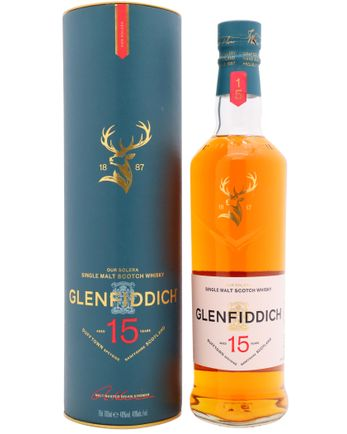
The world's best-selling single malt. Family-owned for four generations in the Valley of the Deer.
Janet Sheed Roberts was the founder William Grant's granddaughter, who lived to 110; one of the eleven 1955-vintage bottles released in her honour sold for $94,000 for charity in 2012. That said, Glenfiddich holds its number-one spot less through ultra-premium collectors than through a core range almost anyone can reach.
Prices are approximate retail / duty-free · Auction — 2012 New York charity sale · Not a personal tasting score
Glenfiddich means 'Valley of the Deer' in Gaelic. It uses both bourbon casks (American oak) and sherry casks (European oak), laying sweetness and spice over a fresh, fruity spirit. The pear-like note of the flagship 12yo is its signature; the 15yo is rounded in the Solera vat, while the 18 and 21 go deeper with sherry and rum wood.
In 1886 William Grant built the distillery by hand with his family, drawing the first spirit on Christmas Day 1887. In the mid-20th century, when most malt was used as blending stock, Glenfiddich put single malt forward as a product in its own right on the world market — and is widely credited with opening the single-malt category. It remains Grant-family owned.
Light and clearly fruity, Glenfiddich is the single malt most often recommended as a first bottle. As the world's best-selling single malt, its accessible price and name recognition make it an entry-level steady seller on both sides of the Atlantic. For anyone put off by Macallan's heavy sherry or Ardbeg's peat, its fresh balance is a safe starting point.
To catch its fresh fruit, a glass that gathers the aroma — a Glencairn or copita — suits it well. The 12yo is 40%, fine neat without water, though a single drop opens a shy nose. Being light, it also takes well to a highball, even as an aperitif.
Sources · Auction — 2012 New York charity sale · Production & range — glenfiddich.com · Product image — Glenfiddich