The world's best-selling Scotch. A blend you read by colour.
Flavourofficial / critical
SmokeToffeeDried fruitVanillaOrangeSpice
Glossaryfor beginners
Blended ScotchA Scotch made by blending malt whiskies and grain whiskies from several distilleries — as opposed to single malt, from one distillery only.
Grain whiskyA lighter whisky made from grains other than barley in continuous stills; the base of a blend.
Master blenderThe person who marries dozens of whiskies to the same taste, year after year.
Striding ManThe walking-gentleman logo from 1908; with the slanted label and square bottle, the brand's signature.
Range & Collections
Red LabelThe everyday entry. Built for highballs and mixing — the best-selling label in the world.
Black Label (12yo)The flagship: some 40 whiskies aged 12 years or more, blended for a balance of smoke and sweetness.
Double BlackA no-age-statement push on peat and oak beyond the Black.
Green Label (15yo)A 'blended malt' — malts only, no grain — at 15 years.
Gold · 18yoSofter, richer premium bottlings.
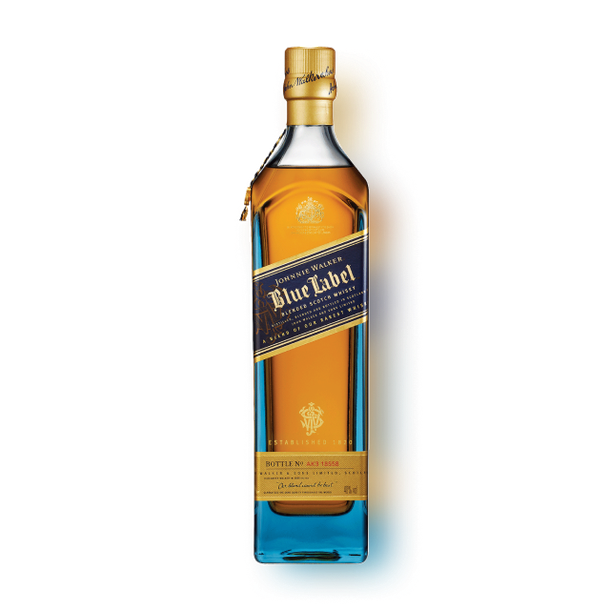
Blue LabelA no-age top tier built from hand-picked rare casks. The gifting-and-keeping flagship.
Johnnie Walker's value lives in a colour-coded ladder rather than Macallan-style auction records. Red is the best-selling Scotch in the world and the basis of the highball; Blue is the hand-picked, rare-cask top tier for gifting and keeping. At the far end, limited 48-year blends like Masters of Flavour can be released at tens of thousands of dollars.
Prices are approximate retail / duty-free · Rare releases at brand list price (volatile) · Not a personal tasting score
How It’s Made
Johnnie Walker is not one distillery but a blended Scotch — malt and grain whiskies from Diageo's many distilleries, married together. The master blender combines dozens of whiskies to give each label a consistent character. Black Label, the flagship, blends some 40 whiskies aged 12 years or more for a balance of smoke and sweetness.
Read by colourRed, Black, Green, Gold, Blue — the colour tells you the price and the character. The colour-coded system took hold in the early 20th century.
Born in a grocer'sIt began in 1820 when John Walker, selling tea and spices in Kilmarnock, blended his own whisky.
Striding ManThe 1908 walking-gentleman illustration, the slanted label and square bottle made the brand instantly recognisable.
Scale of blendingA single bottle of Black Label draws on whiskies from dozens of distilleries, married by the master blender to the same taste each year.
History
In 1820 John Walker opened a grocer's shop in Kilmarnock, Scotland, and began blending and selling his own whisky. Through his son Alexander and grandson, the slanted-label square bottle and the Striding Man logo carried it around the world; today, under Diageo, it is the best-selling Scotch on earth.
How It’s Drunk
Johnnie Walker is almost shorthand for Scotch the world over. Black Label is the benchmark bottle for bar and home, Red goes into highballs and mixers, and Blue is settled in as a status gift. Its strength is the reassurance of the same taste everywhere rather than single-malt individuality — an easy choice for a first whisky or for sharing.
◆The Right GlassSignature
Red Label is in its element as a highball — a tall glass, soda and ice, served cold. Labels made to be savoured, like Black and Blue, are better neat in a Glencairn or copita; if you add ice, keep it to a cube or two so the nose doesn't close. The same bottle splits into different rituals depending on the glass you reach for.