Oban
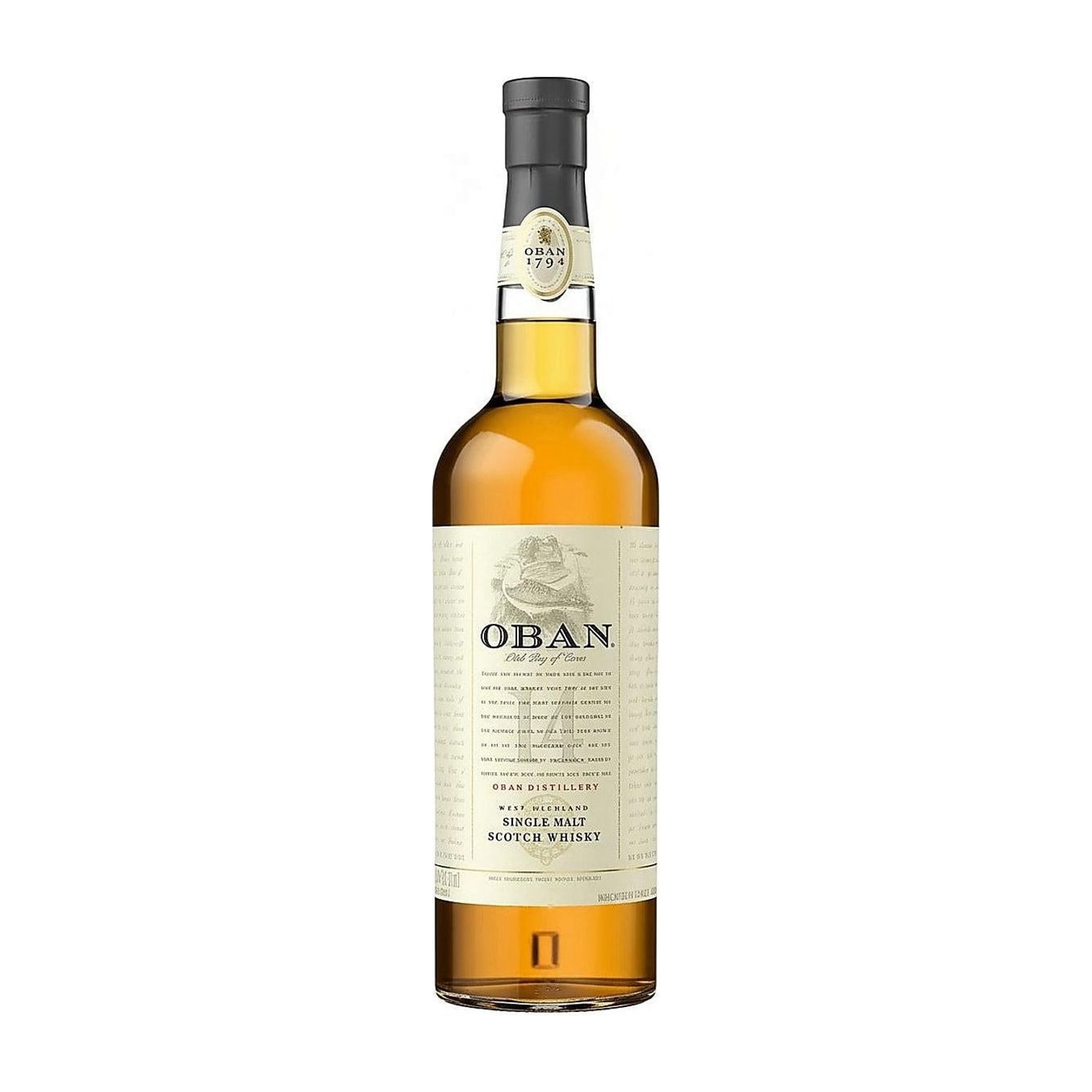
Between Highland and Island — honey and dried fruit brushed with a coastal salt tang.
The thing you can't skip about Oban is size. The distillery is wedged into the middle of a coastal town, harbour and sea in front, a cliff behind, on a plot with no give. It runs just two pot stills, and however far demand climbs there's simply no room to expand. Small output here isn't a marketing pose but a matter of geography — and that fact explains most of Oban's character.
The history is tangled up with the town too. The distillery was built first, in 1794, and the town of Oban grew up around it. It counts among Scotland's oldest distilleries, but with the town pressing in on every side it has stayed small from then to now. Place and distillery share, in effect, a single history.
Its place on the palate sits somewhere between Highland and Island. The base is Highland in feel — malty, honeyed sweetness with orange peel and dried fig — but being on the west coast, a salty sea tang and faint smoke run through it too. Neither the heavy peat of Islay nor a plain Highland malt, it works as a bridge between the two worlds, which is why enthusiasts like to recommend it.
For a first bottle the 14yo is effectively the answer. Oban's standing range is a spare one, so once the 14 has set the character you can spread out: Little Bay if you want it softer, the Distillers Edition finished in Montilla Fino casks if you want more sherry sweetness. If you'd like the same profile carried deeper, the 18yo sits above them.
Oban's value lies less in rare bottlings or auctions than in the simple fact of the distillery itself — just two stills, boxed into a small town, turning out limited quantities. A scale that can't be expanded becomes the character, and its position between Highland and Island keeps that small output in steady demand.
Prices are approximate retail / duty-free · varies by bottling — not a personal tasting score
Oban's core is scale. Wedged into a tight spot between the town and the cliff behind it, it runs just two pot stills with no room to add more. Output is therefore small, and the spirit that comes off has a clear character: Highland maltiness and honeyed sweetness layered with orange peel and dried fig, shot through with the salty coastal air and faint smoke of the west coast. It leans fully toward neither Highland nor Island — a whisky that sits on the border between the two.
The Oban distillery began in 1794 in a small town on the western Highland coast. Unusually, the distillery came before the town: Oban grew up around it, so the histories of place and distillery are effectively one. It counts among Scotland's oldest distilleries, yet the town closing in around it has kept it small then and now. Today, under Diageo, it holds the West Highland seat in the Classic Malts.
Among enthusiasts Oban is often called the bridge between Highland and Island malts. It suits the drinker who likes malty sweetness but wants a touch of sea salt and faint smoke alongside it. With small output it isn't a heavily pushed brand, but that's exactly why it becomes a name people return to once it fits their taste. In other markets it tends to be the bottle people reach for as a next step after a Highland introduction.
Honey and orange sweetness laced with sea air and faint smoke suits an aroma-gathering tulip glass — a Glencairn or copita. A big lump of ice shuts down that delicate salt and smoke, which is a waste. Most sit around 43%, so water is rarely needed, though a drop opens the honey and fruit a little further. Hold it by the base and follow, slowly, the way malty sweetness and coastal salt take turns across the palate.
Sources · Production & range — malts.com · History — Diageo / Classic Malts · Product image — Oban