
Redbreast
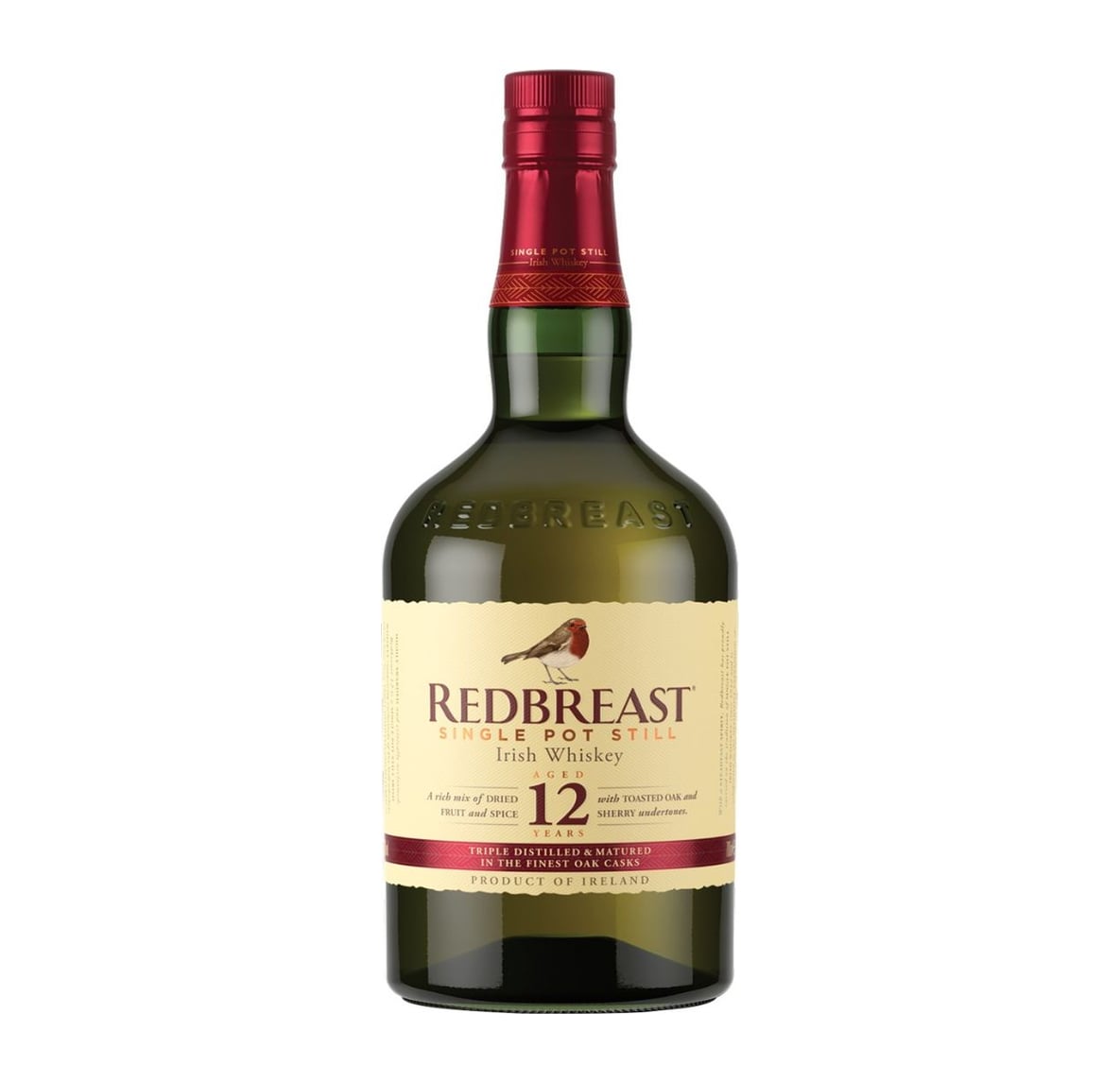
The benchmark of Irish single pot still — the oily, spicy texture only unmalted barley gives.
The first thing to settle about Redbreast is the phrase "single pot still." Where Scotch single malt uses only malted barley, this Irish tradition mixes malted with unmalted barley and runs it through pot stills. That unmalted grain builds an oily, spicy, mouth-coating texture you won't find elsewhere. Redbreast is the name that represents the style, so a single glass works as an answer to the question of what Irish pot still actually is.
There's a reason the style now sounds rare. The Irish whiskey industry all but collapsed in the mid-20th century, and the labour-intensive, costly pot still whiskey was at risk of disappearing. Redbreast hung on by a thread until Irish Distillers brought it back as a proper line at Cork's Midleton distillery in 1991. The Redbreast we drink today is, in effect, a tradition deliberately rescued from the edge of extinction.
The fact that Jameson comes from the same Midleton is easy to misread. The two are made under one roof but are entirely different whiskeys. Jameson is a light, popular blend cut with grain whiskey; Redbreast is a richer, heavier thing — a high-unmalted pot still spirit aged in sherry casks. The price gap is better read as a difference of method and maturation than of grade.
For a first bottle the 12yo is close to the right answer. It has stood shoulder to shoulder with much older whiskeys at international competitions more than once, so the value runs high. If the dried fruit, nut and Christmas-cake sherry sweetness suits you, climb to the 15 or 21; if you want it richer still, the cask strength concentrates the same character.
Redbreast's value lies less in auctions than in the reputation it earned by reviving a nearly lost Irish single pot still and making itself the style's benchmark. Even the 12yo has swept international awards, while limiteds like the Dream Cask fill the high-end collector tier.
Prices are approximate retail / duty-free · limiteds are volatile — not a personal tasting score
Redbreast's core is single pot still. Malted barley is mixed with unmalted barley and distilled three times in pot stills, and it's that unmalted grain that builds the oily, spicy, creamy texture. Sherry casks then layer on dense dried-fruit, nut and marzipan sweetness. It's a standard for 'Irish pot still' that differs from both Scotch single malt and the lighter Irish blends.
The Redbreast name dates to 1912, when wine-and-spirit merchant Gilbey took whiskey in bulk in Dublin and bottled it themselves. As the Irish whiskey industry collapsed mid-century, the pot still style was nearly lost — until Irish Distillers re-established Redbreast at Cork's Midleton distillery in 1991. Today, under Pernod Ricard, it stands as the name that symbolises the revival of single pot still.
Among enthusiasts Redbreast is often called the place to start if you want to know Irish single pot still. If Jameson is the light, popular blend, Redbreast is the richer, weightier whiskey from the same Midleton. In other markets it is steadily settling in as the name sherry-loving beginners reach for after Scotch.
Rich, oily and deep with sherry, it calls for an aroma-gathering tulip glass — a Glencairn or copita — while a big lump of ice shuts the nose down. Most sit at 40–46%, so water is rarely needed, though a single drop unlocks the marzipan and spice in cask strength. Hold it by the base and roll the creamy pot still texture slowly across the palate.
Sources · Production & range — redbreastwhiskey.com · History — Irish Distillers · Product image — Redbreast