Suntory
The house that started Japanese whisky — from Yamazaki to the Kakubin highball.
Yamazaki 55 — just 100 bottles — sold for HK$6.2 million at Bonhams Hong Kong in 2020, a record for Japanese whisky at auction. Suntory's real range runs from that summit down to the Kakubin highball: one group holding both the everyday pour and the collector's peak. In 2014 it bought America's Beam (Jim Beam, Maker's Mark) to become Beam Suntory, one of the world's three largest drinks groups.
Prices are approximate retail / duty-free · Auction — Bonhams (2020) · Not a personal tasting score
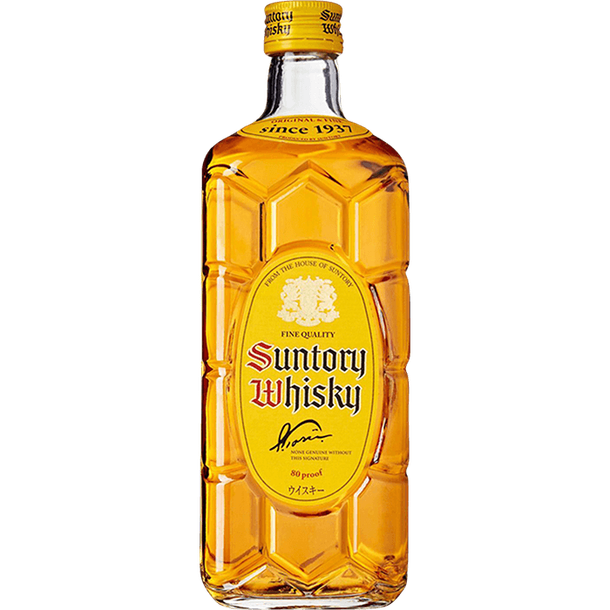
Suntory is not one product but the house of Japanese whisky. One group makes Yamazaki (malt), Hakushu (the forest malt) and the blends that marry them with grain (Hibiki, Toki, Kakubin). Layering an Eastern aroma from Japanese mizunara oak, and growing a soft balance alongside a highball culture, is the Suntory identity.
In 1899 Shinjiro Torii opened Kotobukiya (later Suntory) in Osaka, and in 1923 built Japan's first malt distillery at Yamazaki to begin making whisky. Kakubin won over Japanese palates in 1937 and grew the highball; in 2014 the purchase of America's Beam lifted it into the global Beam Suntory group.
Suntory sits at the heart of the global Japanese-whisky boom. Hibiki and Yamazaki carry heavy gift and collector demand amid scarcity, with list prices hard to find in the US and UK, while Toki and the highball serve give bars an everyday way in. It holds two faces at once — balance and delicacy, and the easy pleasure of a cold highball.
Kakubin and Toki are in their element as the highball Suntory spread — a tall glass packed with ice, lengthened cold with soda. By contrast, lines made to be nosed — Hibiki, Yamazaki, Hakushu — are better neat in a Glencairn or copita. Within one house, the glass decides how you drink.
Sources · Auction — Bonhams (2020) · Production & range — suntory.com / house.suntory.com · Product image — Suntory