Once you have worked your way through Riedel and Zalto, the next question usually points toward France. Baccarat, Saint-Louis, Lalique. Everyone has heard the names somewhere, yet almost nobody writes about how they actually perform as whisky glasses. Most of us have only seen them lit from below behind a department store vitrine.
The short version first: these three are not competing with the Austrian and German houses. They are built for a different purpose entirely. Know that going in and you will be happy. Miss it and you have bought an expensive disappointment.
Why all of them sit in the northeast corner
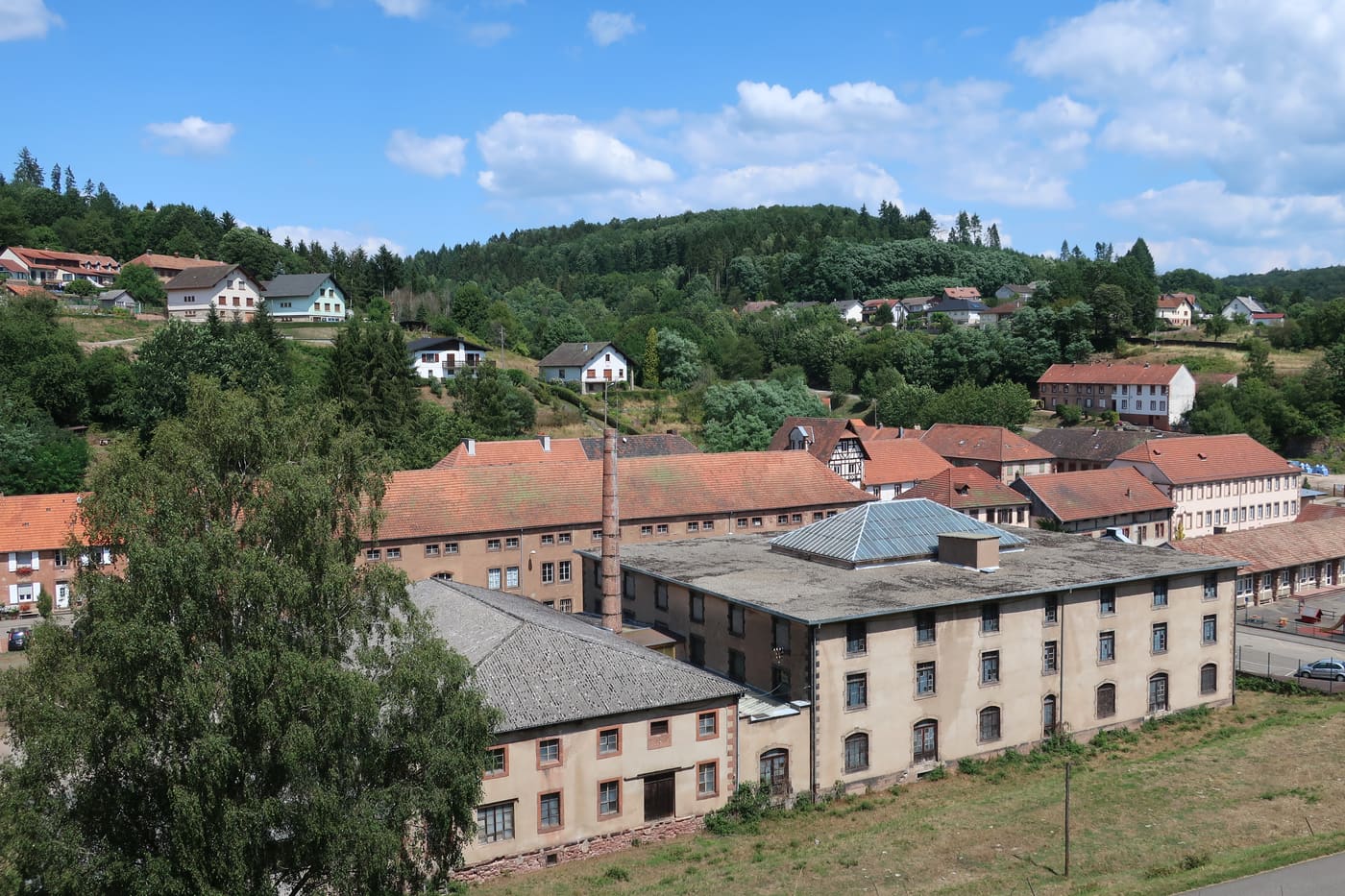
Put the three on a map and it is genuinely striking. Baccarat is in the town of Baccarat in Meurthe-et-Moselle; Saint-Louis is at Saint-Louis-lès-Bitche in Moselle; the Lalique factory is at Wingen-sur-Moder in Alsace. An hour or two apart by car. Practically all of French crystal is packed into one stretch of the Northern Vosges forest.
The reason is not romantic. A glass furnace eats firewood at a frightening rate, so workshops followed the forests and moved on once they had burned through them. The Northern Vosges had timber and silica sand together, and potash could be pulled from the ash. Geography added one more thing: this was border country with the Holy Roman Empire, which made it easy for Bohemian glassmaking know-how to walk across with the people who carried it.
The legal system helped too. In France a glassmaker could be a gentilhomme verrier — a rare class permitted to work with their own hands without forfeiting noble status. Any other trade would have cost them that rank; blowing glass did not. That is a large part of why the skill stayed in families and stayed in one region.
There is still lead in it
This is the most practical line separating the French three from Riedel, Spiegelau, and Zalto.
In Europe "crystal" is a specification, not a marketing word. EU Directive 69/493/EEC sets 24% lead oxide as the floor for calling something lead crystal, with 30% and above forming a higher grade — cristal supérieur. When the French houses keep the word cristal on their products, it means they are still meeting that bar.
That is the opposite direction from the Austrian and German brands, most of which moved to lead-free crystal through the 2000s. Neither choice is wrong; the goals differ. Lead oxide raises the refractive index and softens the glass enough to cut deeply into it. A brand that competes on cut patterns cannot easily give it up.
Does it matter in use? While you are drinking, essentially no. There is no evidence that pouring a dram and finishing it that evening leaches lead in any meaningful amount. Storage is the real issue. If your habit is to keep whisky in a crystal decanter for months, that is a different conversation — glass, crystal, and lead covers it in detail. The summary: use French crystal as a drinking glass and leave long-term storage to the original bottle. Lead content varies by line, so the materials note on the product page is worth reading.
Baccarat — half of it is the name
Founded in 1764 in Lorraine, with the usual origin story about a royal warrant from Louis XV attached. It did not start with crystal, though. The early output was flat and ordinary glass; crystal production only began in 1816 — thirty-five years after Saint-Louis, which comes next.
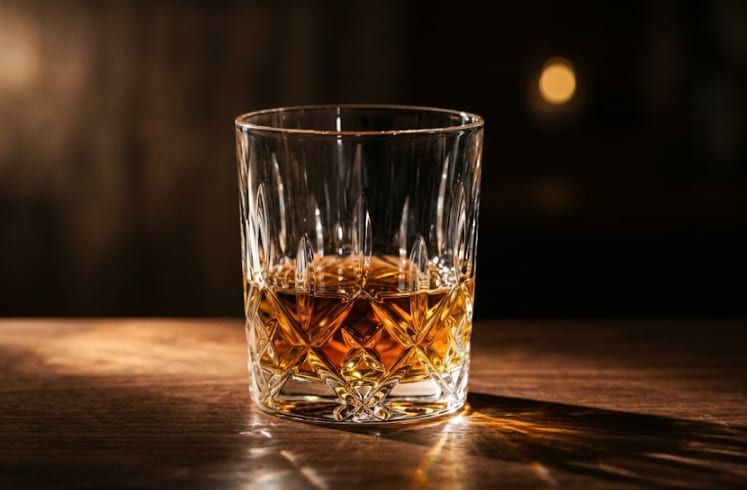
As a whisky glass it comes down to Harcourt, effectively. The 1841 design is built around a hexagonal foot and six broad flat cuts, and while the stemmed version is more famous, the old-fashioned tumbler follows the same grammar. It is heavy in the hand and the cuts throw a serious amount of light under a lamp. There are other cut tumbler lines — Rotary and Louxor among them, using spiral and geometric patterns — plus a more accessible entry range.
Baccarat's best-known link to spirits is a bottle rather than a glass: the Rémy Martin Louis XIII decanter is Baccarat-made. A good deal of the general assumption that fine spirits belong in crystal was built right there.
It is also, by a distance, the easiest of the three to buy. Baccarat is realistically the only one of them you can pick up, feel the weight of, and then purchase in person. The limited-edition end of things is covered in the most expensive whisky glasses; for a glass you actually intend to use, one Harcourt tumbler is plenty.
Saint-Louis — the oldest, and the hardest to find
Saint-Louis is the eldest of the three. The glassworks itself dates to 1586 at Münzthal, and in 1767 Louis XV granted it royal glassworks status. It was also the first in France to succeed at making lead crystal — confirmed by the Royal Academy of Sciences in 1781, a full generation before Baccarat got there.
Since 1989 the majority owner has been the Hermès group. You notice that fact on the price tag before you notice it in the design.
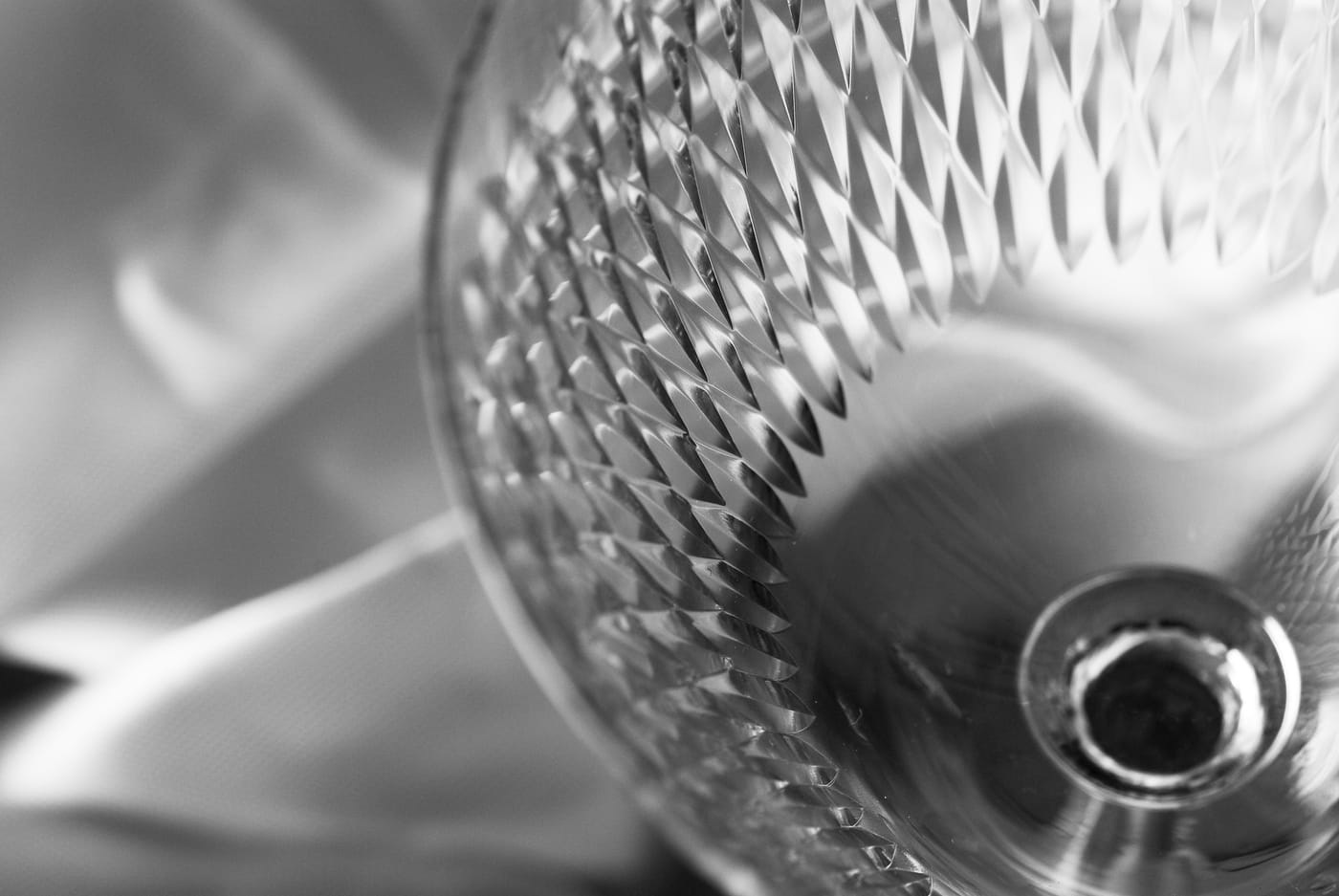
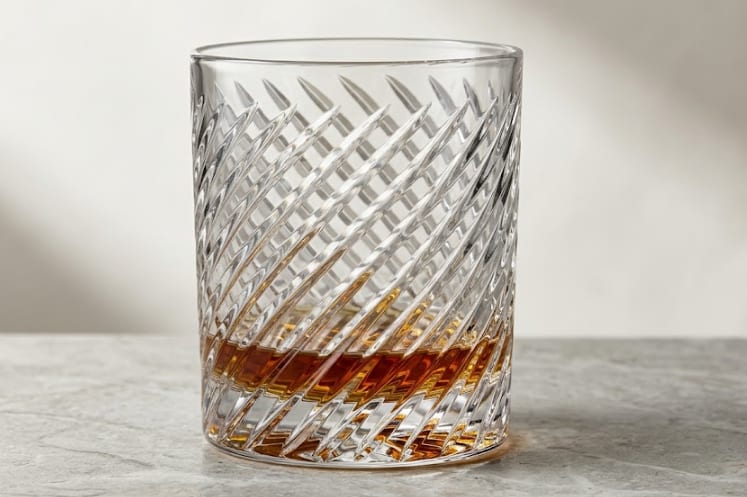
For whisky, the line to look at is Tommy. The pattern dates to 1928 and wraps the whole glass in deep diagonal cuts. There is an old-fashioned tumbler size, so it works directly for a dram neat or over ice. Bubbles takes a contemporary route, setting air bubbles into the crystal instead of cutting it, and the top-tier gilded lines like Thistle run past the price of a decent bottle of whisky per glass.
The catch is availability. Outside Europe there is barely any official retail presence, so you rarely see one in person and usually end up on direct-order or parallel import routes. Crystal is a category where shipping damage is a genuine risk, and that weighs more heavily here than it might elsewhere. Even so, of the three, Saint-Louis carries the most of that quiet if-you-know-you-know satisfaction.
Lalique — the one most entangled with whisky
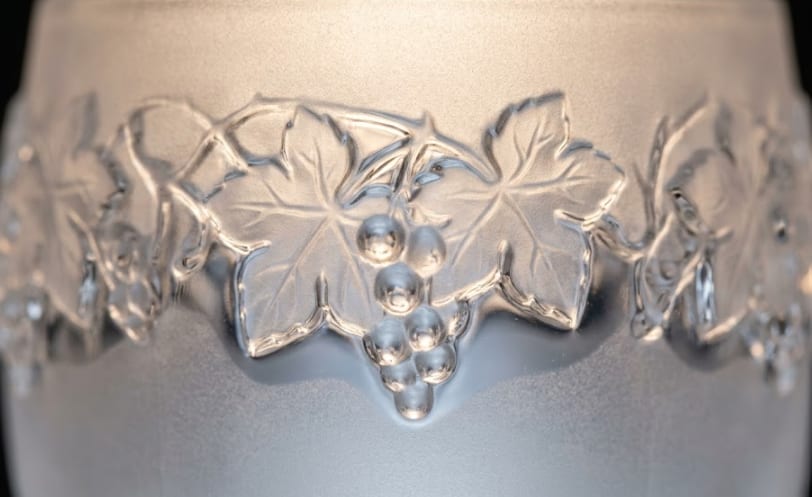
Lalique started somewhere else entirely. René Lalique was an Art Nouveau jeweller first, and moved into glass by way of perfume bottles. He opened the factory at Wingen-sur-Moder in Alsace in 1921, and the satin, semi-opaque surface treatment with relief decoration became the face of the brand. If you assumed crystal was all transparent sparkle, a Lalique piece looks slightly foreign. The switch to crystal came after the Second World War, under his son Marc.
For a whisky drinker, the interesting part is less the glassware than the connections.
The Six Pillars decanter series with The Macallan ran from 2005, and in 2010 a Macallan 64-year-old in a Lalique Cire Perdue decanter sold for $460,000 at a Sotheby's New York charity auction — a record for a bottle of whisky at the time. Lalique Group went further in 2019 and acquired The Glenturret distillery in Scotland. A crystal house owning a distillery outright is an unusual structure, and it is why Glenturret's top releases arrive in Lalique decanters.
For something to actually drink from, the realistic option is the 100 Points collection developed with James Suckling. It pairs whisky and spirits tumblers with decanters, and the Lalique ornamentation is restrained enough to be usable. Lines like Merles et Raisins, where relief covers the whole body, are lovely but divide people on how they feel in the hand.
Before you buy
Do not buy these for nosing. This matters most. Almost everything these three make for whisky is a tumbler — a glass for ice and for neat pours. Concentrating aroma requires a narrowing mouth, and a cut crystal tumbler is wide-mouthed with thick walls. The cut faces also scramble the optics inside the glass, which makes watching colour and legs awkward. If you want a glass to dig into aroma, the nosing glass comparison points the right way; French crystal is the second glass you choose after you already own that one.
All of it is hand-wash. Dishwasher heat and alkaline detergent will cloud the surface of leaded crystal, and that clouding does not come back out. Lalique's satin finish is especially prone to holding detergent marks, so lukewarm water, a gentle wash, and an immediate dry is the way. Details are in the glass care guide.
Budget from roughly $150–200 a glass upward. A Baccarat Harcourt tumbler, a Saint-Louis Tommy, and a Lalique 100 Points all start in a comparable region and double from there depending on line. Exchange rates and import routes move this a lot, so treat the figure as orientation and check official channels before buying.
Be careful with secondhand and antique. All three have busy vintage markets, and counterfeits circulate accordingly. The filters that work — base engravings, sharpness of the cut faces, the tap test — are set out in authentic versus fake.
So which one
If you want to see it before you buy and this is your first French crystal, the Baccarat Harcourt tumbler is the safe call. It is the one you can find in person, and its resale value holds up best.
If you would rather avoid the name everyone recognises, it is Saint-Louis Tommy. You accept the shipping risk, and in exchange you get a glass still made to a 1928 pattern.
Lalique suits the person drawn to the brand's relationship with whisky more than to the glass itself. If drinking a dram from the crystal house that owns Glenturret is a context you enjoy, that is reason enough.
Set them beside the Japanese crystal houses and the character sharpens. Edo Kiriko cuts through a coloured overlay to reveal a pattern; the French approach leaves the body clear and works purely through refraction. Both are cutting traditions, and the results could hardly be less alike.