Nosing glasses like the Glencairn or Copita are not suited to whisky on the rocks — and there are structural reasons for this. Nosing glasses are designed with a narrow aperture and tulip form to concentrate aroma. Ice doesn't go in easily through the narrow opening, and once inside, the ice can displace liquid over the rim. Above all, the thin glass of a nosing glass is poor for temperature management.
On the rocks demands different criteria. Drawing on Reddit r/Whisky and r/cocktails, specialist bar reviews from Eater, and Imbibe Magazine, here are the key selection criteria and product recommendations for rocks glasses.
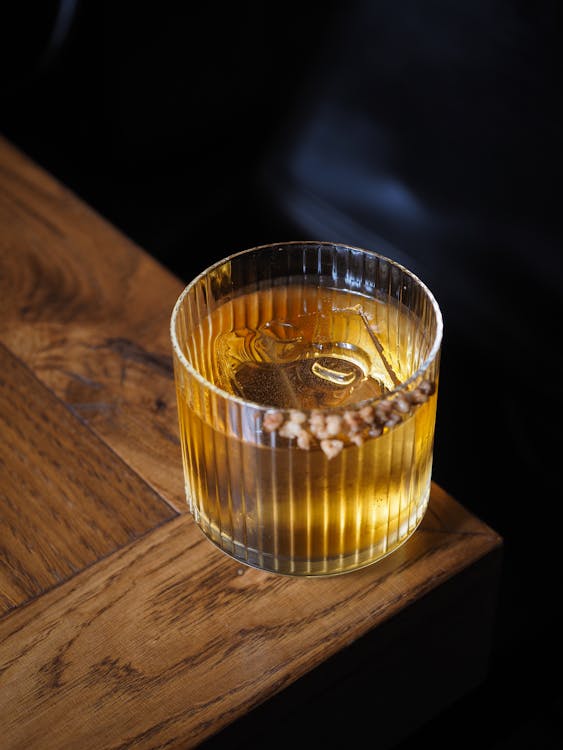
Key Criteria for a Rocks Glass
Thick walls
In a rocks glass, thicker walls are better. Thick glass insulates against external heat and slows the rate of ice melt. In a nosing glass, thin glass is a virtue — in a rocks glass, the reverse is true.
A minimum wall thickness of 3mm is generally recommended. The Glencairn's wall is approximately 2mm; a good rocks glass is 3–5mm. The base should be thicker still — a heavy base handles both stability and heat insulation simultaneously.
Appropriate weight
There is a saying that heavier is better in a rocks glass. This is partially true. A heavier glass is more stable on the table and less likely to slip from the hand. However, excessively heavy glasses cause fatigue.
The ideal weight when empty is 250–350g. With whisky and ice added, this becomes 500–700g — heavy enough to feel substantial without becoming a burden.
200–300ml capacity
The ideal is for the glass to be 70–80% full when it holds 45–60ml whisky (or 30ml) plus one spherical ice ball or two to three ice cubes. The 200–300ml range satisfies this.
Too small and the ice overhangs the rim; too large and the whisky looks sparse.
Recommendation 1 — Libbey Rocks Glass
Price approx. 10,000–20,000 KRW | Capacity 266ml | Material Tempered soda-lime glass
Founded in the US in 1818, Libbey is the de facto standard for American bar and restaurant glassware. The Libbey basic rocks glass is the most common form seen across American bars. Its thick base and uniform walls effectively retain the cold, and its durability holds through hundreds of uses without the surface clouding.
Among the best-performing rocks glasses for the price, it has consistently ranked in the top tier of Eater's "Best Rocks Glasses" reviews.
Specs: Base approximately 8mm thick, walls approximately 3.5mm, dishwasher safe
Recommendation 2 — Spiegelau Whisky Tumbler
Price approx. 30,000–50,000 KRW (set of 2) | Capacity 280ml | Material Lead-free crystal
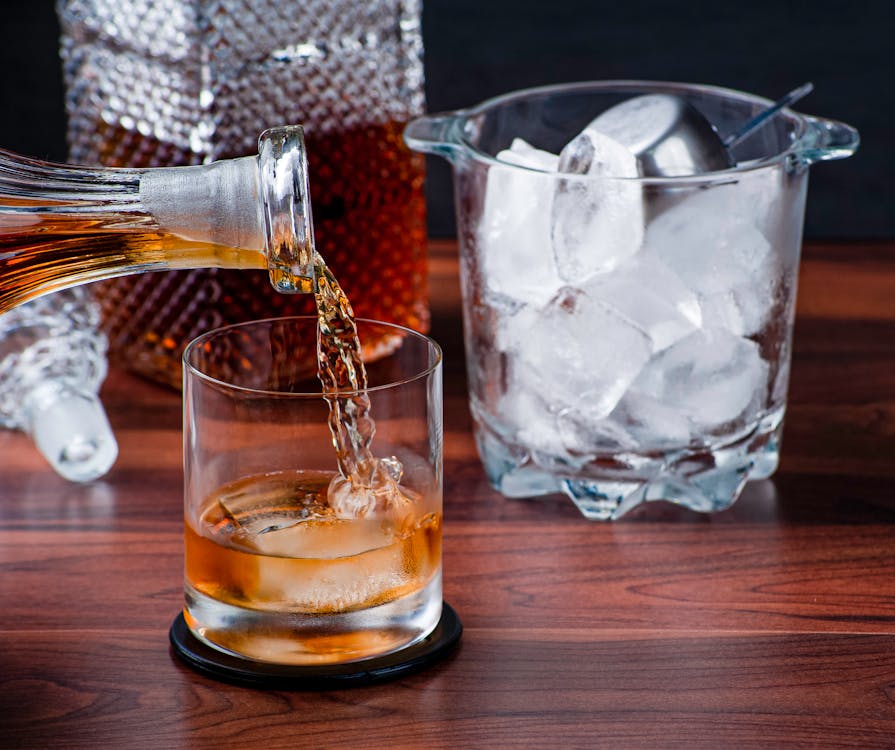
Spiegelau's whisky tumbler. Lead-free crystal with higher clarity than Libbey — the whisky's colour and legs appear more vividly. The thick base and walls suit on-the-rocks conditions, and it is dishwasher safe for easy management. Frequently used for on-the-rocks service in fine dining and whisky bars. More expensive than Libbey, but the crystal's transparency and lustre are more satisfying visually in a home bar setting.
Specs: Lead-free crystal, dishwasher safe, multiple fine dining use cases
Recommendation 3 — Glencairn Whisky Tumbler
Price approx. 30,000–40,000 KRW | Capacity 300ml | Material Crystal glass
The on-the-rocks line released by the Glencairn Company as a companion to their original nosing glass. The heavy base design philosophy of the Glencairn has been applied directly to the tumbler form. The solid base keeps the glass stable, and when paired with the Glencairn original nosing glass, there is visual continuity.
There is also the symbolic value of an on-the-rocks glass from a dedicated whisky brand. The approach of first nosing a whisky in the Glencairn and then switching to the Glencairn tumbler for on-the-rocks creates a layered drinking experience.
Specs: Visual continuity when paired with Glencairn original, symbolic brand value
Recommendation 4 — Waterford Lismore Rocks Glass
Price approx. 50,000–100,000 KRW | Capacity 218–300ml | Material Lead crystal (or lead-free)
Waterford's Lismore series is one of the world's oldest and most recognised crystal cutting patterns. First released in 1952, it has become the symbol of Irish crystal, and has been supplied to the residence of the Irish President and the British Royal Family. If you enjoy Irish whiskey, drinking it from Irish crystal adds cultural context to the experience.
Ice Matters Too
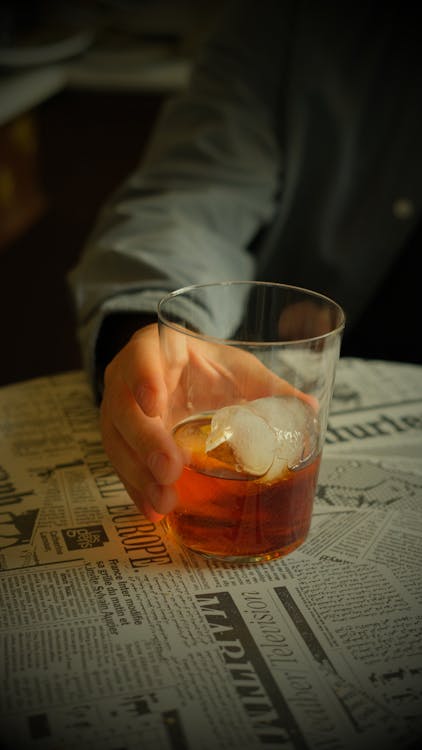
Once you've chosen the right glass, the ice also deserves consideration.
Spherical ice (5–6cm diameter) — Small surface area means slow melting. The slowest rate of dilution. Available from spherical ice moulds or specialist bars.
Cube ice (5×5×5cm) — The easiest to make at home. Melts faster than a sphere but far slower than crushed ice.
Crushed ice — Fast dilution. For when you want the whisky cold and fast rather than tasting its character fully.
Summary
| Glass | Price | Capacity | Material | Best for |
|---|---|---|---|---|
| Libbey Rocks | 10,000–20,000 KRW | 266ml | Tempered glass | Value, durability |
| Spiegelau Tumbler | 30,000–50,000 KRW | 280ml | Crystal | Clarity and practicality |
| Glencairn Tumbler | 30,000–40,000 KRW | 300ml | Crystal | Glencairn set pairing |
| Waterford Lismore | 50,000–100,000 KRW | 218ml | Crystal | Irish whiskey, gifts |
For a first rocks glass, the Libbey is the most realistic choice. For crystal, Spiegelau. For pairing with a Glencairn, the Glencairn tumbler fits the context.