The ingredients of whisky are surprisingly plain: grain, water, yeast. That's all. Yet turning those three into a bottle takes eight stages, and at each one there is a small fork in the road. Which grain, whether to add smoke, what cask and how many years — those choices pile up until two completely different whiskies, a Laphroaig and a Macallan, are born from the same start.
From the barley field to the glass, here are those eight stages in order.
01. Grain — where the character is set
Grain is the backbone of whisky, and what you choose sets the spirit's direction from the start. Barley is the classic single-malt base, corn gives bourbon its heavy sweetness, rye a sharp spice, and wheat a soft roundness.
Harvested grain isn't used right away. It's dried and stabilised somewhere cool and well ventilated — and barley bound for malting has to keep its power to sprout.
02. Malting — where sweetness begins, and peat divides
Grain itself holds only starch, with no enzyme to turn it into sugar — so the barley is soaked until it sprouts. As it germinates it makes those enzymes itself, and whisky's sweetness begins here. Once the shoots have grown enough, the barley is kiln-dried to stop it.
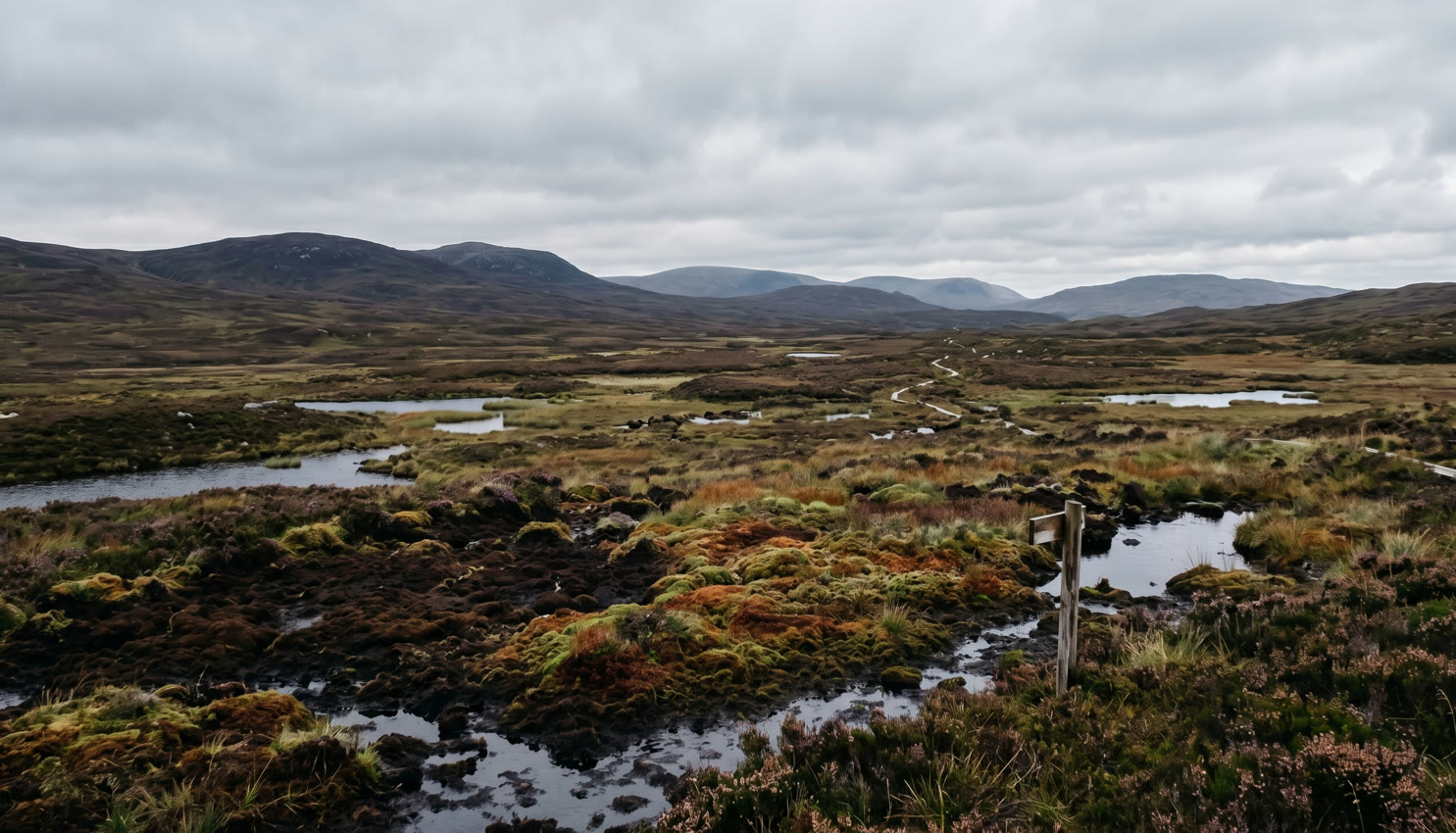
Here comes the first fork in flavour: what you burn to dry it. Some Scottish distilleries fire the kiln with peat — soil from peat bogs, where moss and heather have lain waterlogged and half-decayed for thousands of years. The smoke from burning it soaks into the malt and leaves a smoky aroma.
The intensity is measured in ppm, and the smoke has to be applied early, while the malt is still damp, to take hold. Islay whiskies like Laphroaig and Ardbeg push this road to its limit. Most single malts the world over go the other way — dried by hot air alone, leaving the grain's own clean sweetness.
03. Milling — grinding the grain into grist
The dried malt is coarsely ground in a roller mill into grist. Too fine and the mash clogs; too coarse and the sugar won't release — so the balance of husk, grits and flour is set with care.
Grains with tougher starch — corn, wheat, rye — go through one more step here: they're cooked under high-pressure steam to free the starch before mashing. That's the bourbon way.
04. Mashing — drawing out the sugar with hot water
The grist is mixed with hot water in a mash tun. Temperature is everything: never boiling, just around 64℃, because any hotter kills the enzymes you worked to build. As they convert starch to sugar, a sweet liquid called wort is drawn off.
05. Fermentation — at last, it becomes alcohol
The cooled wort goes into a washback with yeast. The yeast eats the sugar, throws off alcohol and CO₂, and the surface foams over. After 48–72 hours you have a wash of 7–9% — essentially a beer. Longer fermentation brings out more fruit and floral character.
06. Distillation — boiling off just the alcohol
This is where single malt and grain split sharply. Single malt is distilled twice in copper pot stills — the first run giving a 'low wine' of about 21%, the second lifting it to around 70%. The copper strips off-notes, leaving a clean spirit.
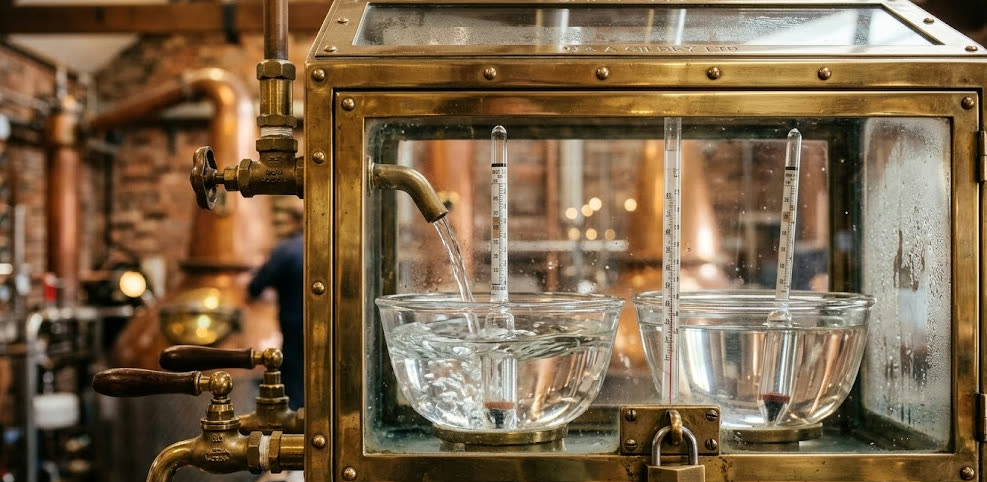
The second distillate splits into three parts. The head is too raw and is discarded; only the middle — the heart — is collected; the tail is heavy and off, and is set aside too. Knowing where to cut is the stillman's craft.
Grain whisky, meanwhile, uses tall column stills — distilling continuously, without stopping, up past 94% in a single pass: a light, clean spirit suited to large-scale production.
The finished spirit is a clear, colourless new-make spirit. The aroma is sharp but still rough. Colour, smoothness and depth come from the next stage.
07. Maturation — where 60–70% of the whisky is decided
The new make is filled into oak and left for years. Remarkably, 60–70% of a whisky's colour and flavour comes from the cask — and the key is what it held before. American oak that held bourbon gives vanilla, honey and coconut; European oak that held sherry gives raisin, nut and dark chocolate. The Macallan bet everything on sherry casks.
The cask breathes. In summer the spirit soaks into the wood, in winter it draws back out, deepening as it goes — and about 2% evaporates each year. That loss is called the angel's share. Scotland requires at least 3 years, and usually matures for 10 or more.
08. Bottling — finally, one bottle
The matured spirit is drawn off and bottled. Casks may be blended to even out the flavour (vatting). Usually water brings it down to 40–46% — left as-is, it's cask strength — and after chill-filtering the fats that cloud it when cold, it's filled.
Same ingredients, different whisky
From the same starting point of grain, water and yeast, whether you burned peat, used pot or column stills, and what cask you matured in for how many years all lead to completely different spirits. When you pick a whisky now, words on the label like 'single malt', 'sherry cask' and 'cask strength' should start to make a little more sense.
If you're curious which of these styles suits your own palate, Find Your Whisky gauges it in five questions, and you can see how the brands differ one by one in the whisky section.