Most glasses are named for how they look or what they hold — wine glass, beer glass, shot glass. The tumbler is the odd one out. Its name comes from tumble, to fall over. Yet the thing we call a tumbler today is the flat, heavy-bottomed glass that almost never tips. The name points the exact opposite way. How did that happen?
The cup you couldn't set down
The story goes back to around the 17th century. Tumblers of that era are said to have had rounded or pointed bottoms. Set one on a table and it lurched over. You couldn't stand it up, so whoever was handed one had no choice but to keep holding it — and to finish it before the cup could be turned over or passed on.
Why make a cup like that? Two threads run through the explanations.
One is plain enough: a cup you can't put down until it's empty. No quietly setting your drink aside and slipping away — in its own way, a tool of pressure at the table.
The other runs the opposite direction. Cups weighted at the base, so that however you tipped them they rolled back upright like a roly-poly toy, were also called tumblers — made to keep drink from spilling on a rocking ship or a jolting carriage. A cup built to fall and a cup built never to fall, sharing one name.
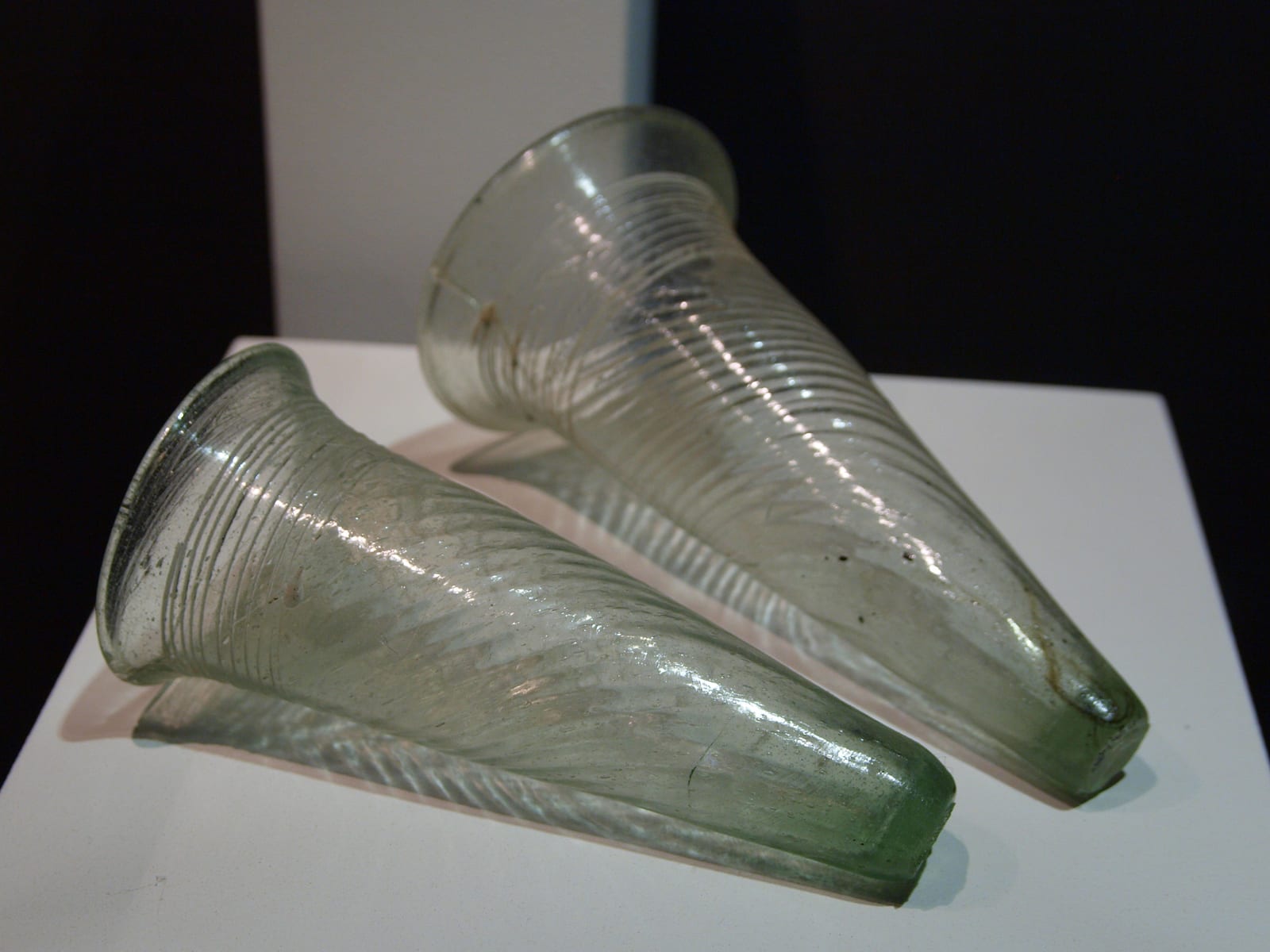
An old cup with a rounded or pointed base that wouldn't stand on a table. Let go and it fell — which, the story goes, is where the name "tumbler" came from.
The two threads look contradictory, but they share a root. Tumble holds both "to fall" and "to do acrobatics." An acrobat is a tumbler; so is the toy figure that springs back up no matter how you knock it down. A cup defined by falling belonged to the same family.
When only the name survives
By the 1660s, tumbler had already settled in as a word for a drinking glass. After that the object changed quietly. As glassmaking improved and drinking from a glass left standing on the table became the norm, the base grew flatter and thicker. The tendency to tip over simply stopped being useful.
What disappeared was the feature. What stayed was the name. We inherited a word meaning "to fall over" attached to a glass that won't.
The tumbler today
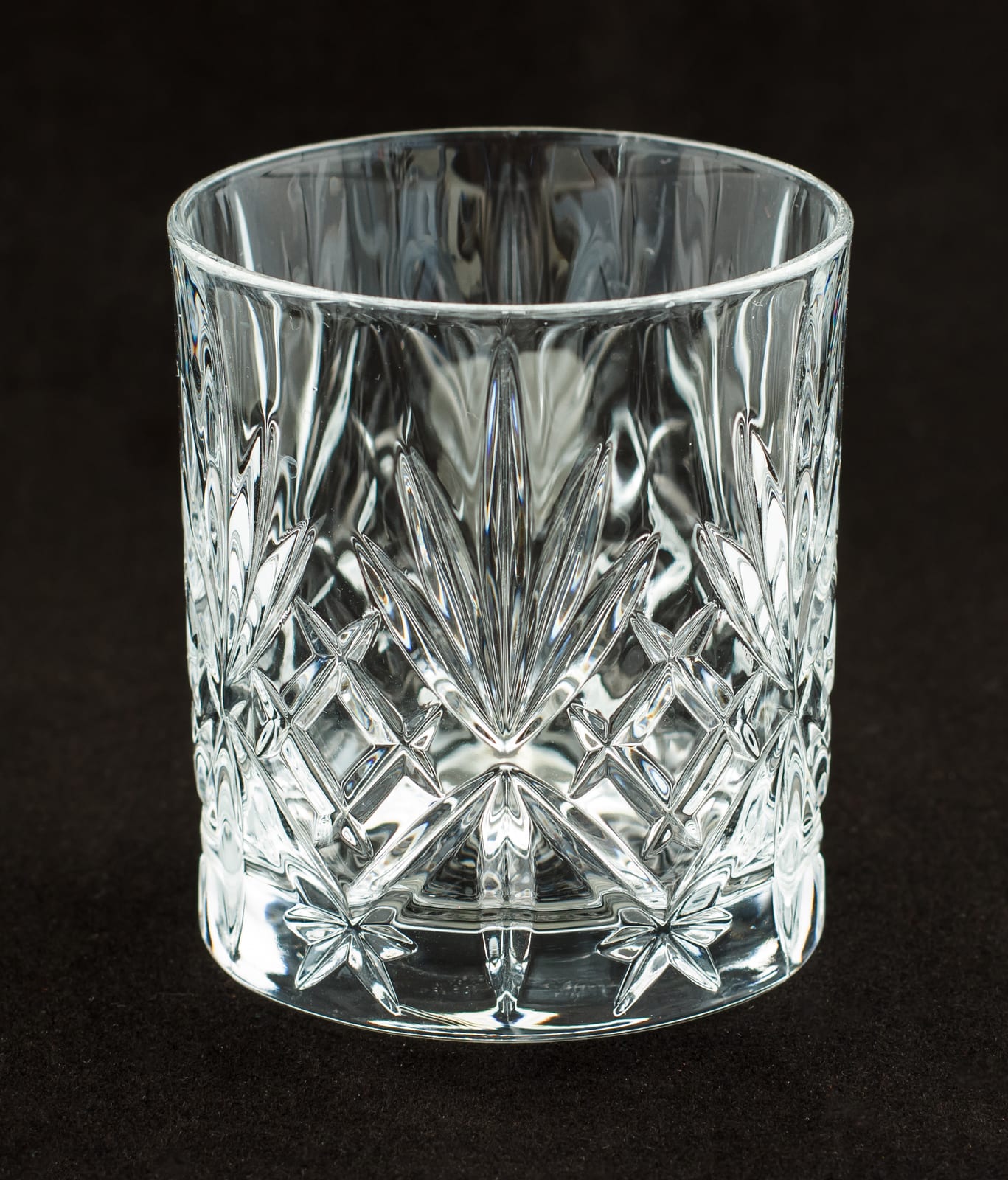
A thick, flat base. This steadiness is what makes a tumbler a tumbler today — the exact opposite of what the name once meant.
Today "tumbler" is a catch-all for any cylindrical glass with no stem, no handle, no foot. The old fashioned (rocks) glass you drink whisky over ice from, the tall highball, the taller Collins, a plain water glass — all tumblers. The shapes and heights vary, but they share one thing: a thick, flat bottom.
That base is exactly why a tumbler suits whisky on the rocks. Drop in ice, give it a stir, and nothing wobbles; the heavy glass sits solid in the hand. Unlike a Glencairn or a snifter, which funnel the aroma up to your nose, the tumbler trades scent for ease. It's the glass for sitting a while and sipping slowly.
When the name and the thing invert
Here's the fun part: on its way to becoming what it is now, the tumbler betrayed its own name precisely. A cup made to fall over became the label for a glass that won't.
Words often outlive the things they described. We still "dial" phones that lost their dials long ago, still "film" on cameras that hold no film. The tumbler is the same. The glass was rebuilt from the base up, and only the name — from the days when it toppled — rode along to the present. Next time you wrap a hand around a rocks glass, it's worth remembering that its solid, steadying base was never supposed to be there at all.
Whisky on the rocks — Benjamin Thompson / Wikimedia Commons (CC BY 3.0) · Pointed-bottom "Sturzbecher" (tumble cup) — Bullenwächter / Wikimedia Commons (CC BY-SA 3.0) · Cut-glass old fashioned tumbler — Andreas Argirakis / Wikimedia Commons (CC BY-SA 3.0)