
If you drink whisky on the rocks, the Glencairn and Copita drop out of consideration. These glasses are optimised for nosing — the analytical act of evaluating aroma. On the rocks is a different experience. Chilling, dilution, drinking ease — the criteria for the glass change entirely.
The most common mistake people make when choosing a rocks glass is applying the same standards they use for a nosing glass: thinner is better, lighter is better. On the rocks, the opposite is true.
Two Types of Rocks Glass
Rocks glasses fall into two main categories.
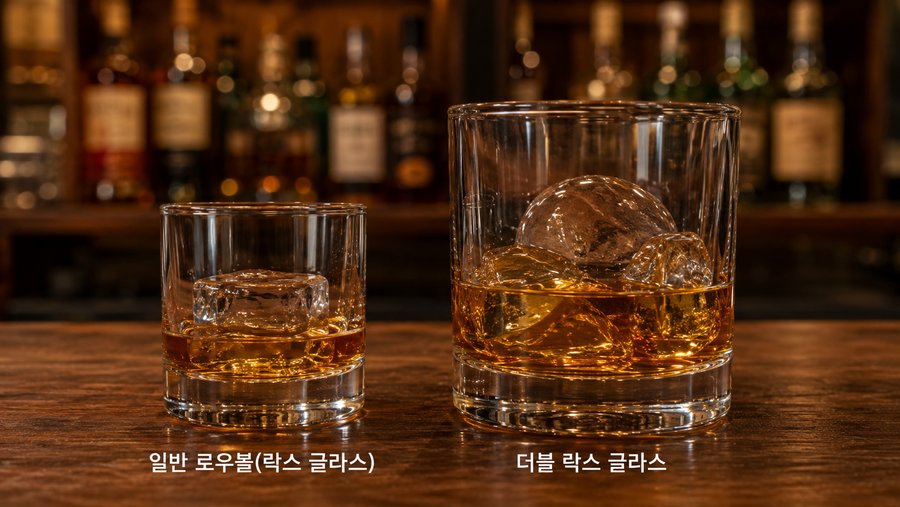
The Lowball (or Old Fashioned glass). Short and wide. Typical capacity is 200–300ml. As the name suggests, it's also used for the 'Old Fashioned' cocktail. With one or two ice cubes and a pour of whisky, the height and proportions feel natural. The most commonly encountered rocks glass.
The Double Rocks glass. Taller and wider than the lowball. Typical capacity is 350–450ml. There's enough space for more ice or a large spherical ice cube. Also suitable for a longer drink with water added.
In practice, both are commonly called "rocks glasses" and many bars don't distinguish between them by use.
Why Thickness Matters
Thickness matters in a rocks glass in the opposite direction from a nosing glass.
Thinner is better for nosing glasses — it reduces weight and allows rapid temperature response for accurate evaluation at the right temperature.
A rocks glass needs appropriate thickness. Three reasons:
Durability. Adding ice creates impact on the glass. Large spherical ice or big cubed ice can crack a thin glass. Thick walls absorb this impact.
Cooling efficiency. A thicker glass has higher thermal mass, slowing the rate at which ice melts against the walls. The whisky dilutes more slowly.
Sensation. The feel of a thick crystal glass in hand is part of the on the rocks experience. The sound of ice against a heavy glass, the stability when you set it down. There's a reason bars use thick crystal glasses.
An overly thin rocks glass cracks easily when ice is added — especially vulnerable to rapid temperature change, such as adding ice immediately after a hot wash.
Weight and Grip
A rocks glass is held and drunk from, not set on a table with your nose brought to it. Weight and grip directly affect the actual experience.
Too light and the glass feels unstable in the hand, especially when ice shifts the centre of gravity. Uncomfortable to swirl or tilt.
Too heavy and your wrist fatigues by the time you've finished.
The Reddit r/Whisky community's consensus on rocks glass recommendations points to a common range: approximately 250–380g for the glass itself. With ice and whisky added, the total weight increases considerably, so an overly heavy glass becomes a burden.
Opening Width and Height
The key to a rocks glass's shape is rim width and height.
A wider opening means aroma disperses faster — less of an issue for on the rocks, where aroma concentration is less important than in nosing. But a wider opening will capture less of the aromatic shift as the ice melts.
Height relates to ice selection. A lowball looks proportionally right with one or two ice cubes. A double rocks provides enough space for a large spherical cube or multiple pieces.
Ice and Glass
Your rocks glass choice directly connects to the ice you use.
Standard ice cubes. Small rectangular pieces from a home freezer. High surface area melts quickly. Best with smaller pours or fast drinking. Suits the wide, low lowball.
Large spherical ice. High volume-to-surface ratio means slow melting — ideal for minimising dilution. Requires a double rocks with enough height and opening. Choose a sphere diameter slightly smaller than the glass interior for a visually complete look.
Large cut ice blocks (1 inch+). Used for similar purposes to spherical ice. Some bars cut and polish their own transparent ice blocks.
| Ice Type | Melting Speed | Dilution | Recommended Glass |
|---|---|---|---|
| Standard cubes | Fast | High | Lowball |
| Large cut blocks | Slow | Low | Double Rocks |
| Spherical ice | Slowest | Lowest | Double Rocks |
Crystal vs Standard Glass
Rocks glasses divide into crystal and standard soda-lime glass.
Crystal. Made with lead oxide, barium, or titanium additives. Higher refractive index for beautiful light reflection and higher intrinsic clarity. Can be worked to thinner walls with greater precision. Heavy and luxurious in feel.
Lead-free crystal (using barium oxide, zinc oxide, or titanium instead) is now the norm. Major crystal brands including Riedel, Spiegelau, and Waterford use lead-free crystal.
Standard glass. Less expensive and more durable than crystal. Most bar glassware is standard glass. The practical difference from crystal is hard to perceive in everyday use.
For gifts or special occasions, go crystal. For everyday use or building a collection of several, thick-walled standard glass is perfectly adequate.

Situation-Based Recommendations
Everyday use with standard ice. A heavy-walled lowball. Easy to find at kitchenware stores. Look for a heavy base and sufficient wall thickness. Even a budget option is fine if it has the right heft.
Large spherical or cut ice. A double rocks or equivalent tall glass. Choose an interior diameter slightly larger than your spherical ice. Works well as a set with a spherical ice mould.
As a gift. A crystal rocks glass. Riedel's Rocks series and Spiegelau's Perfect Serve line are accessible options.
Conclusion
Priority order for a rocks glass:
Thickness (durability, weight) → Size (matched to ice) → Opening width (aroma, dilution) → Material (standard vs crystal)
The key insight is that the criteria are completely different from a nosing glass. Lighter and thinner is not better. Decide how you'll drink first, and the glass choice follows naturally.
Next: Whisky Glass Care — From Hand-Washing to Storage