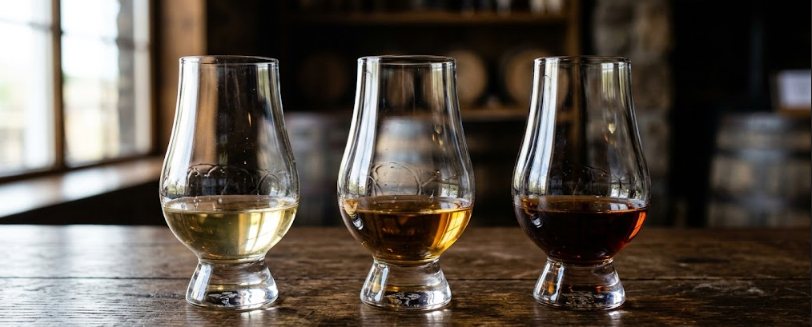
Say the bartender sets two drams in front of you. One is pale straw, the other a deep red-brown. Asked which is older and pricier, most people point to the dark one — darker must mean older, richer. And the clearer the glass, the more that colour pulls your eye. The trouble is, the guess is right less often than you'd think.
The colour comes from the cask
Whisky off the still is colourless — clear as vodka. Every bit of colour comes from the oak. The spirit spends years in a barrel, the wood leaches in, and how much it leaches is what becomes the colour.
So age isn't what decides the shade. The cask matters more. Spirit raised in an ex-bourbon American oak cask — used once already, a refill — stays a pale gold even after long ageing. A European oak cask that once held sherry, by contrast, can stain the spirit deep mahogany in just a few years. The Macallan is dark not because it's old but because it's sherry-matured.
Climate pitches in too. Taiwan's Kavalan and India's Amrut mature fast in the heat, taking on deep colour while still young. Three years in Scotland and three years in Taiwan look nothing alike in the glass. Reading age or price off colour alone is a bit like guessing someone's age from their tan.
And you can add more
If that were the whole story, colour would be an honest record. But there's one more thing. Scotch and many other whiskies are allowed a colourant: E150a, the dark-brown additive known as spirit caramel. It's essentially burnt sugar, and aside from water it's about the only thing you can legally put in Scotch.
Why add it? Not for flavour — for consistency. Colour varies slightly from cask to cask. If this bottle of the 12-year looks different from the next, shoppers suspect the quality has shifted. So big brands add a touch of caramel to bring every bottle to the same shade. That uniformly amber 12-year on the shelf is no accident.
American bourbon is the telling exception. By law, bourbon can have nothing added — no colouring, nothing. The colour from the charred inside of a new oak barrel has to be all of it. So whatever shade your Jim Beam or Wild Turkey shows in the glass, it's the real thing, straight from the wood. Scotch, Irish and Canadian, meanwhile, may use colouring.
Does it change the taste?
Here enthusiasts split. The brands say the amounts are far too small to affect flavour — and the doses really are tiny. The other camp swears a heavily coloured dram carries a faintly bitter, burnt edge, an odd sweetness. Blind tastings come out all over the place: some people catch it, some don't.
What's surer than taste is that colour fools the eye. A darker pour reads as richer and heavier before you've even sipped. You expect more, and the expectation drags your actual impression along with it. Take one whisky, colour a portion of it darker, and that portion scores higher — it's been shown more than once. Caramel works on the head more than the tongue. There's a separate piece on how the brain tastes the glass.
So how should you read it?
None of this means ignore colour entirely. Within a single distillery's own range, a darker bottling really does tend to mean more sherry influence — that's real information. It's lining up two whiskies from different brands and casks by colour alone that gets you nowhere.
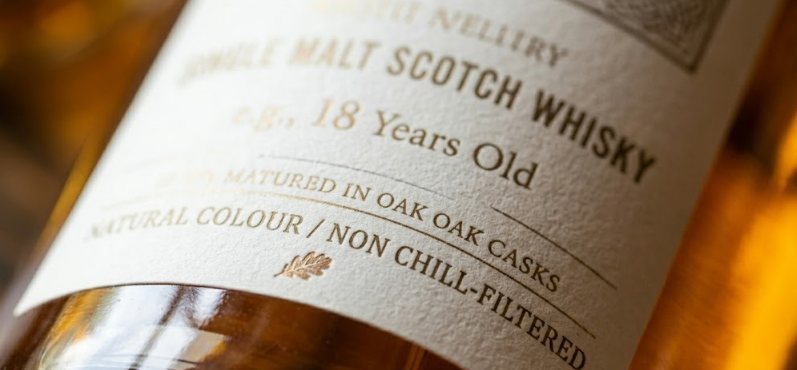
The label gives you a clue. Whiskies that skip the colourant tend to print "natural colour" (or "non-coloured") like a badge — especially the brands that want colour to stand as proof of maturation. A few countries, Germany among them, require added colouring to be declared on the label, so bottles sold there note it in small print. No note at all, and it may well be in there.
The most useful habit, though, is plain: when you lift the glass, don't read age or grade into the colour. Pale doesn't mean young or thin; dark doesn't mean old or dear. Colour is a mark the cask left behind, not the whisky's CV.
The glass shows the colour honestly. What that colour means is a story from outside the glass.
Comments
Be the first to leave a comment.