Arran
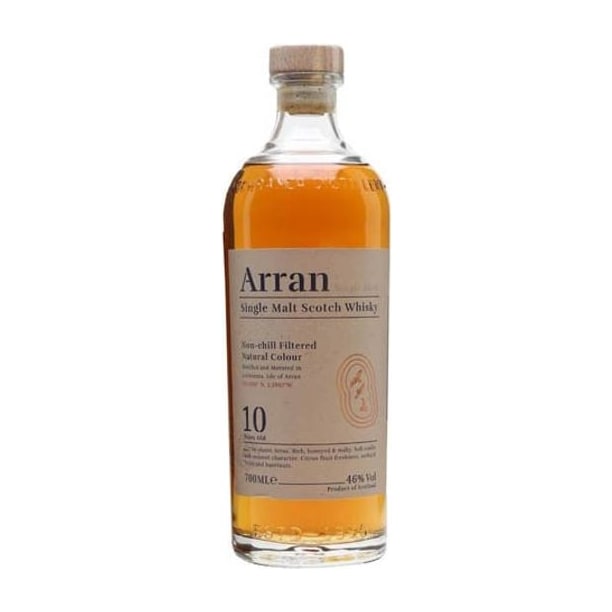
An island distillery that isn't owned by a drinks giant — a clean, unpeated house style of citrus, orchard fruit and honey.
The key to Arran is two words: independent and island. Where most famous Scotch belongs to a large drinks group, Arran was founded in 1995 by Harold Currie, a former Chivas/Seagram director, with private money — and specifically to bring spirit back to an island that had gone without legal distilling for a long time. So Arran is talked about less for an old name than as a case study in how far a modern independent, started from scratch, can get.
Its direction is unpeated. If you come expecting Islay smoke, you'll be off the mark. Arran uses little to no peat, so the malt's own bright fruit leads — citrus, green apple, pear, honey. It matures in ex-bourbon and ex-sherry and is often finished in wine casks like Amarone, Sauternes and port, which gives each release a slightly different grain and makes choosing between them part of the fun.
Peat lovers may still see the name and pause. In 2019 Arran opened a second distillery, Lagg, in the south of the island and handed the peated style over to it. So the classic Arran from Lochranza is unpeated, with Lagg as its peated sibling. If you want a smoky island whisky, look to Lagg; if you want the clean, fruity side, Arran is the one.
For a first bottle the 10yo is the easy choice. It shows the house citrus, orchard fruit and honey plainly, and the price is sensible. If sherry sweetness and dried fruit are your thing, move to the Sherry Cask; if you want more aged depth, climb to the 18. The wine-cask finish series has plenty of variation, and working through them one at a time, once you know the house style, is its own reward.
Arran's value lies not in an old name but in the fact that a from-scratch independent distillery, started in 1995, established a recognised unpeated house style in barely two decades. Prices stay sensible, so it earns a reputation as a bottle people actually open, while limited single casks fill the collector tier.
Prices are approximate retail · limiteds are volatile — not a personal tasting score
Arran's basis is unpeated. With little to no peat smoke, the malt's own citrus, orchard fruit and honey come straight through. It matures in ex-bourbon and ex-sherry casks, with a wide range of wine-cask finishes — Amarone, Sauternes, port — laid on top. Neither Islay-smoky nor a heavy sherry bomb, it's a clean, bright name that shows what an unpeated island malt tastes like.
Arran was founded in 1995 by Harold Currie, a former director at Chivas/Seagram, at Lochranza on the north of the Isle of Arran. It brought legal distilling back to an island that had gone without it for a long time, and became a symbol of Scotland's modern 'new wave' of independents — privately owned rather than run by a large corporation. In 2019 the company opened a second distillery, Lagg, in the south of the island to make the peated style, splitting the roles: Lochranza's Arran unpeated, Lagg peated.
Among enthusiasts Arran carries a reputation as an honest island malt for the money. Two things come up often: that it isn't owned by a drinks giant, and that being unpeated lets the malt's own fruit show clearly. In other markets it is gradually becoming a name beginners reach for when they want sherry and wine-cask sweetness without smoke.
Bright and leaning to fruit and honey, this unpeated malt suits an aroma-gathering tulip glass — a Glencairn or copita. A big lump of ice shuts the delicate fruit down. Most sit around 46%, so water is rarely needed, though a single drop opens the sweetness on higher-proof bottlings like the Sherry Cask. Hold it by the base and follow the citrus and orchard fruit as they open.
Sources · Production & range — arranwhisky.com · History — Isle of Arran Distillers · Product image — Arran