
Springbank
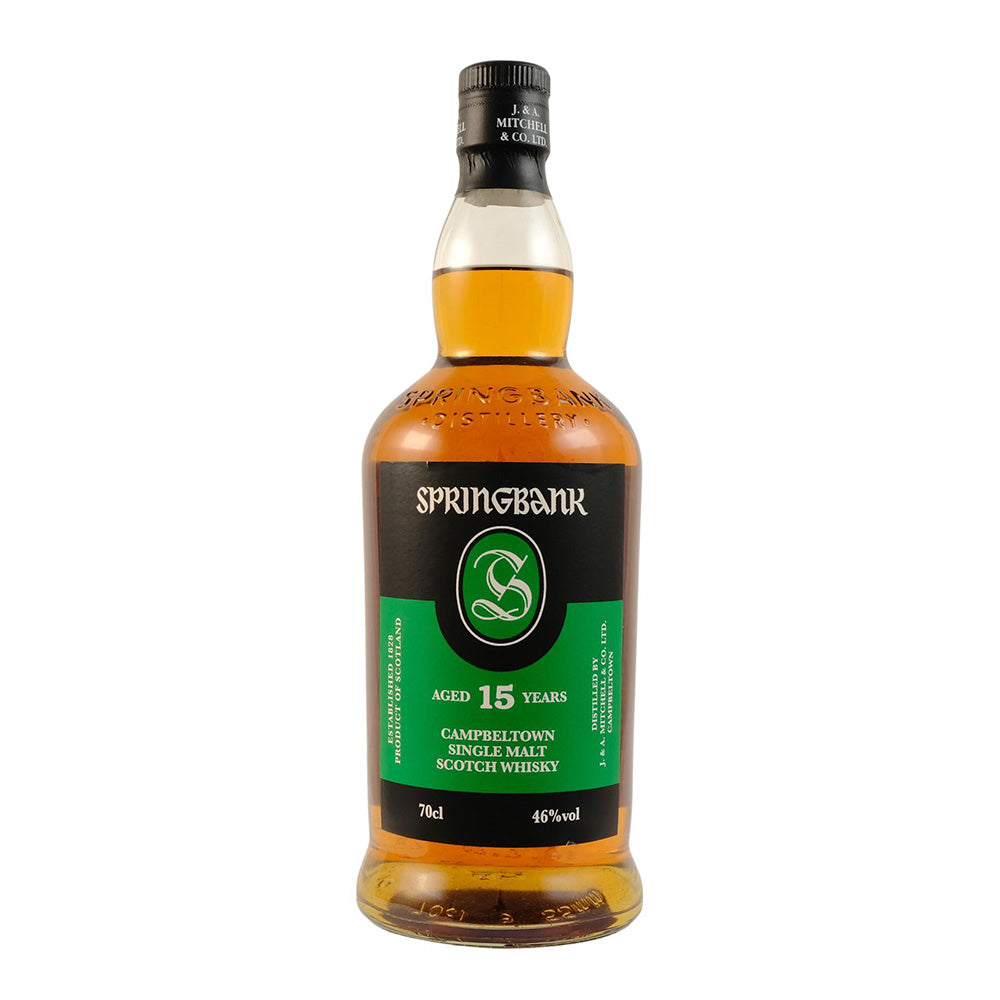
Malting to bottling, all on one site — the last pride of Campbeltown.
Springbank is a name whisky enthusiasts hold especially dear. It's one of the few distilleries left in Campbeltown — once the heart of the whisky industry, now all but vanished — and a family-owned holdout for the old ways.
What makes it special is that it does everything itself. From floor maltings, where the barley is germinated, all the way to bottling, it's all done by hand on one site. Processes that big distilleries outsource for efficiency, Springbank keeps in-house. The oily, faintly salty, oddly savoury character you rarely meet elsewhere comes from exactly that.
These days small production plus surging popularity make it hard to find. That brings out the "isn't it overrated?" line — but the way it's made, at least, is real rather than marketing. People say that if you come across the 10 at list price, grab it without hesitating.
List prices are relatively modest, but low volumes mean bottles trade at several times RRP on the secondary market. Queues outside shops on release day are routine, and limited runs like Local Barley command especially high premiums. By total auction value Springbank ranks second after Macallan, yet its much lower average per bottle keeps a broad base of collectors in the market.
Auction & pricing — The Spirits Business (Oct 2025), whiskyhunter · list prices are approximate retail · not a personal tasting
Springbank's hallmark is that it does everything itself. Where most distilleries buy in their malt, here the barley is bought, spread on the floor and germinated by hand — floor malting through to bottling, all on one site. The flagship Springbank uses an unusual 2.5-times distillation (part twice, part three times) for an in-between strength and oily texture, and is bottled non-chill-filtered with no added colour. The same equipment yields three characters: the heavily peated Longrow, and the unpeated, triple-distilled Hazelburn.
Licensed in Campbeltown in 1828, on the site of an illicit still once run by Archibald Mitchell. His relatives, the Reid brothers, built the licensed distillery, and the Mitchell family later took it over. J&A Mitchell remains family-owned to this day, and also owns Cadenhead's, the oldest independent bottler, and the neighbouring Glengyle (Kilkerran) distillery. As Campbeltown's thirty-plus distilleries closed one after another, Springbank survived — the main reason the region still exists.
Springbank barely advertises, yet it has a cult following worldwide. Output is small, so it is hard to find in any market, and in Korea, too, news of a release sells out fast. Rather than lavish sherry sweetness, enthusiasts prize its brine, oily texture and gentle peat, and many call it the real thing. Its list price is relatively fair — though actually buying at that price is the hard part.
With layers of brine, oily texture and gentle peat, it suits a tulip-shaped glass that gathers aroma upward — a Glencairn or copita. A thick tumbler with a big ice cube shuts those subtle layers down. The 40%-ish 10 and 15 need little or no water, but higher-strength bottles like the 12-year Cask Strength or Local Barley open up with a single drop.
Sources · Production & range — springbank.scot · auction & pricing — The Spirits Business (Oct 2025), whiskyhunter · history — Wikipedia 'Springbank (distillery)' · product image — Springbank