
Bulleit
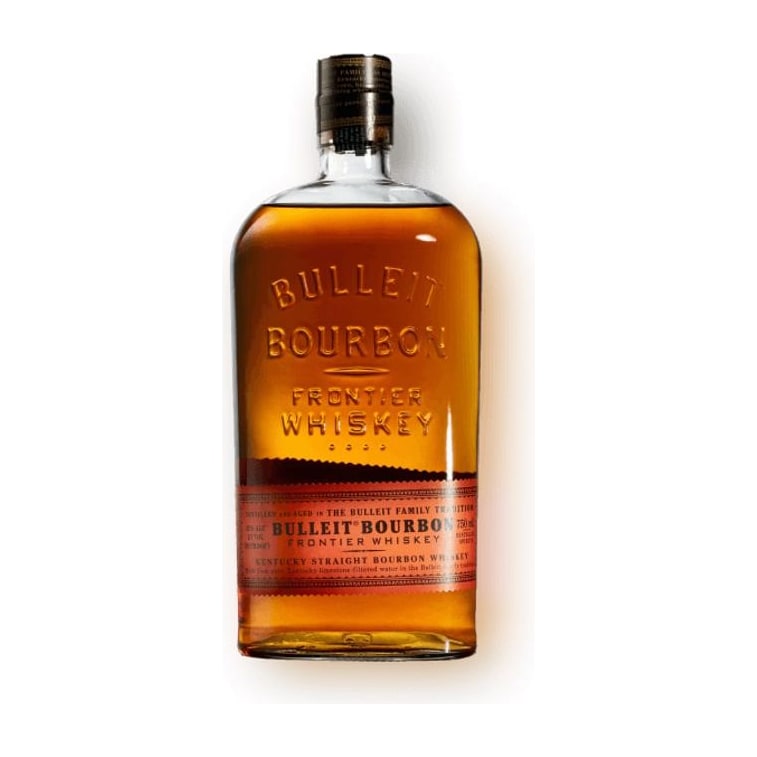
Frontier Whiskey — a rye-heavy, spicy, dry Kentucky bourbon that bartenders reach for first.
Sum Bulleit up in a phrase and it's "a bourbon with a lot of rye." Bourbon has to be at least 51% corn, and where most bourbons follow the corn with wheat or a small amount of rye, Bulleit pushes the rye to around 28%. That high-rye mash bill gives it a spicy, dry, angular character. Come to it expecting a soft, sweet bourbon and the little kick of spice is a surprise — but that kick is the whole identity.
There's some confusion about the brand's age. The 1830s on the bottle comes from a family story about Augustus Bulleit, an ancestor and tavern keeper who made a rye-heavy whiskey; the Bulleit we actually drink is a modern brand his descendant Tom Bulleit founded in 1987. The angular, apothecary-style bottle with its slanted label is a deliberate design choice, reaching for an old frontier feel to sell the "Frontier Whiskey" idea.
The way it's made changed only recently, too. For a long time Bulleit had no distillery of its own and was a sourced whiskey, bottling spirit from other Kentucky and Indiana distilleries — Four Roses and the MGP plant among them. It didn't become a genuinely self-made brand until the Shelbyville, Kentucky distillery opened in 2017. So it's worth knowing that the source of the spirit can differ depending on the vintage.
Above all, Bulleit is a bar whiskey. Its spicy, dry high-rye character divides people neat, but it refuses to be flattened by syrup and bitters, which makes it excellent as an Old Fashioned or Manhattan base. If you're thinking of mixing cocktails at home, the standard Bulleit Bourbon is a sensible starting point — cheap enough and easy to find anywhere. Want the rye spice pushed further forward, move up to Bulleit Rye.
Bulleit's value is in access rather than scarcity. It sits on almost every back bar, and its worth is the reputation of a dependable, hard-working bourbon that forms the base of an Old Fashioned or a Manhattan. The Barrel Strength and 10 Year hold up the tier above.
Prices are approximate retail / duty-free · batches vary — not a personal tasting score
Bulleit's signature is rye. Bourbon must be at least 51% corn, but Bulleit Bourbon runs a high-rye mash bill that pushes rye to around 28% among the remaining grains. That rye gives the spicy, dry character; new charred American oak adds the vanilla, caramel and oak. Alongside it sits Bulleit Rye, roughly 95% rye, with the spice pushed further to the front. For years Bulleit was distributed as sourced whiskey, bottling spirit from other distilleries, until it opened its own distillery in Shelbyville, Kentucky in 2017.
Bulleit's story runs on two tracks. The brand traces its roots to a family recipe said to come from Augustus Bulleit, an 1830s tavern keeper who used plenty of rye — but the Bulleit of today is a modern brand his descendant Tom Bulleit revived in 1987. The angular apothecary-style bottle with its embossed glass and slanted label built the 'Frontier Whiskey' identity. Through the 2000s it passed to Seagram and then Diageo, spreading worldwide, and the 2017 Shelbyville distillery closed out its sourced-whiskey era.
Bulleit made its name among bartenders before enthusiasts. Its spicy, dry high-rye character isn't buried by syrup or bitters, so it works as the base of an Old Fashioned or Manhattan. Drunk neat it divides opinion on the peppery, dry finish — though many argue that angularity is exactly the point. It has settled in as the name that comes up first when people think 'a bourbon for cocktails.'
Being spicy and dry, Bulleit is fairly sensitive to how you drink it. To read the aroma and spice, pour it neat into a tulip glass like a Glencairn or copita; at around 40% a drop or two of water opens the oak and vanilla. But Bulleit's real stage is a rocks glass with a big cube, and cocktails. In an Old Fashioned the rye spice locks in with sugar and bitters and earns its place. Decide neat-or-cocktail first, then pick the glass.
Sources · Production & range — bulleit.com · History — Diageo · Product image — Bulleit