
Canadian Club
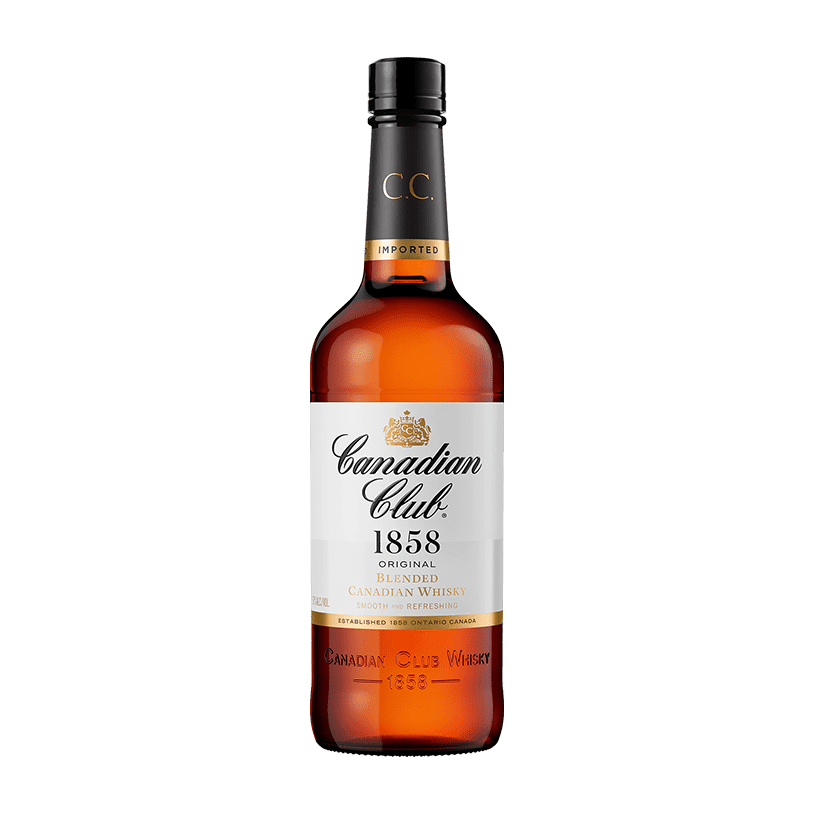
A distillery an American built in Canada. Under Prohibition its whisky crossed the Detroit River into the United States.
Prohibition is never far from any account of Canadian Club. The distillery stood on the Canadian bank of the Detroit River, and the other bank was the United States. A whisky factory next door to a country that had just banned drink — the rest writes itself. That decade became brand mythology, and it still turns up in the marketing.
The whisky itself keeps no such company. It is light, sweet, and hard to get a grip on. That is why it is cheap, and why it goes into highballs. Expecting a complicated nose from a bottle that costs less than lunch for two was never realistic.
One detail is worth keeping. Canadian whisky is usually aged grain by grain and blended at the end; Canadian Club reverses the order and marries the whiskies before the barrel. How much that decides the flavour is arguable, but it does explain why this one tastes so seamless.
If you are buying, settle on the job first. For highballs, a bottle of 1858 is the whole answer and paying more is wasted. If you mean to drink it neat, start at Classic 12. There is very little worth agonising over in between.
Canadian Club's value lies in access rather than scarcity. The 1858 flagship sits at the cheap end of any supermarket shelf, and Classic 12 puts an age statement within reach for far less than a 12-year-old Scotch. The 20 and 21 Year cost considerably more but were never made in volume, and the Chronicles releases, built from stock of forty years and more, trade on their own limited-edition terms.
Prices are approximate retail · Not a personal tasting score
Canadian Club is made at the Hiram Walker distillery in Windsor, Ontario. It follows the Canadian build — a corn-based whisky lifted with rye — but where other Canadians blend fully matured stock, here the whiskies are married before they go into barrel and age together. That order, the brand has long argued, blurs the seams between the grains and leaves a smoother texture. The result is light and sweet, with oak and vanilla arriving as the age statements climb.
In 1858 Hiram Walker, an American from Massachusetts, built a distillery across the Detroit River in Ontario and, around it, a company town called Walkerville. His whisky became a fixture in American gentlemen's clubs and was sold as Club Whisky until American distillers pushed for the country of origin on the label, which gave it the name it still carries around 1890. During Prohibition in the 1920s, its position one river away from the United States made it a symbol of the smuggling trade. Ownership has changed hands repeatedly; the brand now belongs to Suntory Global Spirits, formerly Beam Suntory, and the whisky is still distilled in Windsor.
In North America, Canadian Club reads as your father's whisky — an impression its own advertising leaned into in the 2000s. In Korea it turns up on the cheap shelf of the supermarket whisky aisle, bought most often as highball material. In Japan, the highball habit has given it the same role alongside ginger ale and soda.
Light and smooth, it belongs in a tall glass with plenty of ice for highballs and ginger ale. Classic 12 and up, and the spice-forward 100% Rye, reward a Glencairn neat, where the rye grain and oak come through.
Sources · Production & range — canadianclub.com · History — Wikipedia 'Canadian Club', 'Hiram Walker' · Product image — Canadian Club