Hibiki
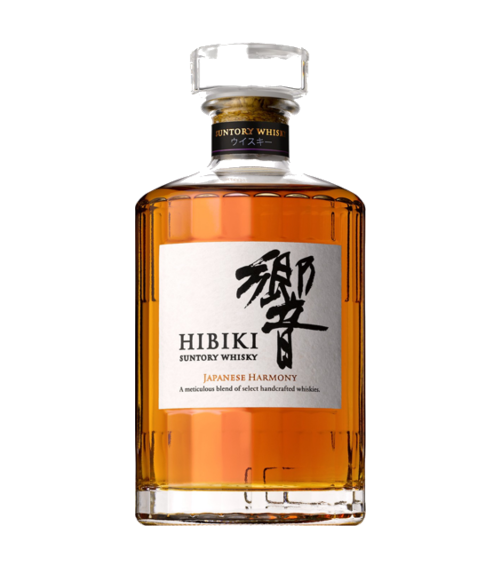
The icon of Japanese blends, weaving Yamazaki, Hakushu and Chita into one — its 24-faceted bottle stands for the 24 micro-seasons.
Hibiki is the face of Suntory's Japanese blended whisky. Its 24-faceted bottle embodies the concept of "harmony," and indeed the delicate balancing of many component whiskies is the heart of this dram. Smooth and bright, it's easy to take even on a first sip.
The catch is the price. When the Japanese whisky boom hit in the 2010s, demand raced far ahead of supply, and age-stated bottles like the Hibiki 17 were discontinued or priced at whatever the seller asks. What you'll usually find on the shelf now is "Japanese Harmony."
A misconception worth flagging: the belief that "Japanese whisky is all authentic and well-aged." In reality, as the market overheated it became common for some products to include imported bulk whisky or to drop the age statement. Look at what's inside, not the mood of the label.
My suggestion: don't pay a premium for the discontinued 17 — start with Harmony. Neat to enjoy the aroma, or as a highball for easy drinking; it works well both ways.
Hibiki's value was lifted by the Japanese whisky boom and scarcity together. The 17 and 21, cut or discontinued for want of aged stock, trade at multiples of list on the secondary market, and the 24-faceted bottle — etched into Western minds by 'Lost in Translation' — became the brand's symbol. Even the Harmony flagship was, for a time, hard to find at list price.
Discontinuation — Suntory · Prices are approximate secondary-market figures (highly variable) · Not a personal tasting score
Hibiki is a blend Suntory marries from the malt whiskies of its Yamazaki and Hakushu distilleries and the grain whisky of Chita. Some stock is matured in mizunara — Japanese oak — for an oriental nuance of sandalwood and incense. The heart of it is the harmony of many whiskies, and the 24-faceted bottle stands for that balance and Japan's 24 micro-seasons.
It launched in 1989 for Suntory's 90th anniversary, a prestige blend distilling the master blender's craft. As Japanese whisky swept world competitions in the 2000s, Hibiki grew scarce, and the 17 and others were discontinued for want of aged stock. Frequent on screen and in media, it became a face of Japanese whisky in the West too.
In Korea, Hibiki has become shorthand for a 'premium gift' alongside the rise of Japanese whisky. Soft, balanced taste plus a striking bottle mean its name carries even to those who know little of whisky. Scarcity makes it hard to buy at list, so many chase it through travel-retail or ballots.
To carry its delicate balance a nose-gathering glass — Glencairn or copita — is good, but a Japanese-style mizuwari or highball also shows Hibiki's grain well. Harmony takes happily to a light splash of soda, while aged expressions like the 21 and 30 reward being left quietly in the glass and savoured slowly.
Sources · Production & range — suntory.com (Hibiki) · Discontinuation — Suntory · Prices — secondary market · Product image — Suntory