
W.L. Weller
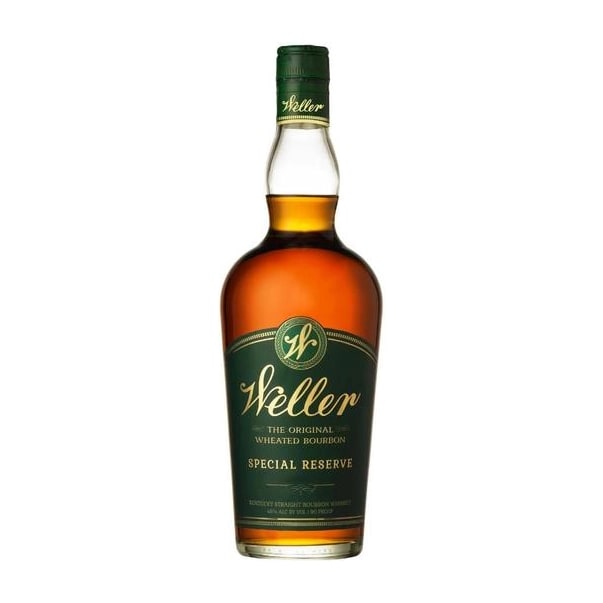
Poor man's Pappy — the wheated bourbon that shares a mashbill with Pappy Van Winkle.
The key to Weller is one grain: wheat. Bourbon is more than half corn, with rye usually filling out the rest — Weller puts wheat there instead. That removes the peppery bite of a rye bourbon and brings caramel and vanilla sweetness roundly to the front. And the fact that this wheated mashbill is the same lineage as the legendary Pappy Van Winkle is what changed Weller's fortunes.
That's where the nickname "poor man's Pappy" comes from. Making a wheated bourbon from the same family as the near-unobtainable Pappy, at a far lower list price, sent demand piling in. The catch is that you can't actually buy it at that list price. It vanishes the moment stores put it out, and the secondary market tacks on several times the cost. Even Special Reserve is hard to catch at retail, and the 12 Year and BTAC bottles live in the world of allocation and lottery.
There's a misconception worth clearing up: Weller is not Pappy. They share the wheated mashbill and a historical Stitzel-Weller root, but today they're different brands bottled differently. The hope of "Pappy flavour on the cheap" is only half right. There's a family resemblance, but it isn't the same whiskey.
If you're buying, the realistic order is this: rather than chasing the 12 Year or William Larue Weller at a secondary premium, grab the Antique 107 if you find it near retail. Its proof shows off the sweetness and weight of a wheated bourbon best, and a few drops of water open the nose further. If a soft entry point is all you're after, Special Reserve is plenty.
Weller's price comes from sharing a wheated mashbill with Pappy Van Winkle. Nicknamed "poor man's Pappy," it trades at multiples of retail on the secondary market, and the 12 Year and the BTAC William Larue Weller are especially hard to find. Special Reserve and Antique 107, though, can still turn up at retail if you're lucky.
Retail and secondary approximations · varies with allocation · not a personal tasting
Weller is a wheated bourbon — it uses wheat, rather than rye, as the second grain after corn. That drops out the peppery spice of a rye bourbon and pushes caramel-and-vanilla sweetness and a round texture to the front. This wheated mashbill is the same lineage as the legendary Pappy Van Winkle, which is why Weller has long been called poor man's Pappy. It's now made by Sazerac at the Buffalo Trace distillery in Frankfort, Kentucky.
The name comes from William Larue Weller, a 19th-century Louisville whiskey merchant credited with being the first to use wheat instead of rye in bourbon. His firm later joined with master distiller Pappy Van Winkle to become Stitzel-Weller, founding the wheated-bourbon lineage. The Weller label is now produced under Buffalo Trace (Sazerac), and its value soared with the bourbon boom of the 2010s.
Weller became famous as much for being hard to get as for how it tastes. Word that it shares Pappy's mashbill sent secondary prices climbing, and in the US it's a fixture of store-opening rushes. In Korea, as the bourbon crowd has grown, the Antique 107 and 12 Year sit high on wish lists. Soft and sweet, it's approachable as a first bourbon — yet that same popularity makes it hard to meet at retail.
It's soft for its proof but sweet and full in aroma, so a glass that gathers the nose — a Glencairn or copita — lets the caramel and vanilla open when sipped neat. Special Reserve at 45% needs little water; higher-proof bottles like the Antique 107 or Full Proof take a few drops to settle the heat. Given the price, it seems a waste to shut the aroma down under a big ice cube.
Sources · Production and range — buffalotracedistillery.com · history — Sazerac / trade sources · auction — secondary market · product image — Buffalo Trace / Sazerac