A Parisian café, late 19th century, five in the afternoon. The waiter brings a glass holding a small measure of green spirit, along with a sugar cube, a flat perforated spoon, and a carafe of iced water. The patron lays the spoon across the rim, rests the sugar cube on top, and drips the cold water down onto it, one drop at a time. As the water soaks the sugar and runs into the glass, the clear green spirit begins to cloud from the top down. The moment the transparent liquid turns a milky, pale green is the one the French called the louche.
Absinthe is a peculiar drink. Its apparatus and its ritual are more famous than the spirit itself. A dedicated glass with a mark cut into it, a slotted silver spoon, a fountain that trickles water from several taps — few drinks demand so much equipment to make a single serving. And above all, absinthe is not finished until you cloud it with water.
It only becomes a drink once it clouds
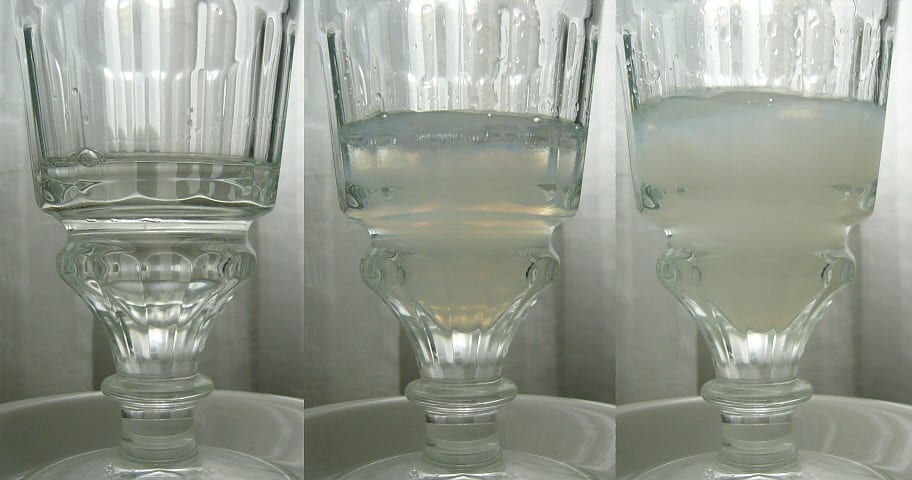
The orthodox method is the one called à la française. First you pour a mouthful of absinthe into the glass — around 30 millilitres. Across the rim you lay a flat spoon riddled with holes, and on it a single sugar cube. Then you let ice-cold water fall onto the sugar, very slowly. No rushing. The water dissolves the sugar and drips into the glass a drop at a time, and you keep going until the ratio of water to spirit reaches roughly three to five times.
Wherever the water meets the spirit, the green unspools like milk. Absinthe carries essential oils drawn from anise and fennel; these dissolve readily in alcohol but poorly in water. So as the water lowers the alcohol strength, the dissolved oils re-emerge as countless tiny droplets that scatter the light. That is why the clear spirit turns cloudy. Louche is French for "shady, murky" — the name was pinned directly onto the clouding itself.
The sugar cube isn't only for sweetness. Absinthe carries a strong bitterness from wormwood, and the sugar softens that edge. Some skip it, by taste. Either way, the point is to cloud it slowly. Pour the water in fast and the aroma is blunted and the louche never rises evenly. This drink asks its drinker for a moment of patience.
A mouthful marked into the glass
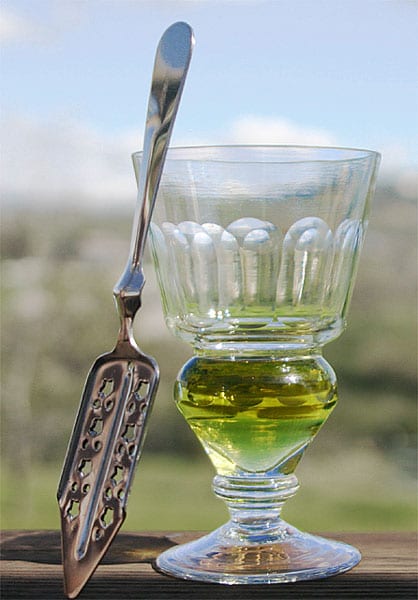
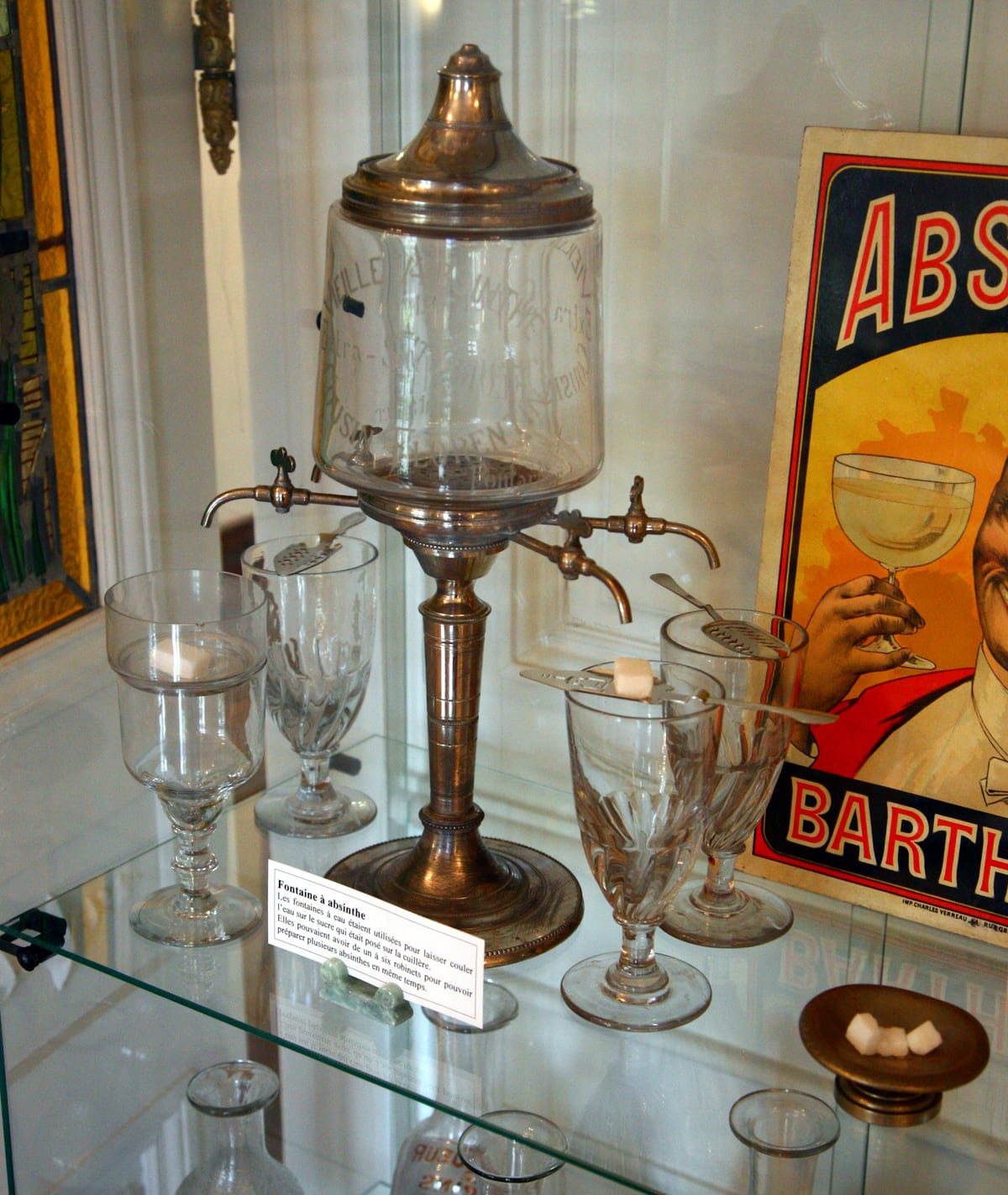
Look at an absinthe glass and the lower part bulges out, or a small reservoir hangs beneath a narrow neck. It isn't decoration. That swollen spot is the gauge for a single measure of absinthe. When a café sold the drink, an uneven pour from glass to glass would be a problem, so the correct line was built into the glass itself. Patron and waiter alike simply filled to that mark.
The most famous of these is the Pontarlier glass. Pontarlier is a small French town near the Swiss border, the heartland of absinthe where the distilleries clustered in the 19th century. The town's name became shorthand for the glass. Fill a reservoir-based glass to that line, trickle in the water, and the spirit and water mingle slowly through the narrow neck, making the louche bloom all the more dramatically. The very shape of the glass was tuned for this drink.
A spoon full of holes
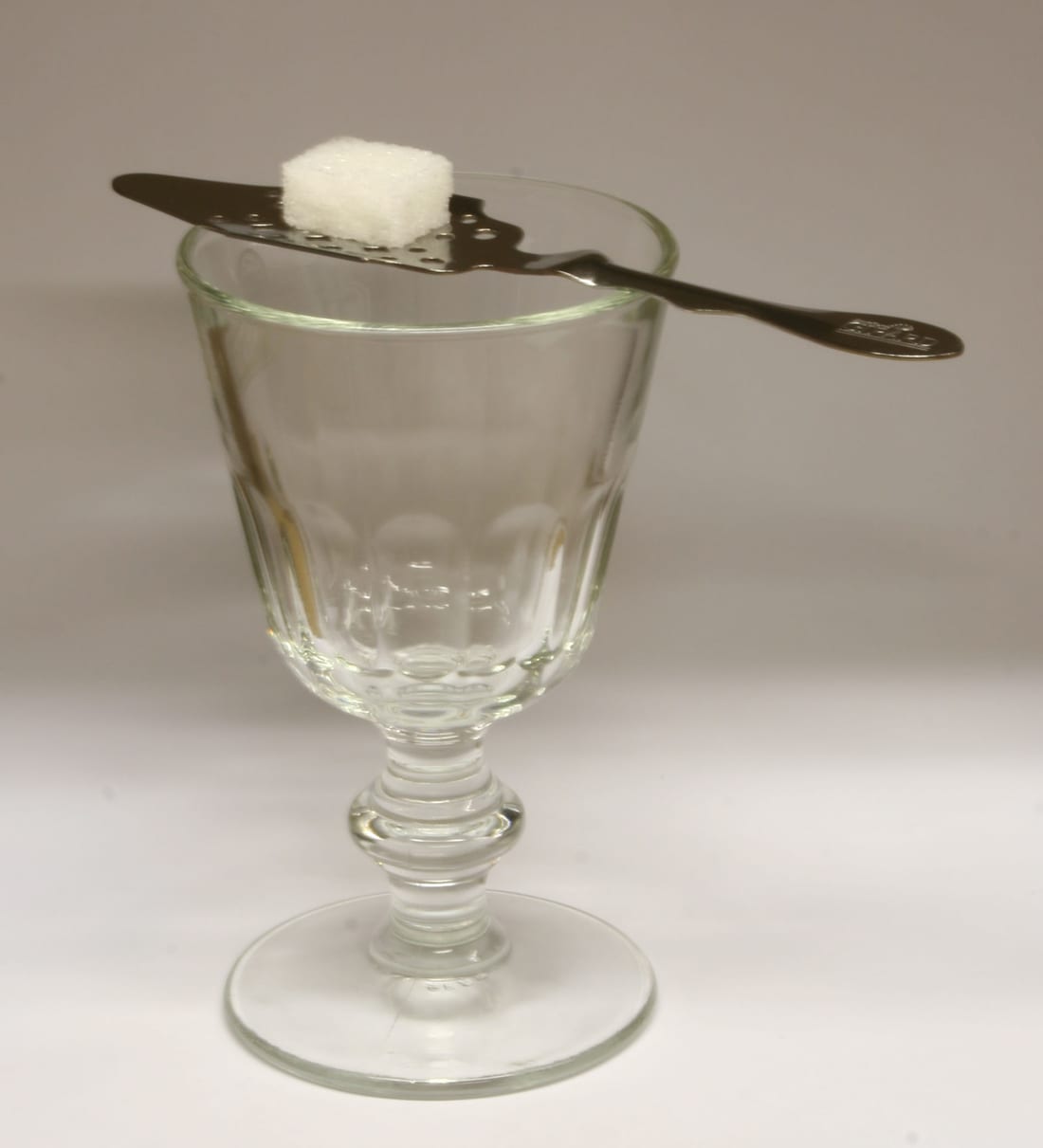
An absinthe spoon is not for scooping soup. It is a flat, broad blade pierced with holes or slots, laid across the rim to serve as a cradle for the sugar cube. It's built so the water passes through those holes, dissolving the sugar as it falls into the glass below.
The spoon spread widely from the mid-1870s, when sugar cubes first began to be manufactured in bulk. As absinthe became a national drink through the 1880s and '90s, the spoons grew common too, and soon they branched into every shape imaginable — leaves, the Eiffel Tower, hearts, lattice patterns, each with its own finely cut design. Distilleries made spoons stamped with their brands and handed them out as advertising. On today's antique market, the spoons, glasses, and fountains of that era are collected together under the name absinthiana. The drink vanished, but its small tools survived to testify to a whole era's taste.
A fountain that trickles water
For a glass or two a carafe is enough, but when a café full of people drank together, that changed. Hence the absinthe fountain (fontaine à absinthe): a large glass vessel of iced water fitted with several taps, each dialled so a drop falls onto its own glass at a time. With no need to hold a carafe by hand, people could set their hands down and talk while their glasses slowly clouded.
The fountain's whole value lay in that word: slowly. Absinthe opens its aroma cleanly and clouds evenly only when the water seeps in bit by bit. The fountain kept that slow pace in place of a human hand. Glass, spoon, and fountain — all three objects around absinthe were saying the same thing: don't hurry.
The green hour
In late-19th-century Paris, around five in the afternoon was called the green hour (l'heure verte). It was the time when people, their day's work done, sat down in the cafés and began to cloud their absinthe. This high-proof, heavily aromatic green spirit became a habit of the city, and people gave it a nickname: the Green Fairy (la fée verte).
Painters and poets in particular kept absinthe close. Degas left L'Absinthe (1876), a woman sitting blankly in a café with a glass of absinthe before her; Manet, Toulouse-Lautrec, Van Gogh, and Rimbaud, Verlaine, and Oscar Wilde all drank it. Wilde is remembered for one line or another about how three glasses of absinthe felt, and Hemingway would later borrow the title of one of his own novels, Death in the Afternoon, for a cocktail made with it. A drink cheap and strong enough for anyone was, at the same time, mythologised as the drink of artists.
From Green Fairy to demon
The myth did not last. Absinthe contains thujone, a compound from wormwood, and a rumour spread that it brought on hallucinations and madness. "Absinthism" — the idea that absinthe drove people insane — rose as a social panic. Experiments in which wormwood oil was fed to animals to induce seizures were dragged out as evidence, yet the amount of thujone actually in a glass of absinthe was tiny. The real trouble lay elsewhere: an alcohol strength approaching 70 percent, and the harmful additives mixed into cheap versions to fake the colour.
What pulled the trigger was an incident in 1905. Jean Lanfray, a French labourer living in Switzerland, murdered his pregnant wife and two young daughters that August. He had been drinking wine and hard liquor heavily since that morning, and among it all were two glasses of absinthe. Yet the world set every other drink aside and named absinthe alone as the culprit. A petition to ban it gathered more than 80,000 signatures, and Switzerland, after a 1908 referendum, banned absinthe by constitutional amendment in 1910.
Onto this were layered the interests of the wine trade and the swelling tide of the temperance movement. To wine producers, who saw cheap absinthe eating into their market, the drink was a thorn in the side. Absinthe fell like dominoes. The United States banned it in 1912, and France in early 1915. In a France on the eve of the First World War, the brand of "the drink that sickens the nation" hardened straight into law, and the Green Fairy vanished from the glass for nearly a century.
Clouding again
Absinthe never disappeared entirely. Britain had never banned it in the first place, and it was through Britain, at the close of the 20th century, that the embers of revival caught. Czech absinthe arriving in Britain in the 1990s began drawing attention once more.
That was also when science cleared its name. Analysis of old absinthe bottles showed thujone levels nowhere near enough to cause madness. The European Union set a thujone ceiling and permitted absinthe to be made again; the United States lifted its ban in 2007, and even France — so stubborn about it — repealed its century-old prohibition in 2011. The conclusion was that the Green Fairy was no demon, merely a very strong drink.
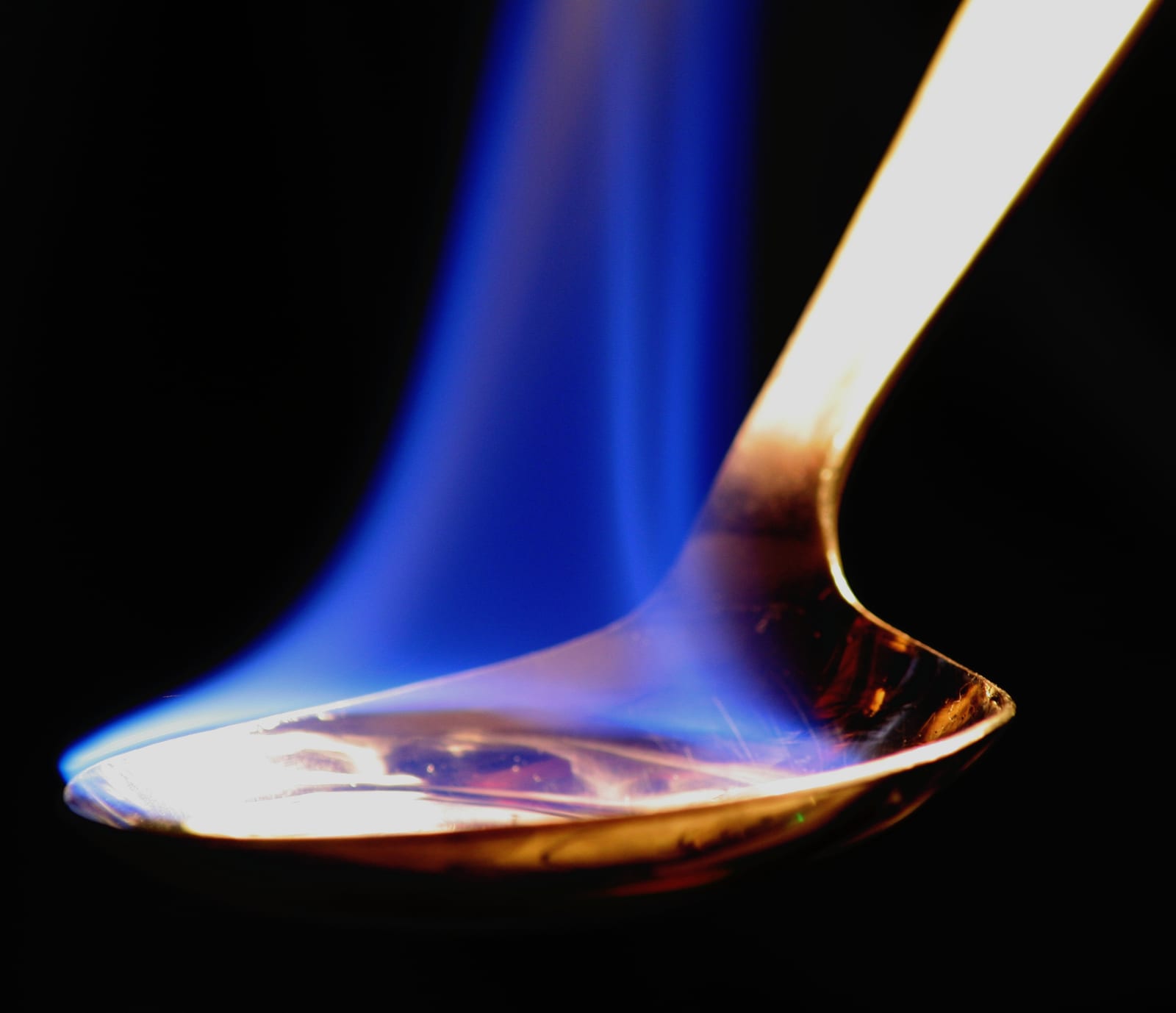
The road back did pick up one stray ritual along the way. This is the so-called "Czech" method, in which a sugar cube is soaked in absinthe, set alight, and the caramel dropped into the glass. The flame looks dramatic, so bars stage it readily — but it is closer to a marketing performance invented in the 1990s. More to the point, many of the Czech absinthes drunk this way lacked enough anise to cloud properly even with water. The absinthe you set on fire, in other words, has no louche — the very heart of absinthe. On the same soil where Bohemia's glassmakers built their reputation in crystal, absinthe alone lost its own ritual, edged out by the showmanship of a flame.
The right way to drink absinthe turns out to be the way of waiting. Fill the spirit only to the mark on the glass, lay the spoon across it and rest the sugar cube on top, and open the fountain's tap as if barely cracking it, letting the water fall drop by drop. Set your hands down and wait a moment, until the green unspools like milk and the aroma opens. Other drinks you pour and drink at once; this one only becomes a glass once you wait for it to cloud. That was the one thing glass, spoon, and fountain were all holding onto — do not hurry.
The louche mechanism, the absinthe spoon (bulk sugar-cube production from the 1870s), the reservoir and Pontarlier glasses, the absinthe fountain, and absinthiana — after Wikipedia, "Absinthe" and "Absinthiana." The Jean Lanfray murders (1905) and the Swiss (1910) and French (1915) bans — after Wikipedia, "Jean Lanfray." The US (2007) and French (2011) relegalisations and the thujone account — after Wikipedia, "Absinthe," and related reporting. Anecdotes about artists, including Degas's L'Absinthe (1876), follow widely cited sources.
Images — Wikimedia Commons: louche stages by Phoney (CC BY-SA 3.0) · reservoir glass by Eric Litton (CC BY-SA 2.5) · spoon and sugar by Cornischong (CC BY-SA 3.0) · absinthe fountain by Rama (CC BY-SA 2.0 fr) · flaming spoon by spacepleb (CC BY 2.0)