

Step into a traditional pub in Prague and you may witness a scene that surprises most first-time visitors: a bartender handing over a heavy glass mug filled almost entirely with thick, dense white foam, leaving barely a sip of liquid golden lager at the very bottom.
To an outsider, receiving a glass of 90% foam looks like a mistake or a joke. But in Czech beer culture, this is a deliberate and celebrated style of serving known as Mleko (the Czech word for "milk").
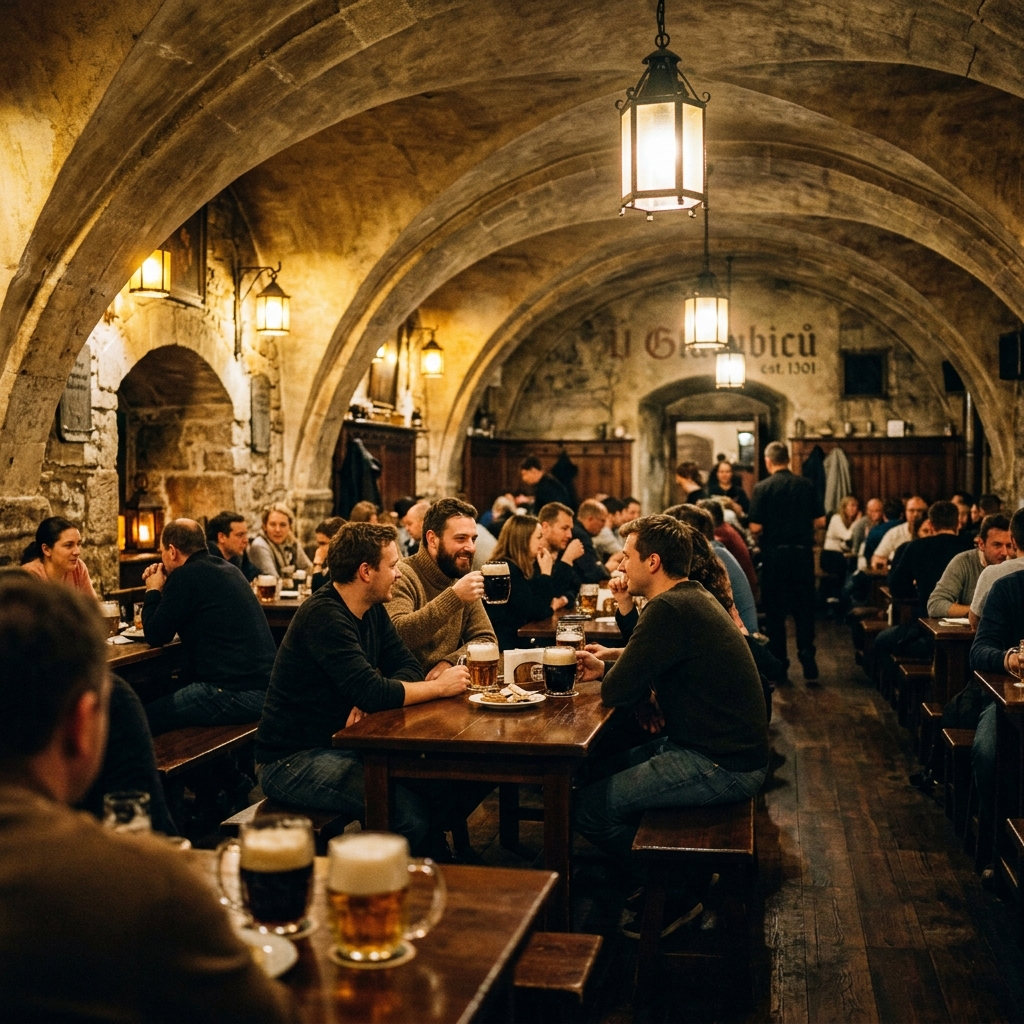
1842 Plzeň: From Opaque Tankards to Clear Glassware
To understand the relationship between Czech beer and glassware, one must travel back to 1842. Before that year, European beers were dark, cloudy, and inconsistent. In Bohemia, drinkers consumed beer from opaque tankards made of clay, wood, or pewter to hide the unappealing turbidity of the brew.
Everything changed in the western Bohemian city of Plzeň. A young Bavarian brewmaster named Josef Groll combined Plzeň’s exceptionally soft water, pale Moravian barley malt, and noble Saaz hops to create the world’s first clear golden lager: Pilsner Urquell.
The sparkling golden liquid topped with snow-white foam was far too beautiful to conceal inside opaque stoneware. Coinciding with the flourish of Bohemian glassblowing art, pub-goers abandoned stoneware in favor of clear crystal and heavy glass tankards, creating a brand-new drinking culture where sight and foam quality became paramount.
The Four Classic Pours of Czech Pub Culture
The Czech Republic leads the world in per capita beer consumption. For Czechs, foam is not wasteful air — it is an essential component engineered to alter texture, sweetness, and carbonation.
In a traditional Czech pub, ordering a beer from the same fresh keg involves choosing from four distinct pour styles:
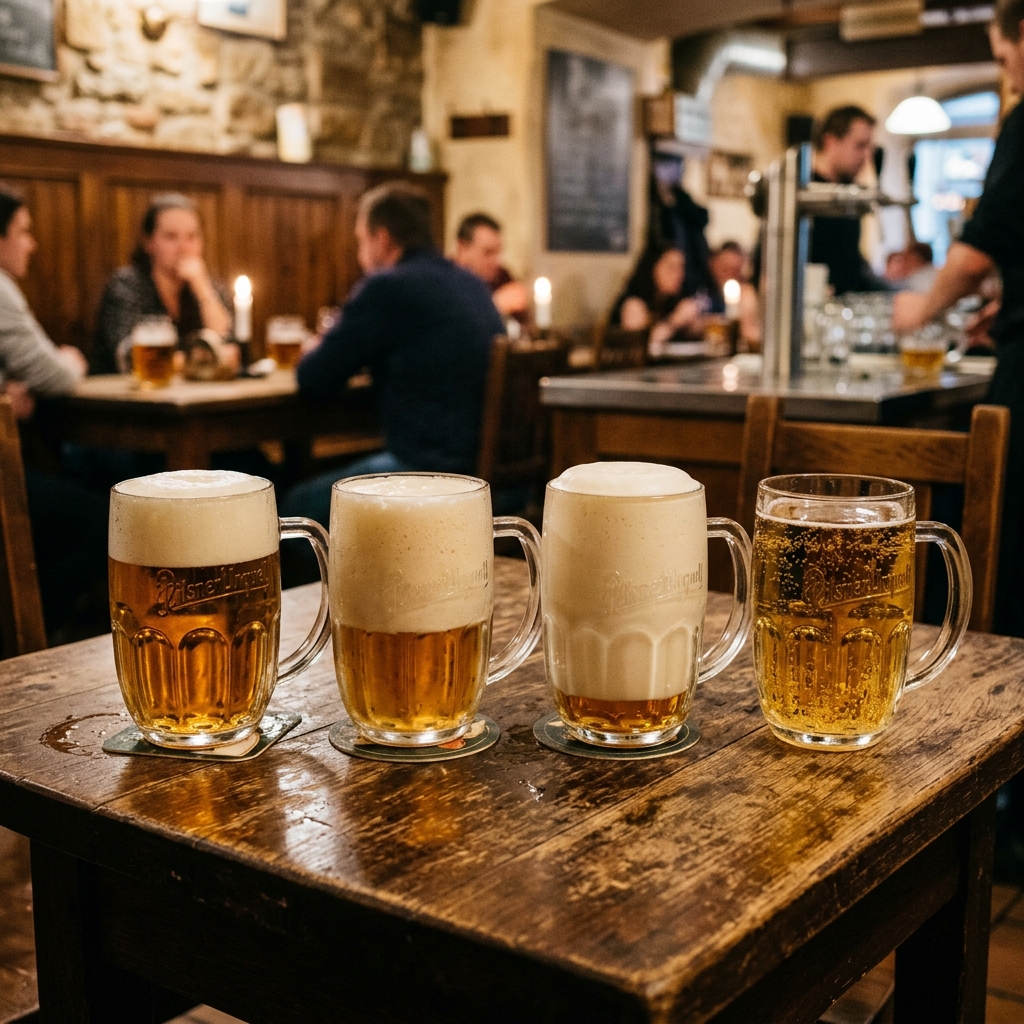
1. Hladinka: The classic gold standard. A crisp body of carbonated lager topped with two to three fingers (about 20%) of thick, wet foam. The first sip is silky, followed by the clean, bitter snap of Saaz hops.
2. Šnyt: Half beer, half foam (50:50). Originally poured by tapmasters to sample keg quality or by drinkers who wanted a light, quick glass before heading home.
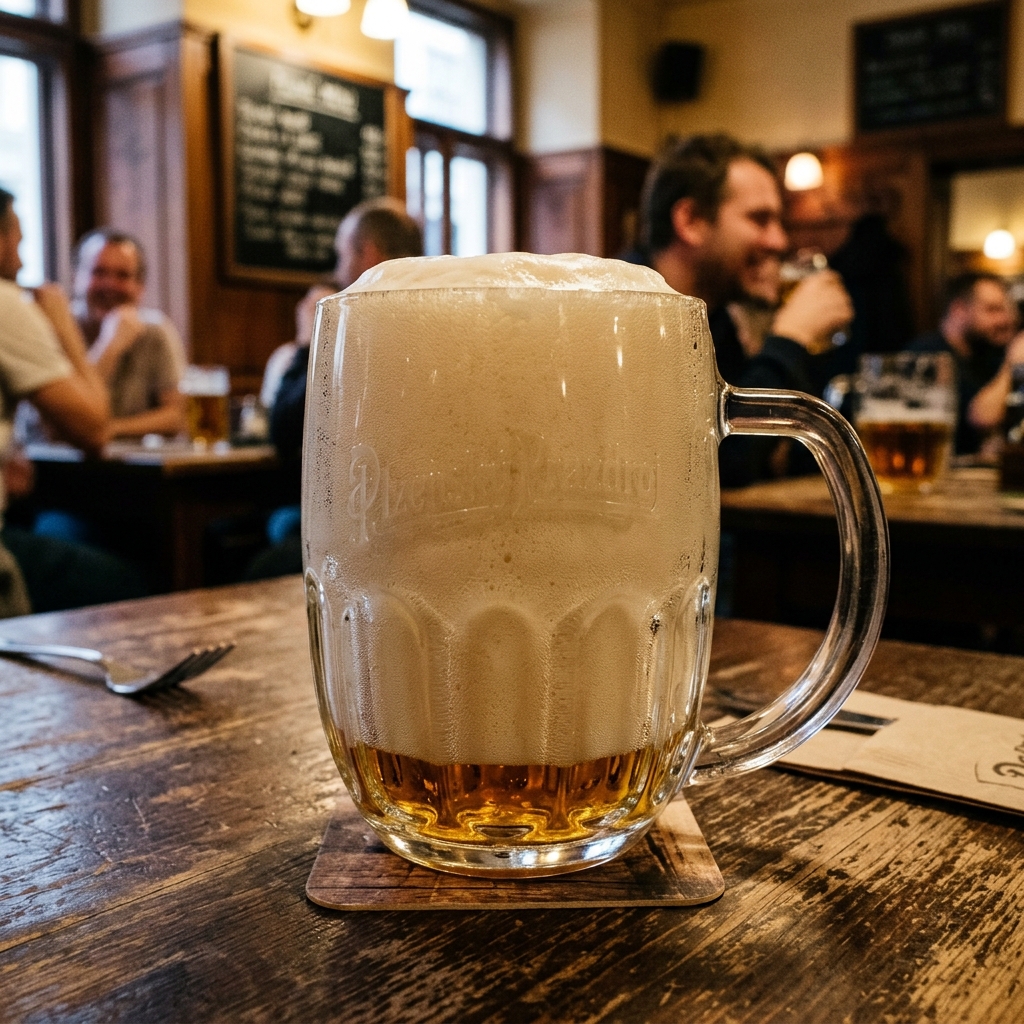
3. Mleko: The mug is filled entirely (over 90%) with micro-fine, wet foam. Carbonation is muted to near zero, unlocking a dessert-like malt sweetness and floral hop oils reminiscent of warm milk.
4. Čochtan: Zero foam, 100% liquid. Unsealed by foam, it packs maximum carbonation and intense hop bitterness — favored by purists seeking a sharp, fizzy bite.
The Science of Foam: Dry Foam vs. Wet Foam
When beer is forced rapidly through a standard vertical faucet, the resulting foam is Dry Foam — airy, brittle bubbles formed by harsh contact with atmospheric oxygen that quickly collapse into bitter dregs.
In contrast, Czech pubs produce Wet Foam — a dense, micro-bubble matrix saturated with liquid.
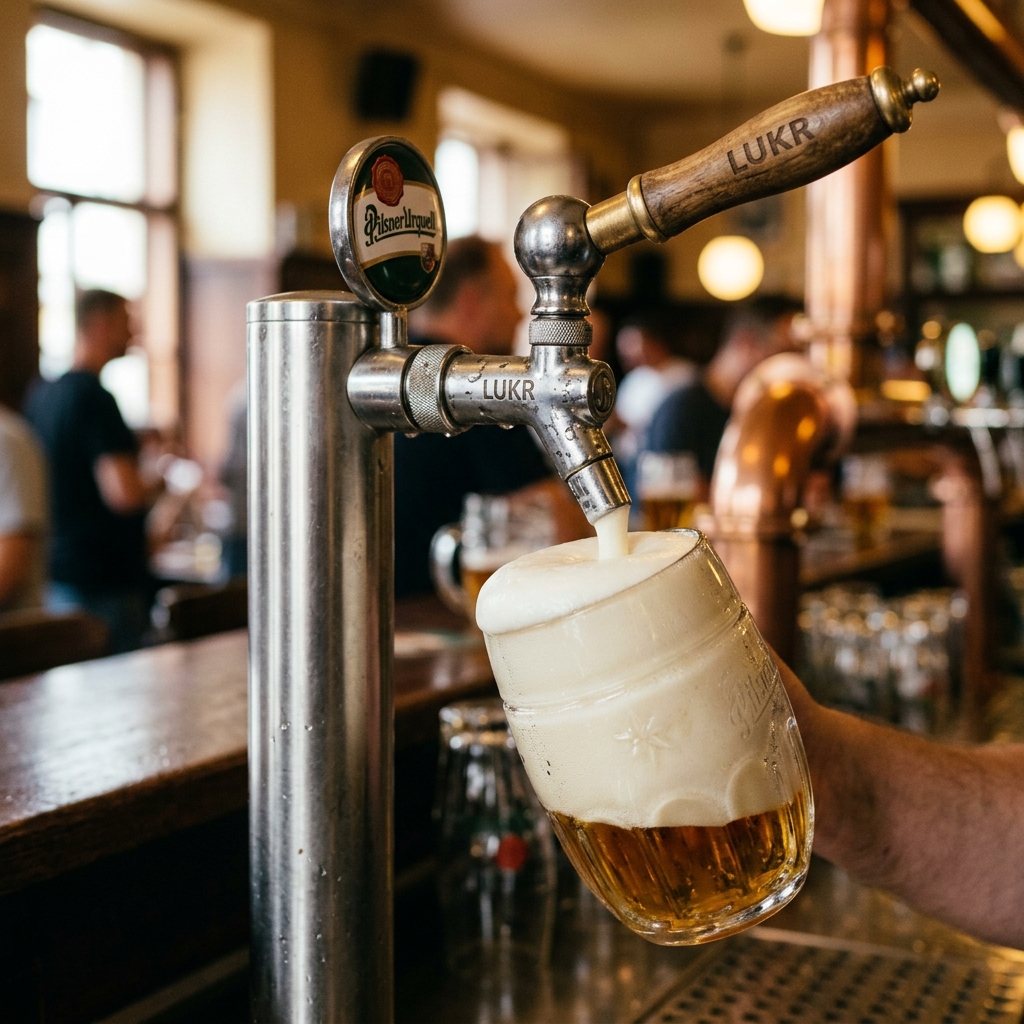
The secret lies in the LUKR side-pull tap, a triumph of Czech engineering. Featuring a horizontal lever with a ball valve and internal micro-mesh, the tap allows a skilled bartender to adjust the flow rate with surgical precision.
The tapmaster submerges the nozzle deep into the glass, laying down a blanket of wet foam first, then pushing liquid lager underneath it. Proteins (LTP1) and hop iso-alpha-acids form a micro-bubble lattice that seals the liquid beneath. This blanket prevents oxidation and maintains the beer at an optimal temperature of 6–8°C.
"The Brewer Cooks the Beer; The Tapmaster Makes It"
There is a famous proverb in Czech brewing culture: "Sládek pivo vaří, ale výčepní ho dělá." (The brewmaster brews the beer, but the tapmaster makes it.)
In the Czech Republic, a tapmaster (Výčepní) is revered as a true craftsman. A Výčepní never pours beer into a dry glass. Glasses are kept submerged in cold water and poured wet (Wet Glass technique), as microscopic friction on a dry surface would rupture delicate foam bubbles.
Mleko comes with one essential rule: it must be enjoyed immediately upon serving, ideally in one or two continuous gulps within two minutes before the foam collapses back into liquid.
Locals order Mleko for three reasons:
- The Dessert Ritual: After a heavy meal of svíčková or pork knuckle, a cool glass of sweet Mleko acts as a smooth, cleansing digestif.
- Low-Carbonation Comfort: Mleko offers a gentle option for drinkers sensitive to heavy fizz or strong alcohol spikes.
- Pub Hospitality: Historically, tapmasters poured Mleko as a friendly, discounted gesture to loyal patrons at closing time.
When the heavy glass meets your lips, cool, whipped creaminess yields to gentle cereal malt notes. Finishing a glass leaves a white foam moustache — the most genuine greeting a Prague pub can offer.