Order a whisky at a bar and there's a thought that crosses some people's minds. The glass is barely a third full. Is that it?
You look at the pour and wonder — is the bartender being stingy, or is this just how it comes? The beer at the next table is nearly overflowing. Why is whisky different?
That question has a fairly long answer.
On the Air Inside the Glass
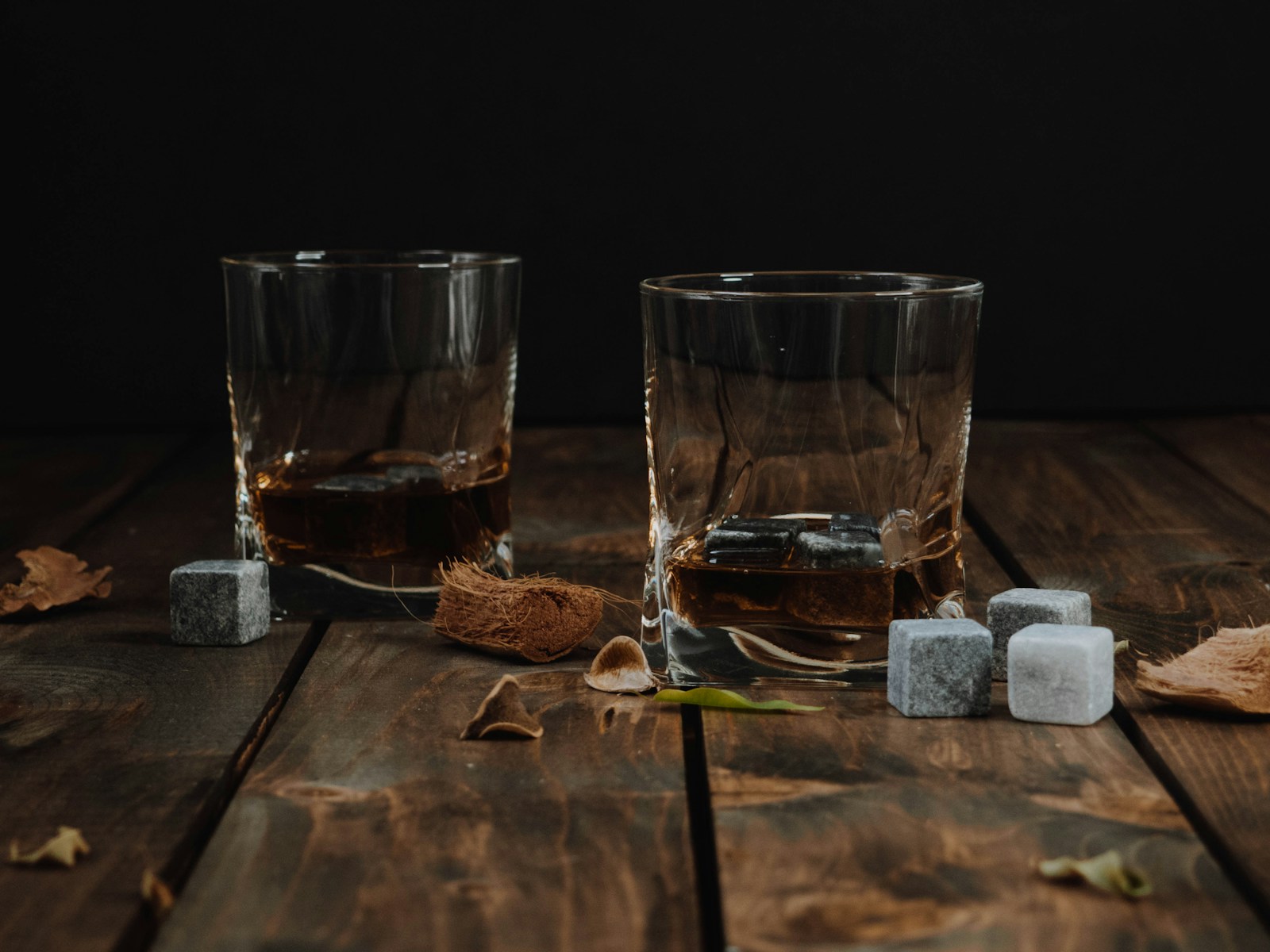
The empty space above the liquid is called the headspace. In wine, whisky, cognac — every spirit and fermented drink that's taken seriously — the headspace is considered as important as the drink itself.
The reason is simple. Aroma compounds are volatile. The moment whisky is poured, its esters, aldehydes, and phenolic compounds begin vaporising from the liquid surface. These gases accumulate in the headspace. What we smell when we bring our nose to the glass isn't the whisky itself — it's the vapour that has gathered in that space above it.
What happens when the glass is filled to the brim? There's no headspace. No room for aroma compounds to collect. When your nose arrives, it meets molecules that have just begun to vaporise — the aroma before it's had a chance to open.
Leave the glass half empty, though, and that space becomes a kind of collection chamber. Over time, aroma compounds layer themselves in the headspace, and when your nose arrives, the scent has already started to develop.
The first reason a bartender doesn't fill your glass is not generosity. It's physics.
Why the Rules Are Different for Every Drink
Why is beer poured to the top? Turn the question around and it makes clear why whisky isn't.
In beer, the foam isn't a bonus. The layer of bubbles created as CO2 escapes acts as a physical barrier against oxidation. Without the foam, the hop aroma and malt character dissipate quickly. So beer is filled to the top, with the head sitting above it. The headspace is occupied by foam by design.
Wine is different. A sommelier pours a Bordeaux glass to no more than a third. Part of it is leaving room to swirl — but before that, the wine needs time and space to open in the bowl. Same principle.
Whisky goes further still. Because alcohol content is high, ethanol vapour vaporises far faster and in far greater volume than aroma compounds. Fill the glass to the top and ethanol dominates the headspace. When your nose arrives, it's the alcohol sting that comes first — not the whisky. It's one reason people who are new to whisky often say it "burns."
A smaller pour, a contained headspace — this combination keeps ethanol concentration lower, and gives the aroma compounds behind it a chance to come forward.
The Number 45ml
Every bar culture in the world has its own standard single pour. The US: 1.5 oz (about 44ml). Scotland: 25ml or 35ml. Japan: 30ml or 45ml. The numbers differ, but they share something: none of them fill the glass.
These aren't arbitrary figures. They're the product of economics, training, and law.
In the UK, bars are legally required to serve spirits in fixed measures — 25ml or 35ml. Violation can cost a licence. Consistency is enforced.
Economically, a standard pour is essential. If a bartender free-pours by eye every time, a few extra millilitres a glass add up quickly. Stock runs out faster than the accounting says it should. Pour a little short and complaints accumulate. Professional bars use a jigger or train over years to nail a free pour with precision.
A trained bartender's 45ml isn't just a volume. It's a unit of reproducible experience.
The Japanese Way
First-time visitors to a Japanese whisky bar sometimes feel surprised. The glass is small. The pour is modest. The price is not.
Is this stinginess, or something else?
How Japan Came to Whisky
Japan's whisky history begins in 1923, when Shinjiro Torii — founder of Suntory — opened Japan's first whisky distillery in Yamazaki, south of Kyoto. Before that, Masataka Taketsuru had crossed to Scotland and learned the craft firsthand at a distillery in Campbeltown. He came back, helped build Yamazaki, then left to found Nikka Whisky on his own.
Both men shared the same ambition: not to import Scottish whisky, but to reinterpret it through a Japanese sensibility. That philosophy became the foundation of Japanese bar culture.
After the Second World War, American soldiers stationed in Japan brought their drinking habits with them. As Japan's economy grew, whisky moved into everyday life. Bars opened in Ginza and Shinjuku. Guests sat at the counter comparing Scotch and Japanese whisky side by side. Bartenders, positioned between two worlds, began to form a service philosophy of their own.
A Country Where Bartenders Are Craftsmen
In Japan, a bartender is not an employee. They are a shokunin — a craftsperson who refines a single skill over a lifetime. The same category as a ceramicist, a carpenter, a sushi chef.
A master bartender at a respected Tokyo or Osaka bar typically has twenty to thirty years of experience. Apprenticeships run five to ten years, during which the trainee may spend months doing nothing but polishing glasses and cutting ice before they're allowed near a guest. The number of years before a bartender is considered ready to serve is not a metaphor — it is the expectation.
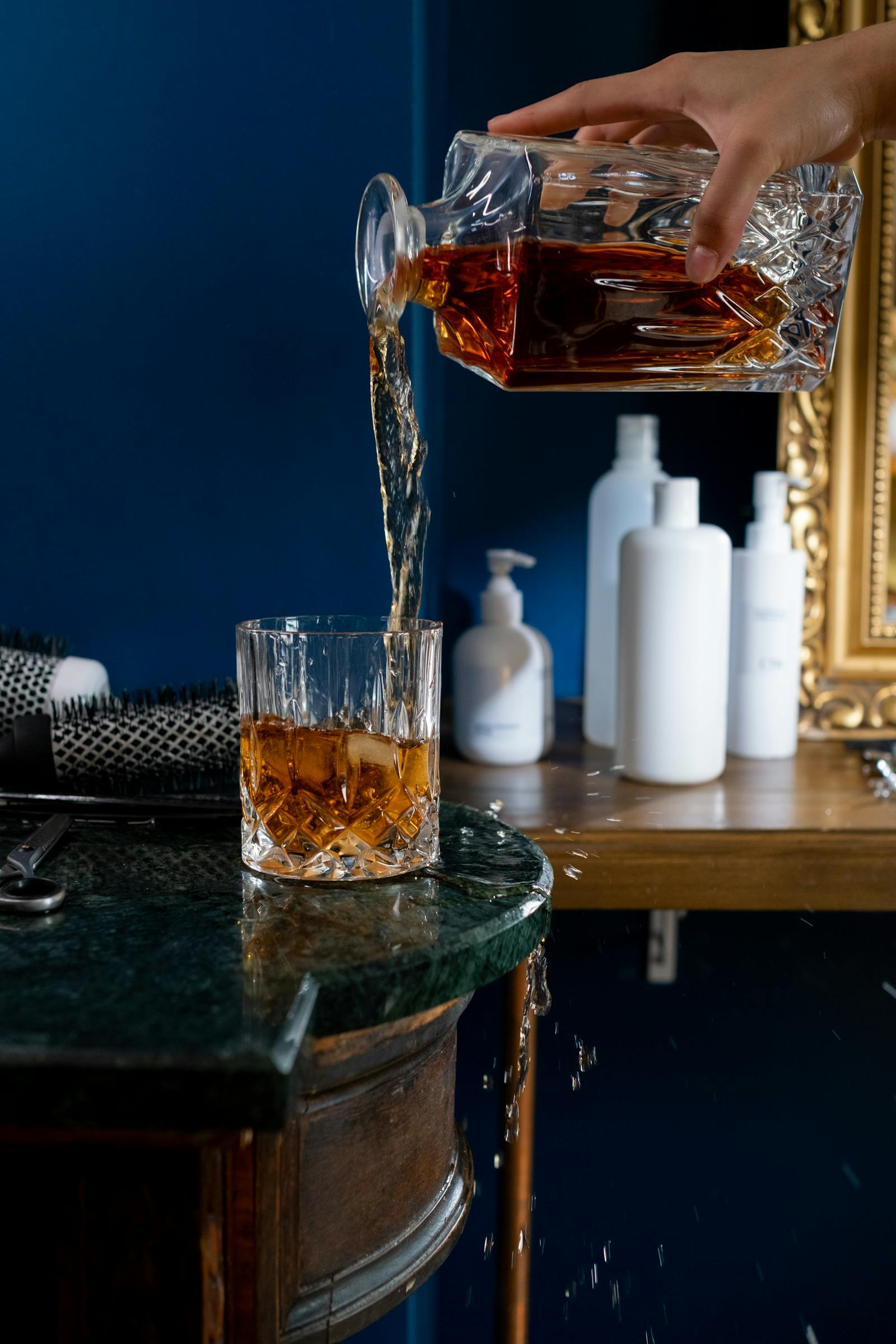
Within this system, the act of pouring whisky is practised thousands of times and constantly corrected. The angle of the bottle, the speed of the pour, the way the glass is set down. Whether the guest notices or not, the bartender knows.
The Obsession with Ice
Japanese bar culture cannot be discussed without talking about ice.
Many Japanese bars don't use factory ice. They order large blocks and cut them by hand every day. The maru-gori — a spherical ice ball six to seven centimetres in diameter — is carved from the block with an ice pick or pressed using a dedicated mould. Because it's spherical, its surface area is minimised, and it melts slowly. The whisky dilutes gradually.
Why does this matter? If the ice melts faster than the bartender has accounted for, the whisky reaches the guest at a different level of dilution than intended. The maru-gori isn't a decorative touch — it's a tool for controlling a variable in the experience.
Ice clarity matters too. Ice without air bubbles is denser and melts more slowly. The precision of Japanese ice-making is recognized globally for this reason.
Mizuwari and Highball — A Philosophy of Dilution
There are three main ways to drink whisky in Japan: neat, mizuwari, and highball.
Mizuwari means whisky mixed with water — typically one part whisky to two or three parts water. It sounds simple, but in a Japanese bar, making a mizuwari follows a defined sequence. Ice goes in first. Whisky is poured and stirred exactly three times. Water is added, then stirred again in a single direction only. The consistent stir direction keeps the ice from abrading, which controls the rate of further dilution. These small details determine how the drink arrives at the guest.
The highball is whisky with sparkling water. Suntory's Kakubin highball became Japan's national drink from the 1990s onward. There is a correct method. A tall glass is filled with ice and rotated to chill the walls. Whisky is poured and stirred once. Sparkling water is added slowly along the side of the glass, never directly onto the ice, to preserve the carbonation. A single squeeze of lemon peel finishes it.
Watching this happen, you notice that making a single drink in a Japanese bar often takes twice as long as it would elsewhere. The time the guest spends waiting is also part of the experience.
The Space That Creates Focus
Old Japanese bars are quiet. The light is low. The bartender doesn't speak first. Music, when there is any, is soft. The bar counter rarely seats more than eight or twelve.
None of this is accidental. The environment is designed for the guest to concentrate on the glass. A modest pour and a quiet room are two expressions of the same idea.
With 30ml in the glass, the guest has no choice but to focus on those 30ml. They smell it, they sip slowly, they stay with it. There's no hurry. When the glass is empty, they can order the same again — or something different. The small volume is precisely what makes that exploration possible.
This changes the pace of drinking itself. In front of a full glass, people tend to drink faster. In front of a glass that holds 30ml, they linger. And within that lingering, the whisky finally shows what it has.
What Filling the Glass Actually Means
There's an interesting paradox here. Consumer research suggests that people feel they're getting more when the glass is full — but actual satisfaction with the drinking experience is often higher when the right amount is served.
The reason is probably this. A full glass has no aroma. No aroma means no anticipation. No anticipation means no preview of what's about to arrive. The sequence of smelling, expecting, tasting — that sequence is what determines the quality of the experience.
Bartenders know this. It's not that you should distrust any bar that pours generously. It's that a modest pour isn't a lesser service. Often it's the opposite.
The empty space left in the glass isn't empty. It's where the aroma collects. It's the time the whisky takes to get ready. When a bartender doesn't fill the glass, it's not because they're holding back — it's because that space is part of the service.
Reader Notes
Be the first to leave a note.