Bring out the wide, shallow champagne glasses at a wedding or a New Year's party and someone will tell the story. That glass was moulded on Marie Antoinette's breast. The teller half means it as a joke, and the listener half believes it.
The problem with the story isn't taste. It's chronology.
The glass was born before the queen
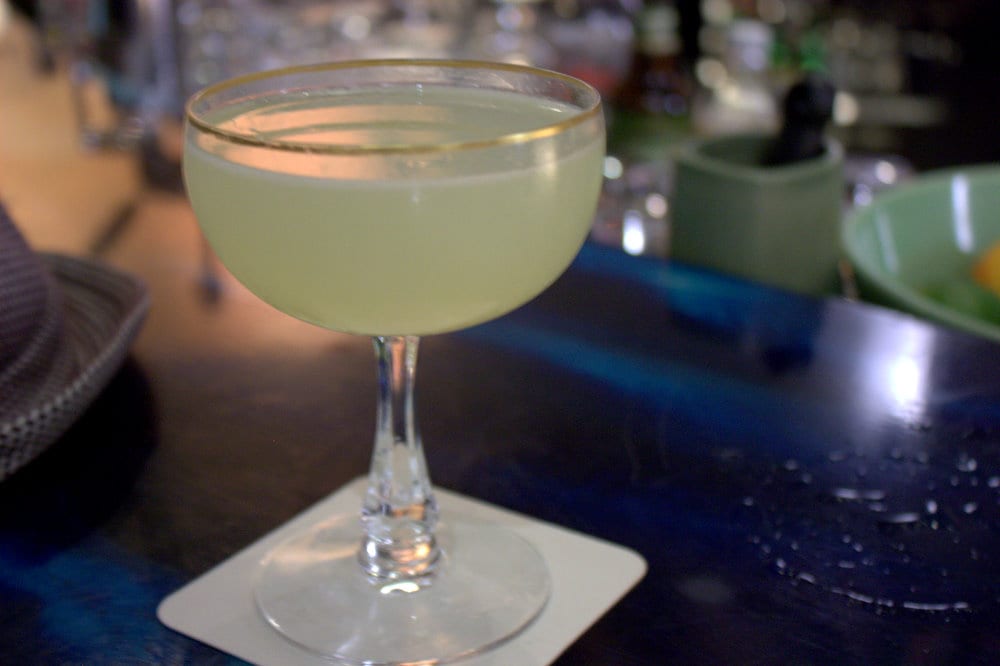
The shallow, wide glass we call a coupe first turns up in the record in 1663, in England. Marie Antoinette was born in 1755. The glass is about ninety years ahead of her.
The way the name in the legend keeps changing is another tell. In one version it's Diane de Poitiers, mistress of Henri II. In another it's Madame de Pompadour. Push further back and it becomes Helen of Troy. Stories anchored to real evidence don't slide from one woman to another like that. Swap the name and the frame works in any century, which is precisely what a legend is.
There really was a breast-shaped bowl, though
The legend has survived this long because one real object got folded into it.
In 1787 Louis XVI ordered a 65-piece Sèvres porcelain service for the Laiterie de la Reine, the queen's dairy at Rambouillet. Among the pieces were four jatte-téton — hemispherical bowls with a nipple, each resting on a tripod of three goats' heads. Jean-Jacques Lagrenée designed them, and they are now in the ceramics museum at Sèvres.
They were for milk. Not champagne, milk. Ornamental dairies where aristocrats drank fresh milk were a fashion of the period, and the one at Rambouillet was exactly that. The set was also, by most accounts, a surprise the queen knew nothing about while it was being made.
So a milk bowl became a champagne glass over the course of a century of retelling. That is more or less how rumours change vehicles.
The Greeks got there first
The idea of a breast-shaped cup is far older anyway. Ancient Greece had the mastos — the word simply means breast — a cup that tapers to a point with a nipple at the bottom.
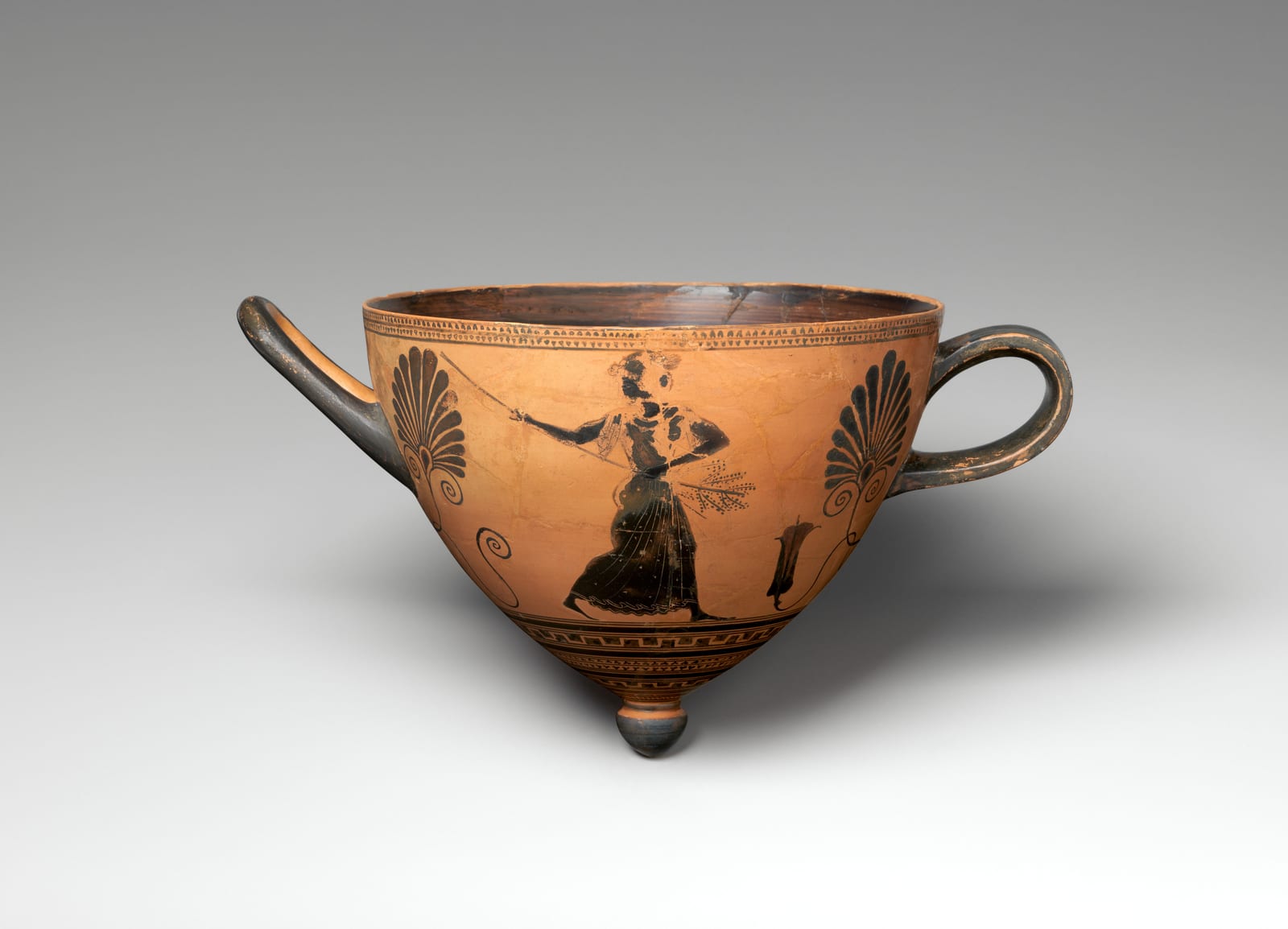
The point at the bottom is deliberate. At a symposium, a cup you cannot put down is a cup you have to drink and pass on. Vessels designed to make setting them aside impossible show up in a lot of drinking cultures; the mastos is one of the early ones.
Line the three up and the sequence is clear. The breast-shaped cup is sixth-century Greek. The shallow coupe is seventeenth-century English. The queen's breast bowl is eighteenth-century French and held milk. None of them descends from another. The legend is those three pressed into one.
The coupe lost on physics, not fashion
Champagne came in coupes well into the twentieth century. Now it is nearly always a flute. That swap had less to do with taste than with gas.
A bottle of champagne holds roughly 12 grams of dissolved carbon dioxide, at something like six atmospheres of pressure. Released at room temperature, that gas comes to about five litres — more than six times the volume of the 750 ml bottle it came out of.
How long that gas stays put depends on surface area. A coupe gives the wine a broad, shallow surface. Bubbles have a short trip up, they burst immediately, and CO2 escapes across the whole width. A flute presents a narrow, deep column, and the same gas leaves far more slowly. Pour both and look again ten minutes later; the difference is not subtle.
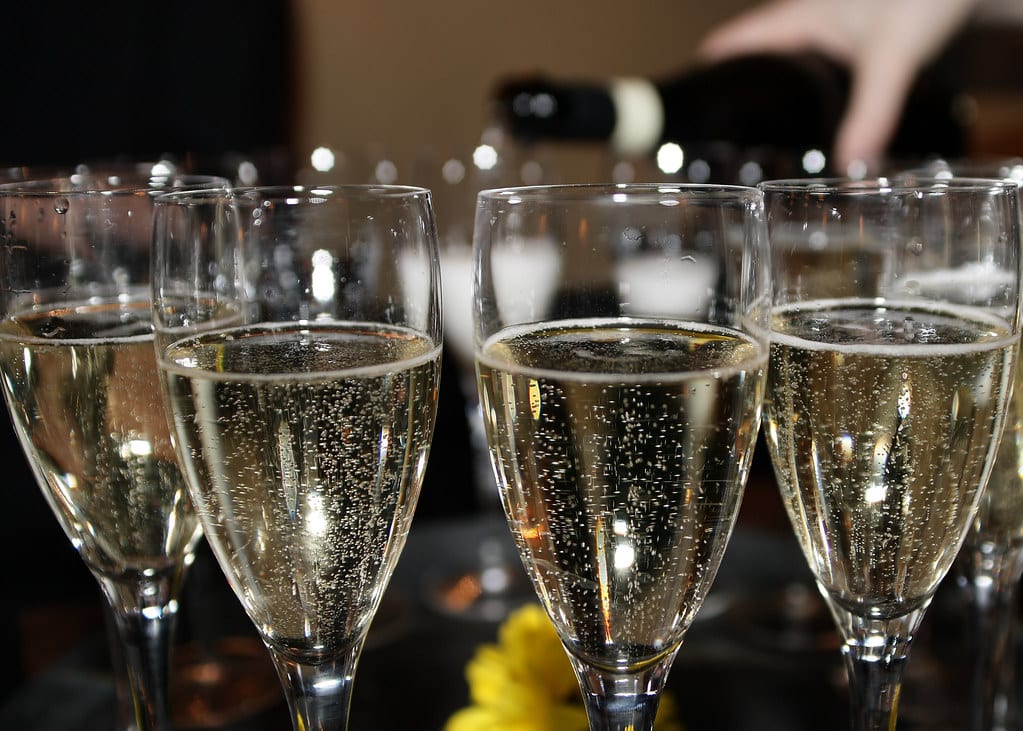
There's a related misunderstanding about the bubbles themselves. The usual explanation is that they nucleate on scratches in the glass. What Gérard Liger-Belair's group at the University of Reims found is that most of them start in air trapped inside cellulose fibres left on the wall — lint from a drying cloth, dust from the air. The same group recalculated the number of bubbles in a glass in 2014 and got about one million. The figure of fifteen million that circulated before that had counted all the escaping gas as bubbles, which overstates it wildly.
Which leads somewhere slightly comic. Rinse a glass perfectly and dry it without a speck of dust, and it produces fewer bubbles. So some champagne glasses now come with a ring of laser-etched scratches at the base, put there deliberately so a single clean train of bubbles rises from the bottom. A flaw engineered for looks.
How you washed the glass changes what happens inside it — the same holds for whisky glasses. There, detergent residue erases the legs. Here, lint creates the bubbles. Only the direction differs.
But the flute isn't the answer either
The flute does keep the fizz longer. The question is where the retained gas goes.
Liger-Belair's group published measurements in 2012 of the gas-phase CO2 in the headspace above the glass. Above a narrow flute it ran nearly twice as high as above a wide coupe. In sensory panels, tasters found champagne served in the flute more irritating to the nose.
CO2 is not an aroma compound; it's an irritant. At high concentration it hits the trigeminal nerve, the nose stings, and that sting buries the aromas you were trying to find. Structurally it is the same problem as nosing a high-strength whisky through a cloud of ethanol vapour.
Which is why champagne houses no longer insist on flutes. Producers who lead with aroma — Krug and Dom Pérignon among them — suggest a white wine glass or a tulip: generous at the bottom, tapering toward the rim. It holds the mousse reasonably well while giving the CO2 somewhere to go.
So when do you use a coupe?
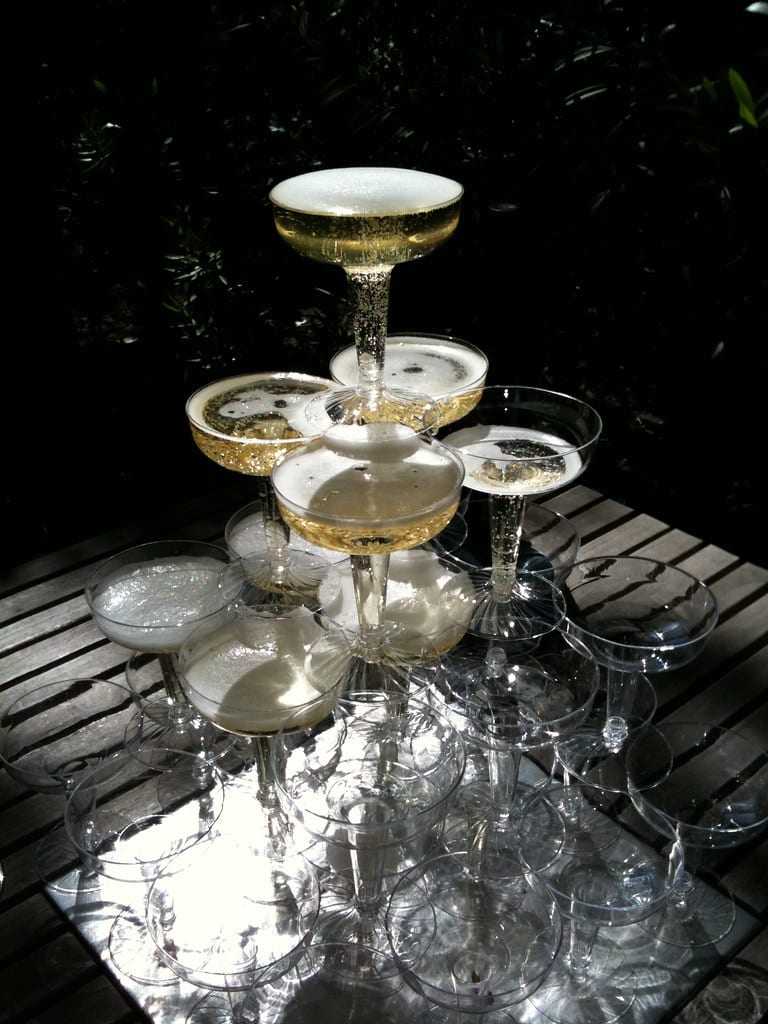
On aroma and fizz alone, the coupe loses. It still has its places.
Cocktails first. For a drink served cold and still, that wide surface stops being a leak and starts being an advantage — aromas open fast. It's why sidecars, daiquiris and whiskey sours so often arrive in a coupe. It also spills less than a martini glass.
Second, the tower. A coupe's flat rim is effectively a stacking feature. Nothing else substitutes.
Third, sound. A wide bowl rings louder and longer when it's struck. Given that clinking is fundamentally about the noise, the coupe remains the best-designed glass for that particular purpose.
The legend is a good story, no argument. But what actually happened to this glass — out of seventeenth-century England, into the twentieth century as the symbol of a party, out again on a point of physics, then back through the cocktail bar — has its own share of turns. Which version you prefer is a matter of taste. Only one of them is true.
G. Liger-Belair et al., Monitoring Gaseous CO2 and Ethanol above Champagne Glasses: Flute versus Coupe, and the Role of Temperature, PLOS ONE, 2012 · G. Liger-Belair, How Many Bubbles in Your Glass of Bubbly?, The Journal of Physical Chemistry B, 2014