
Walk into an old tavern in the back streets of Santiago de Compostela and ask for viño do país, tinto, and if you're lucky you won't get a glass. You'll get a small white bowl. No handle, just a low foot underneath. A bit wider and shallower than a teacup. Someone fills it from a jug.
The wine is close to black-purple. Against the white glaze it bleeds violet at the edges. A few mouthfuls in, your lips and tongue are the same colour.
In Galician this bowl is called a cunca.
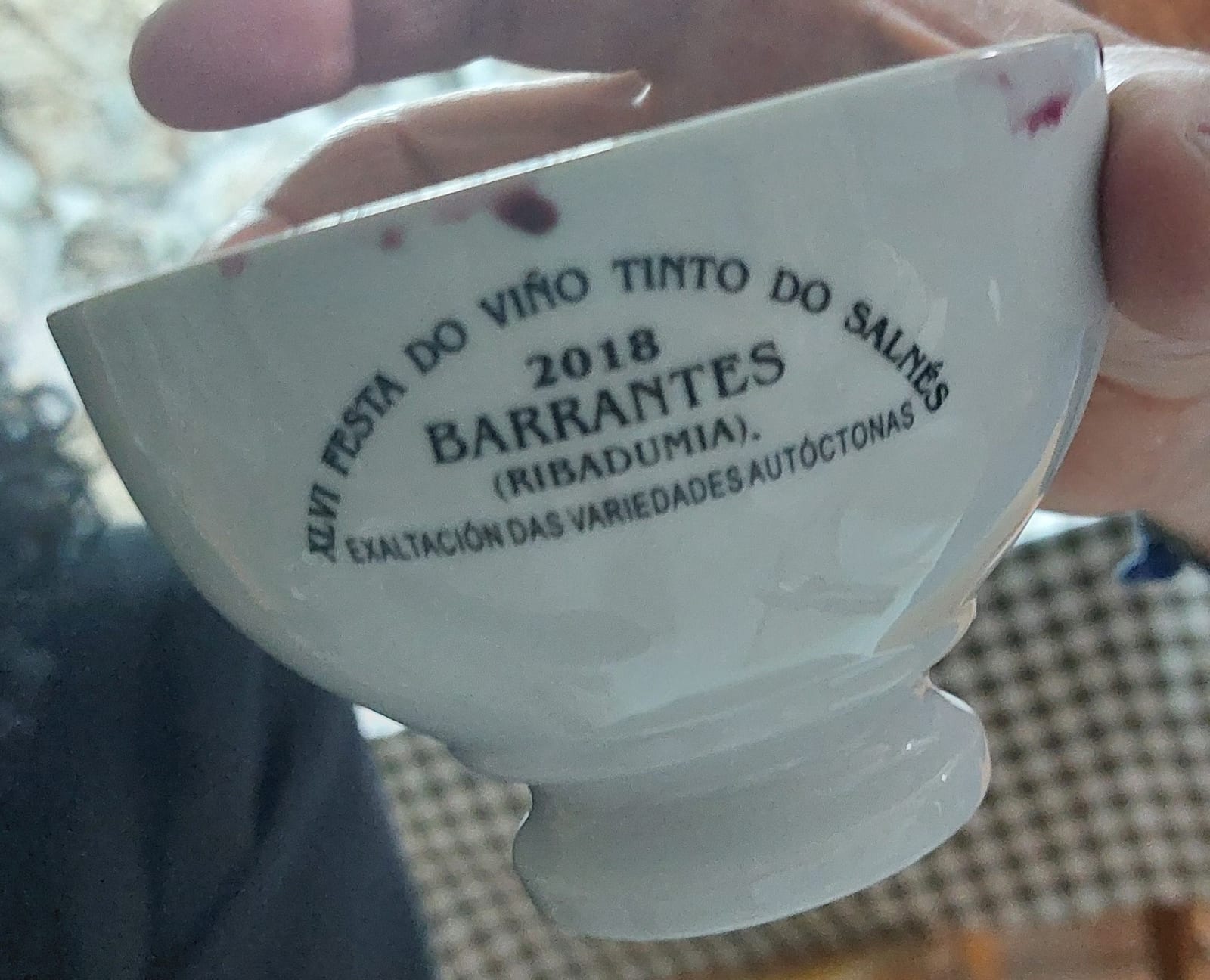
You hold it on your palm
The size is fairly settled. About eight centimetres tall, holding around 125ml, an eighth of a litre in the old reckoning. A small flat base and a body that's nearly a hemisphere. A few have handles, but most don't, so you tend to cradle it on an open palm rather than pinch it with your fingers.
The word is usually traced to the Latin concha, a shell. The Galician writer Álvaro Cunqueiro got his surname from it too: a cunqueiro was someone who made or sold cuncas. Fittingly, he wrote a book on Galician cooking, and the cunca turns up in it.
The cunca was never just for wine. Galicians drank caldo, their broth, from it as well. Whatever bowl was in the kitchen held soup one minute and wine the next. It's much the same story as Korea's makgeolli bowl.
What goes in it
Not expensive bottled wine. The cunca belongs to young local wine, made in the village and drunk the autumn it was pressed. Galicians call it viño do país, country wine. Old taverns kept a barrel at the back, drew the wine into a white ceramic jug called a xarra, and put that on the table. When the jug ran dry, it went back to the barrel.
On the red side, the best-known is probably Tinto de Barrantes, from the parish of Barrantes in Ribadumia, in the Rías Baixas. It's under 10% alcohol with sharp acidity, and it's drunk before malolactic fermentation, so it doesn't keep or travel well. You rarely see it outside Galicia. The colour is a deep blackcurrant violet. It's traditionally poured into a cunca, and Ribadumia holds a festival for it every May.
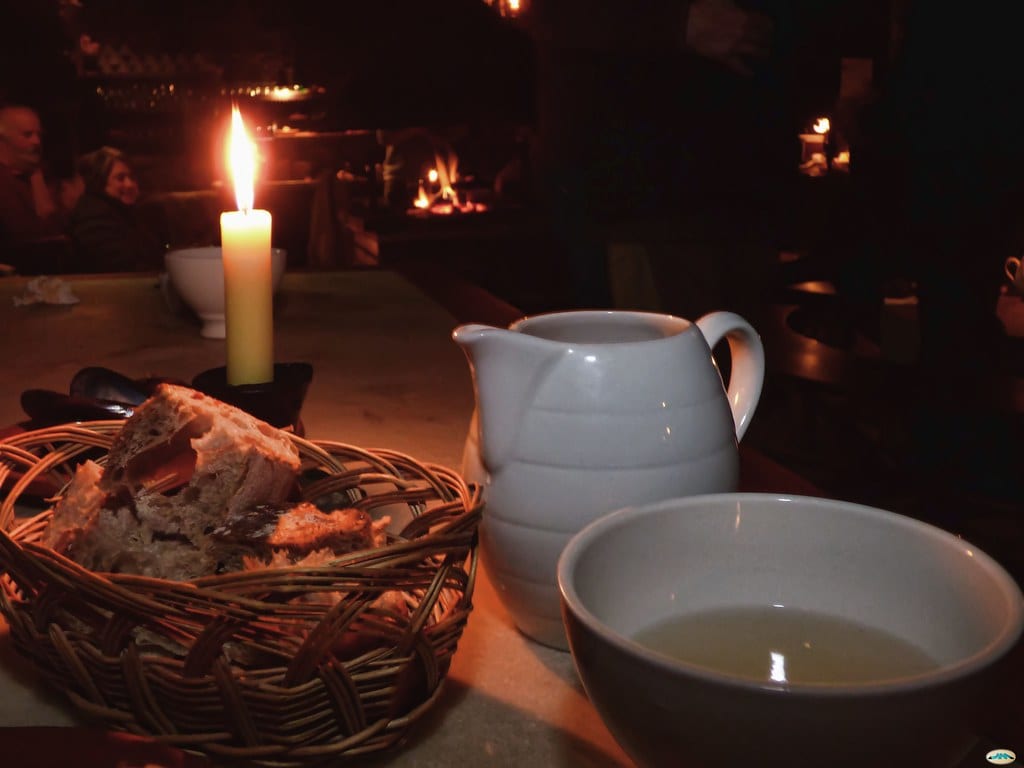
Nobody pours this into crystal and swirls it for the nose. That's not what it's for. It's cold, tart, sometimes with a slight prickle, and it's gulped next to a plate of octopus or a bowl of caldo. The cunca suits that exactly.
Why a white bowl, of all things
Honestly, nobody knows. Almost everything written about the cunca opens with some version of "its origin is practically unknown". Still, a few explanations get passed around.
One is that new wine is cloudy. Unfiltered young wine has bits floating in it. In a glass you'd see all of it; in opaque ceramic you don't. A story from O Morrazo, told by the Galician food historian Xavier Castro, fits this nicely. There, the new wine that came out from November onwards was drunk from ceramic cups, and around March, once it had settled and cleared, people switched to a glass called a carolino.
The opposite argument also gets made: that the white bowl shows off the colour. A violet wine like Barrantes looks much more vivid on white. Hiding the sediment and showing off the colour sounds contradictory, but both can be true at once. In a shallow bowl the dark colour spreads out at the rim, while the lees settle underneath and disappear.
There's one more. Ribeiro wine, the story goes, was high in volatile ethers that gave people headaches, and in a wide-mouthed cunca they evaporated. Treat that as a plausible bit of folklore. Nobody has shown it to be true.
My guess is that the simplest answer is closest. Glass was expensive and earthenware was already in the house. You poured wine into the bowl you drank caldo from. The white came later, once pottery improved and glazes came in. The early clay cuncas were reportedly sealed with pitch to make them watertight, so they weren't white to begin with.
A poor house's cunca, a rich house's cunca
Cuncas were ranked by their clay and glaze. Galician sources usually sort them into three.
The commonest was brown clay, glazed only on the inside: the "poor people's cunca". A step up was the cunquelo, smooth white clay with simple flowers painted on the outside, but still glazed only inside. The best was the escudilla: white clay, incised decoration under the rim, glazed inside and out.
The smooth white cunca we picture today is really the rich household's model gone mainstream.
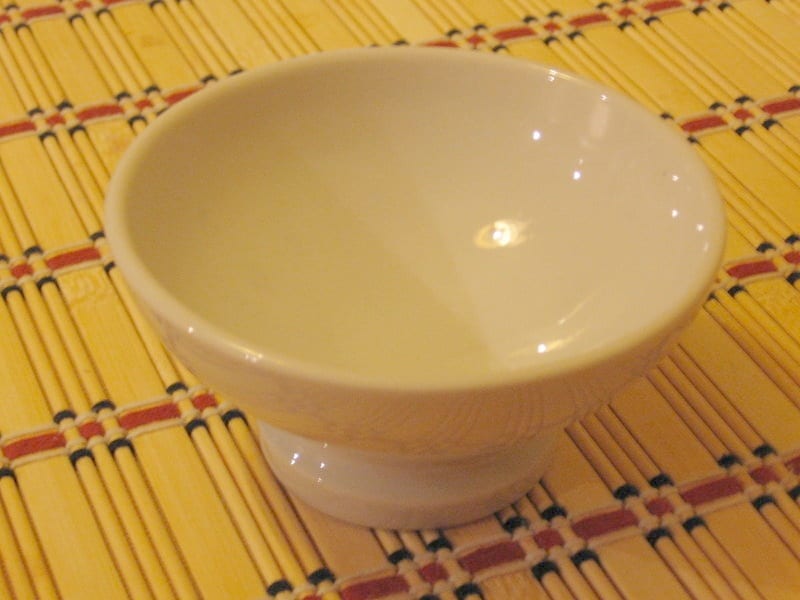
Sizes varied too. A big one, a cuncón, held about a quarter of a litre, and it wasn't for one person. During a break in field work, one would be filled and passed round. In the Ponte Ulla area, apparently, it went to the next person without being washed. If that bothered you, you rinsed it with a splash of wine. There was even a Spanish saying for it: "Everyone's cup: well licked and badly washed."
For a while it was an embarrassment
Up to the early 20th century the cunca crossed class lines. Farmers used it, and so did the intellectuals who gathered in the cafés of Santiago. Things changed in the second half of the century. The idea arrived that good wine belongs in crystal, Galician wine started being bottled and sold far away, and the cunca got pushed back into the country tavern.
These days the push is the other way. In the autumn of 2000 the Ribeiro region ran a campaign around the feast of San Martín encouraging people to drink the new wine from ceramic cups, and some Ribeiro wine lovers still insist porcelain is the best thing to taste new wine from. There's even a group in A Coruña devoted to keeping cunca drinking alive. Even so, in places full of tourists you'll usually get a glass. If you want a cunca, ask for one.
The malga across the border
Just south of Galicia, in Portugal's Minho, the same bowl exists. There it's called a malga or tigela, and it's for red Vinho Verde. Most people think of Vinho Verde as a light, spritzy white, but for people in the Minho the dark purple red is the old drink. And they'll tell you it still tastes best from a white malga.
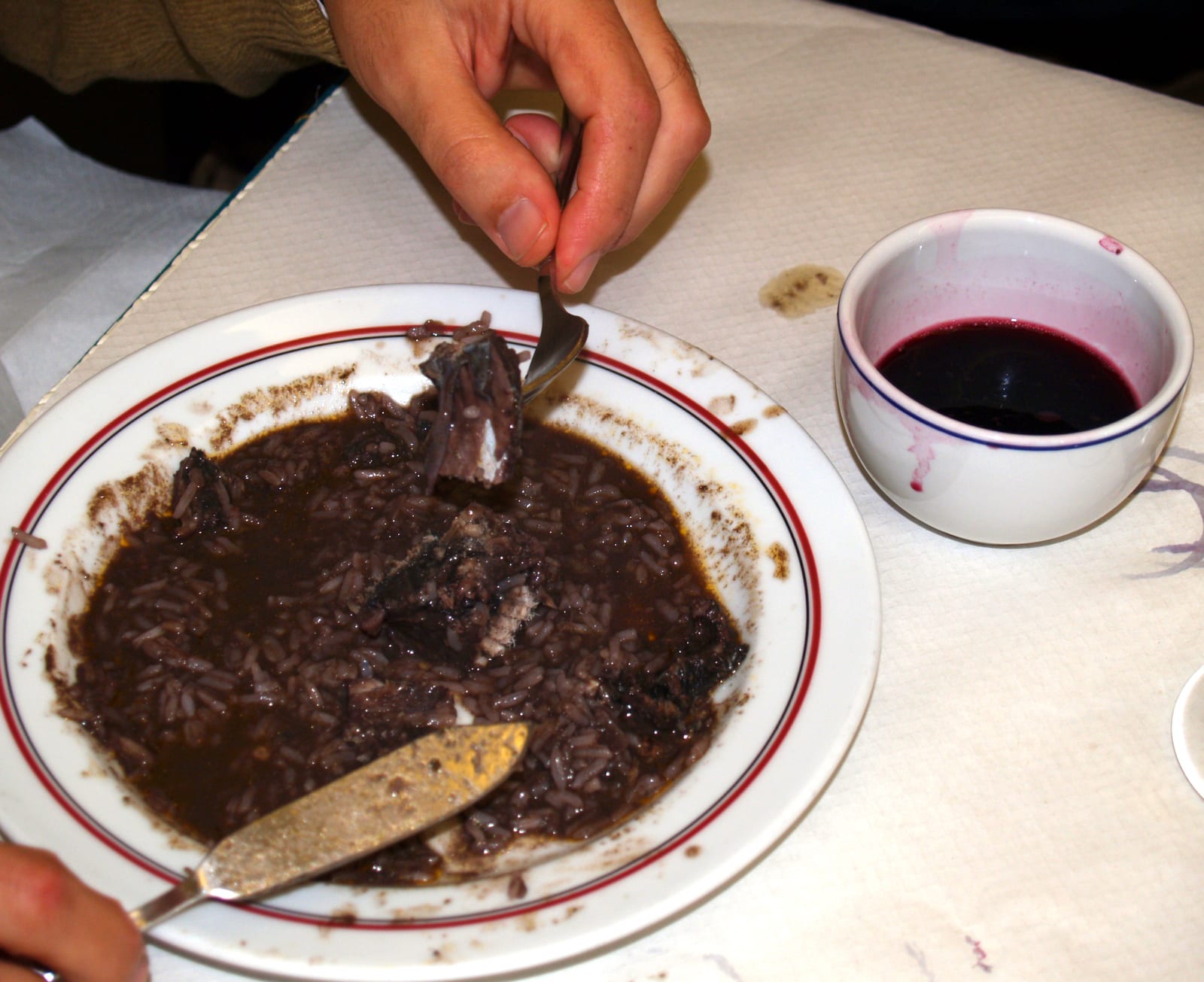
The malga was first made of clay too, took on a white glaze once glazed pottery reached ordinary households, and porcelain ones were for the well-off. Same sequence as in Galicia. That's no surprise: Galicia and the Minho share a closely related language and grow much the same grapes. A few years ago the Portuguese architect Álvaro Siza even redesigned the malga at a winery's request.
There's no clever science in a cunca. It doesn't gather aromas or hold temperature. Most of what a wine glass fusses over, the cunca ignores. What it does do is sit neatly in one hand, never tip over, rarely break when dropped, and ask for no ceremony from whoever's pouring or drinking.
If you find yourself in Galicia, ask a tavern for viño do país tinto in a cunca. Don't swirl it. Just rest it on your palm and drink. When you're done, look at the violet ring left at the bottom of the bowl, and it starts to make sense why this wine never went into a glass.
Size, materials and the link with Ribeiro — Wikipedia (es) "Cunca", Albariño.com "La cunca gallega" · Seasonal switch in O Morrazo, the cuncón, shared drinking in Ponte Ulla, the 2000 Ribeiro campaign — Xavier Castro, "La taza y la cunca", Diario de Pontevedra · The three grades of cunca — A la gallega, "La cunca: acariciar el vino" · Tinto de Barrantes — Wikipedia (en) "Tinto de Barrantes" · The Minho malga — Blogue do Minho; Revista de Vinhos, "Siza reinventa a malga de vinho"