Standing in front of a whisky shelf, most people's eyes go to the same place: the number on the label. 12 years, 18 years, 21 years. The bigger the number, the more expensive; the more expensive, the better — so the intuition runs. Like a wine vintage, the age statement feels like the most direct measure of quality a bottle offers.
But how far does that intuition hold?
To understand what the number says, and what it doesn't, you first have to see what maturation actually does.
What Maturation Does
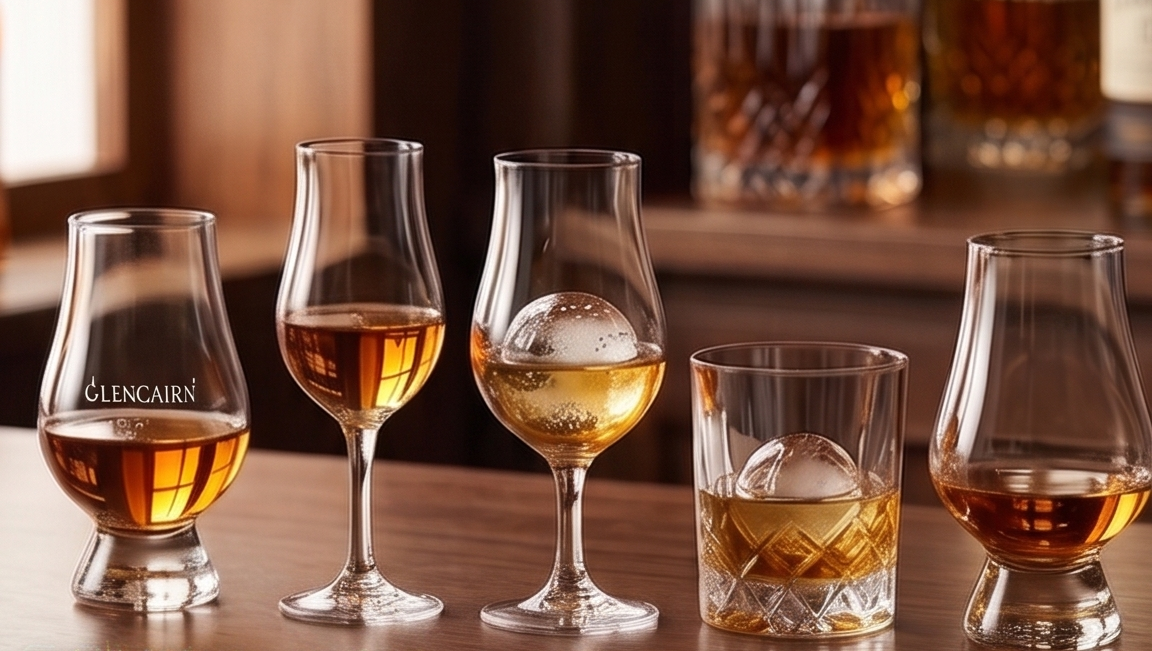
New make spirit, fresh from the still, is colourless and sharp. The sting of alcohol and raw grain sit at the front. Put it in an oak cask and three things happen.
First, liquid leaves. Alcohol and water evaporate through the oak's pores. This is the angel's share. In Scotland, about 2% is lost every year. After ten years, roughly 18% has gone; after twenty-five, close to half the original volume has vanished into the air.
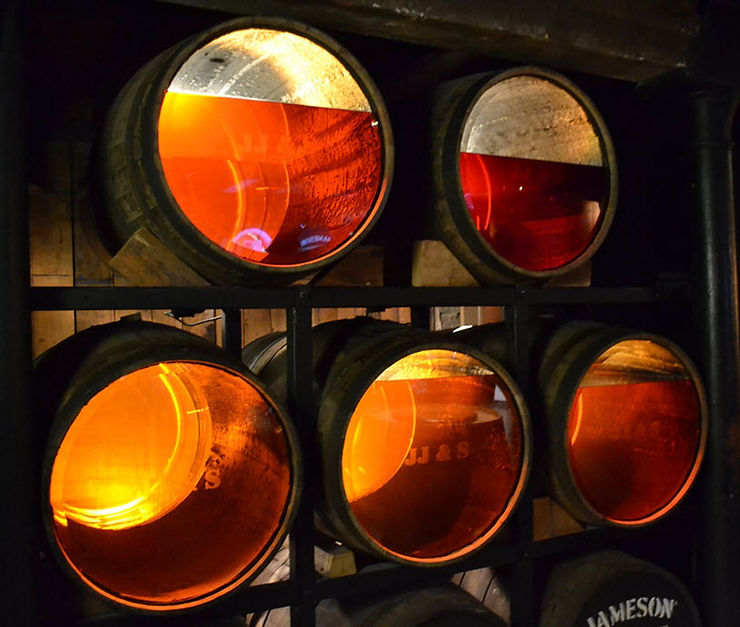
Second, oak comes in. The wood's own compounds — vanillin, tannins, lactones, phenols — dissolve into the spirit. So does the ghost of whatever the cask held before: bourbon, sherry, port, Madeira. The colour of whisky comes almost entirely from here.
Third, oxidation. Small amounts of air entering through the oak's pores soften the harsher elements and encourage complex flavour compounds to form.
Those three processes are maturation. And the speed and outcome of each is something a single number can never fully explain.
What the Number Doesn't Say: Climate
One comparison gets cited a lot in the whisky industry: a ten-year-old Scotch versus a three-year-old Indian whisky.
Scotland's average annual temperature is around 9°C, with gentle seasonal swings. The cycle of spirit soaking into wood in winter and drawing back out in summer repeats slowly and deeply. In Scotland, the conversation between oak and spirit is a long game.
India is different. Distilleries near Nashik, north of Mumbai, and around Goa sit in climates averaging 25–30°C, with sharp seasonal jumps. In that environment, the exchange between spirit and oak happens far more quickly. Amrut's award-winning three-year-old expressions make perfect sense once you understand the climate.
Kentucky bourbon works the same way. Summers above 35°C and winters that drop below freezing drive violent, repeated expansion and contraction of cask and spirit. American law sets two years as the minimum for straight bourbon, and many premium bourbons reach genuine depth in eight to twelve.
The same twelve years in Scotland and the same twelve years in Kentucky are utterly different experiences. The number tells you the time. It says nothing about what happened during it.
What the Number Doesn't Say: Cask Size
There is no standard size for a whisky cask. The industry uses many.
| Cask name | Capacity | Character |
|---|---|---|
| Quarter Cask | ~50 litres | Maximum oak contact, rapid maturation |
| Barrel | ~200 litres | Standard for bourbon, US legal measure |
| Hogshead | ~250 litres | The most common size in Scotland |
| Butt | ~500 litres | Traditional sherry cask format |
| Puncheon | ~500–700 litres | Originally from the rum trade |
Compare a cask of half the volume with one twice as large. Fill each with the same quantity of spirit: the smaller cask gives the spirit a higher ratio of wood surface to liquid. Oak influence arrives faster and more intensely. The larger cask works slowly and subtly.
Laphroaig's Quarter Cask transfers spirit already matured in bourbon barrels into small casks for a second period of maturation. No age statement appears on the label, but the process concentrates oak influence deliberately. It isn't an age-free product in any casual sense — it's a designed outcome.
Not every twelve-year-old has spent twelve years the same way. What size of cask, in what environment, through how many stages of re-casking: all of it matters alongside the number.
What the Number Doesn't Say: It's a Minimum
This fact is less widely understood than it should be.
The age printed on a whisky label is the age of the youngest component in that bottle. A 12-year-old single malt is made exclusively from spirits that have matured for at least twelve years — it does not mean every drop in the bottle is exactly twelve years old.
Blended whiskies push this further. Johnnie Walker Black Label 12 Year is an assembly of spirits from dozens of different distilleries. Some are twelve years old; many are likely considerably older. The blender's job is to combine these different ages into something consistent.
The number on the label is a guaranteed floor, not an average, not a representative age.
Too Old Can Also Be a Problem
The belief that older is always better runs into another trap: over-maturation.
Oak adds flavour to whisky, but when its influence becomes too dominant, it can erase the spirit's own character instead. Extremely old whiskies can become heavily oaked — the original grain notes and distillery character buried under aggressive tannin, dry timber, and bitterness.
Some distilleries handle this well. Dalmore and Glenfarclas, for instance, release expressions of forty or fifty years that succeed because of extreme care in cask selection and warehouse management. But these are achievements, not guarantees. Not every old whisky reaches them.
Frank McHardy, who spent many years as Master Distiller at Springbank, put it plainly: "Some casks peak at eighteen years. Some peak at eight. The distiller's job is to find that peak — not to run up the number."
The Rise of NAS — and What It Actually Meant
Through the 2010s, a significant shift moved through the Scotch whisky industry. Aged stock was running short.
In the late 1980s and early 1990s, the Scotch industry went through a serious slump. Many distilleries badly misjudged demand and cut production sharply. The spirit produced in those lean years was due to reach twelve, eighteen and twenty-one years old in the 2010s — just as global demand was surging. Supply couldn't keep pace.
In response, many distilleries released products with no age statement on the label: NAS, or No Age Statement. Ardbeg's Uigeadail, Bruichladdich's Classic Laddie, Glenfiddich's IPA Experiment were among them.
Consumer reaction was mixed. Some read it as a cover for depleted reserves, selling young whisky at inflated prices. Others welcomed it as something genuinely new.
But many NAS releases were not simply young spirits sold at a premium. They were deliberate assemblies of spirits from different years — combining the energy of young whisky with the depth of older casks to achieve a flavour complexity impossible within a single age bracket. Age statement or not, the intention was craft.
How the Blender Actually Chooses
When the people who actually select casks — blenders, master distillers — are working, what do they look at first?
It isn't the number.
Cask history. What did this cask hold before? How many times has it been used? A first-fill cask — one used for the first time — delivers strong, direct oak influence. A second-fill gives a softer contribution. Third-fill and beyond, the wood has little left to give.
Sampling. In the warehouse, small amounts are drawn from individual casks and tasted. Two casks filled on the same day in the same warehouse, standing side by side, can produce entirely different spirits — different position, different wood grain, different result. Macallan is known for meticulous records of warehouse position and regular rotation to even out variation.
Nose and palate. In the end, the blender decides by smell and taste. What the number cannot tell you, a trained and experienced palate reads directly from the glass.
So Is the Number Useless?
No. The number is information.
Within the same distillery and the same product line, it holds up well. Glenmorangie 10 and 18 come from the same place using the same methods — the eighteen-year-old genuinely has spent more time with oak. Balvenie 12 and 21 follow the same logic.
But comparing whiskies from different distilleries, different climates and different cask sizes using age alone is meaningless. A Kentucky ten-year-old and a Scottish ten-year-old cannot be ranked by that number.
And then there's the price question. Scarcity drives cost as much as quality does. An older whisky exists in smaller quantities — angel's share has been at work — and the gap between supply and demand shows up in the price. Much of what makes a 25-year-old more expensive than a 12-year-old is rarity, not necessarily superior quality. Maturation costs, warehouse overhead and the capital tied up for decades are all priced into the bottle too.
How to Actually Read the Number
When you see an age statement on a label, a few things are worth thinking about alongside it.
Where is it from? Scotland, Ireland and Japan mature slowly. India, Taiwan and Australia, with their more extreme climates, see more exchange between spirit and oak in the same span of years.
What kind of cask? Sherry butt, bourbon barrel or quarter cask matters as much as the number.
Is it cask strength? Spirit bottled at the strength it came from the cask — without dilution — carries a more direct record of what time in oak actually did. The number fades and the cask's own story comes forward.
Who made it? The philosophy of a distillery and the skill of its blender shape the result more deeply than any number.
What Lies Behind the Number
The number on a whisky label doesn't lie. But the things it leaves unsaid fill a much larger space.
What kind of warehouse, in what climate. What cask, and for how many uses. How many stages of re-casking. Which casks the blender chose, and at what moment. How much the angels took. All of it goes into one bottle.
The number tells you the time. What that time did — that belongs to whoever opens the bottle and pours a glass.
If you're curious what to look at instead of age when choosing a whisky, Nosing Glass Compared explains how the shape of the glass itself changes what you smell.