
Today it feels natural to think of the Glencairn the moment someone says "whisky glass." It carries the official endorsement of the Scotch Whisky Association and is the most commonly encountered glass in whisky bars and distillery visitor centres worldwide. But it only appeared in 2001. Whisky has a history of centuries — what did people drink from before that?
Finding the answer means tracing the drinking cultures of Scotland, Spain and England back through time.
Scotland's Drinking Culture in the 18th and 19th Centuries
Many of the practices we now think of as the "proper" way to drink whisky — nosing the glass first, drinking neat, analysing aromatic complexity — are largely twentieth-century conventions. They became widespread only as the whisky industry matured and nosing culture spread through enthusiast communities.
In eighteenth and nineteenth-century Scotland, whisky was consumed in very different contexts. Most whisky at the time was relatively roughly distilled, and common serving methods included warming or diluting with hot water — the Hot Toddy being the most familiar example. It was only in the late nineteenth century, as blending technology advanced and smoother, more complex whiskies became available, that the practice of nosing whisky for pleasure began to take hold.
During this period, Scottish distilleries used whatever glassware was to hand for internal quality control. Blenders reached for small vessels drawn from the local culture — and in Scotland, that meant vessels connected to an unexpected source: Spain.
How the Copita Came to Scotland
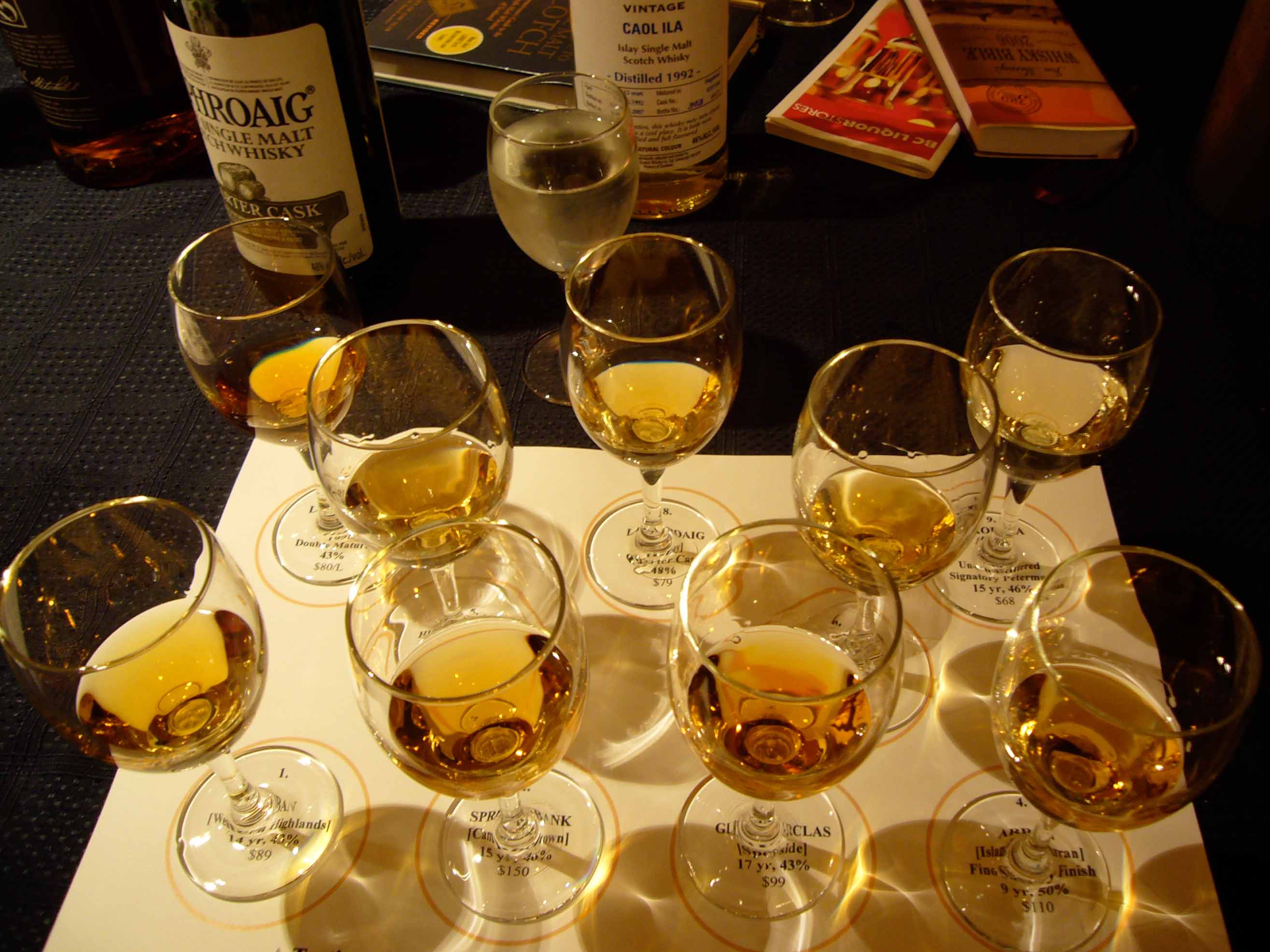
The Copita is a small, stemmed, tulip-shaped glass from Andalusia, southern Spain, developed within sherry wine culture. Its name is a diminutive of copa, meaning cup or glass. The Spanish tradition of holding the stem, swirling gently and opening the aromas has been associated with sherry for hundreds of years.
The route from Andalusia to Scotland ran through sherry casks. From the eighteenth century onward, Scottish distilleries imported sherry from Spain, consumed the wine, and matured whisky in the emptied casks. This trade brought not only casks but the tools and customs of sherry culture. The people who handled sherry — and subsequently the blenders who worked with sherry-matured spirit — naturally used the Copita as their evaluation vessel.
According to the Malt Whisky Yearbook, Copita-style glasses were the dominant choice for day-to-day quality control at major Scottish distilleries up to and well beyond the Glencairn's arrival.
Ingvar Ronde (ed.), Malt Whisky Yearbook, Mag Watt Ltd, various editions
The structural reasons for the Copita's suitability are clear. The stem prevents body heat from reaching the bowl. The wide bowl provides a generous surface area for aromatic compounds to evaporate. The narrow rim concentrates those aromas toward the nose. For blenders evaluating multiple batches in sequence over a long working day, this was the optimal tool available.
The Brandy Snifter — A Misapplied Elegance
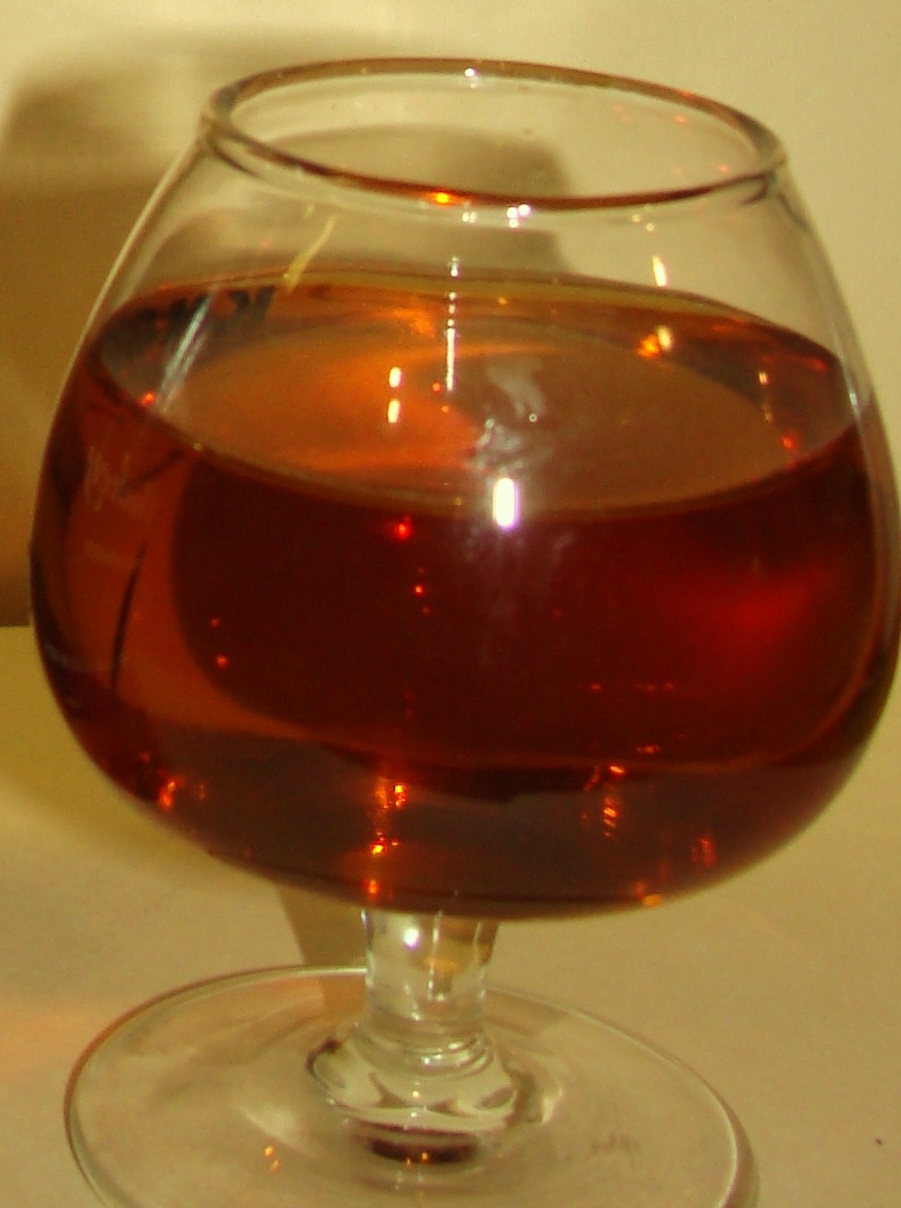
Beyond the distillery, in the drawing rooms and gentlemen's clubs of Britain, the brandy snifter was long regarded as the sophisticated choice for spirit drinking. Its wide, spherical bowl and short stem were designed for cognac and brandy, but the belief that it suited whisky equally well spread through mid-twentieth-century drinking culture.
The snifter's association with whisky has a historical logic. From the late nineteenth century through the early twentieth, British upper-class culture included an after-dinner tradition of drinking brandy from a snifter, held cradled in the palm to gently warm the spirit. As Scotch whisky rose to comparable social status as a prestige spirit, it inherited this presentation. Films and advertisements repeatedly showed whisky in a snifter, and the image embedded itself.
But the snifter has real structural limitations for whisky.
The bowl is too wide and too spherical. Aromas disperse rather than concentrate. Cognac is traditionally warmed in the hand so that heat-driven evaporation compensates for the lack of convergent geometry. Whisky at room temperature does not produce the same effect.
Body heat transfers directly to the liquid. The snifter is designed to be cradled in the palm — a feature intended to gently warm brandy. For whisky, this accelerates evaporation in an uncontrolled way and, for higher-ABV expressions, amplifies alcohol sting.
The rim is too wide relative to the bowl. The slight convergence from bowl to rim in a typical snifter is insufficient to meaningfully concentrate aromatic vapours toward the nose in the way a Copita or Glencairn does.
None of this made the snifter disappear from whisky culture. It persists in popular imagery and in some retail environments to this day.
The Tumbler — The Most Honest Glass
The most widely used vessel of all was the tumbler, or old-fashioned glass. For the majority of whisky drinkers who consumed their whisky on the rocks, with water or mixed with soda, the aroma-concentrating properties of the glass were simply not a priority.
The tumbler is structurally the weakest option for nosing: its open top allows aromas to disperse freely rather than concentrating toward the drinker's nose. But this is also its honesty — it makes no pretence of serving a function it is not designed for. Ice can go in. Soda can go in. The glass can be held any way. Nosing-specific glasses lose their design logic the moment ice goes in; the tumbler has no such pretence.
The dominant mode of whisky consumption in the 1980s and 1990s — on the rocks, in a highball, diluted with water — was well served by the tumbler. The rise of nosing culture as a mainstream enthusiast practice is largely a phenomenon of the 1990s and 2000s, driven partly by the growth of whisky shows, publications and online communities.
The tumbler is not a wrong glass for whisky. It is the right glass for a specific way of enjoying it.
The Glencairn Arrives — 2001
In 2001, Glencairn Crystal of East Kilbride, Scotland, presented a new whisky glass. Founder Raymond Davidson had worked with leading Master Blenders from across the industry to refine the form. Among those involved were representatives from Ballantine's, Johnnie Walker, The Macallan, The Glenlivet and Glenfiddich.
The design departed from the Copita's stem-and-bowl structure while retaining the core geometry: wide bowl, narrow rim. The stem was removed and a heavy base added. The result was more stable and more comfortable to hold than the Copita, while achieving far better aroma concentration than the tumbler.
Glencairn Crystal Studio, The Story of the Glencairn Glass, glencairnglass.com
Removing the stem was both a compromise and an innovation. A stem prevents body heat from reaching the bowl — a genuine advantage. The Glencairn partially compensates by designing the base to be held rather than the bowl, though this only works if the drinker is attentive to the habit. It is an imperfect solution but a realistic one for everyday use.
Official Endorsement and the Spread of a Standard
In 2005, the Scotch Whisky Association gave the Glencairn its official endorsement — the first time any dedicated whisky glass had received formal industry recognition. Without heavy advertising, the Glencairn spread through distillery visitor centres and the whisky gift market. People received it as a souvenir, used it at home and gave it to friends. The network grew organically.
Today the number of Glencairn glasses produced runs into the millions. It appears at whisky competitions, tastings, festivals and distillery tours across the world. It is, without question, the dominant whisky glass of the early twenty-first century.
Did the Copita Disappear?
No. Among professional blenders, Master Tasters and experienced enthusiasts who regularly evaluate multiple samples, the Copita remains the practical choice. Its structural advantages — stem for temperature control, wider bowl for more surface area — make it better suited than the Glencairn for extended nosing sessions.
Where Copita outperforms Glencairn: blind tasting panels; extended evaluation of high-ABV expressions; sessions where the glass is held for long periods.
Where Glencairn outperforms Copita: standing events with frequent table contact; casual single-glass enjoyment; introducing new drinkers to nosing.
What the Standardisation of a Glass Means
Before the Glencairn, whisky had no standard glass. Copita, snifter and tumbler coexisted, each suited to a different context and preference. The Glencairn's arrival and the SWA's endorsement created a single reference point in whisky culture.
That is not uncomplicated. When one option becomes the default, the others become less visible. In the years since the Glencairn's rise, many first-time buyers have reached for it without awareness that alternatives might serve them better for specific purposes. Understanding the landscape before 2001 is, practically speaking, useful context for making better choices today.
The Glencairn is an excellent glass. But it was not the only answer — and still is not.
Reader Notes
Be the first to leave a note.