

SHTOX makes a whisky glass that spins on the table. Give it a nudge on the side and instead of sliding, it turns in place, round and round. You may have seen one in a video already. It looks like there should be a bearing hidden in the base, but there isn't. It's solid crystal.

How does it spin?
A normal tumbler has a flat bottom, so a wide area touches the table. Push it and friction drags it to a stop. SHTOX grinds the base into a rounded shape so only a tiny spot meets the table, and balances the weight of the glass over that spot. Little friction, a steady centre, and it keeps going like a top.
The shape of the base is covered by an international patent. According to the official site, each base is finished by hand to get the balance right.
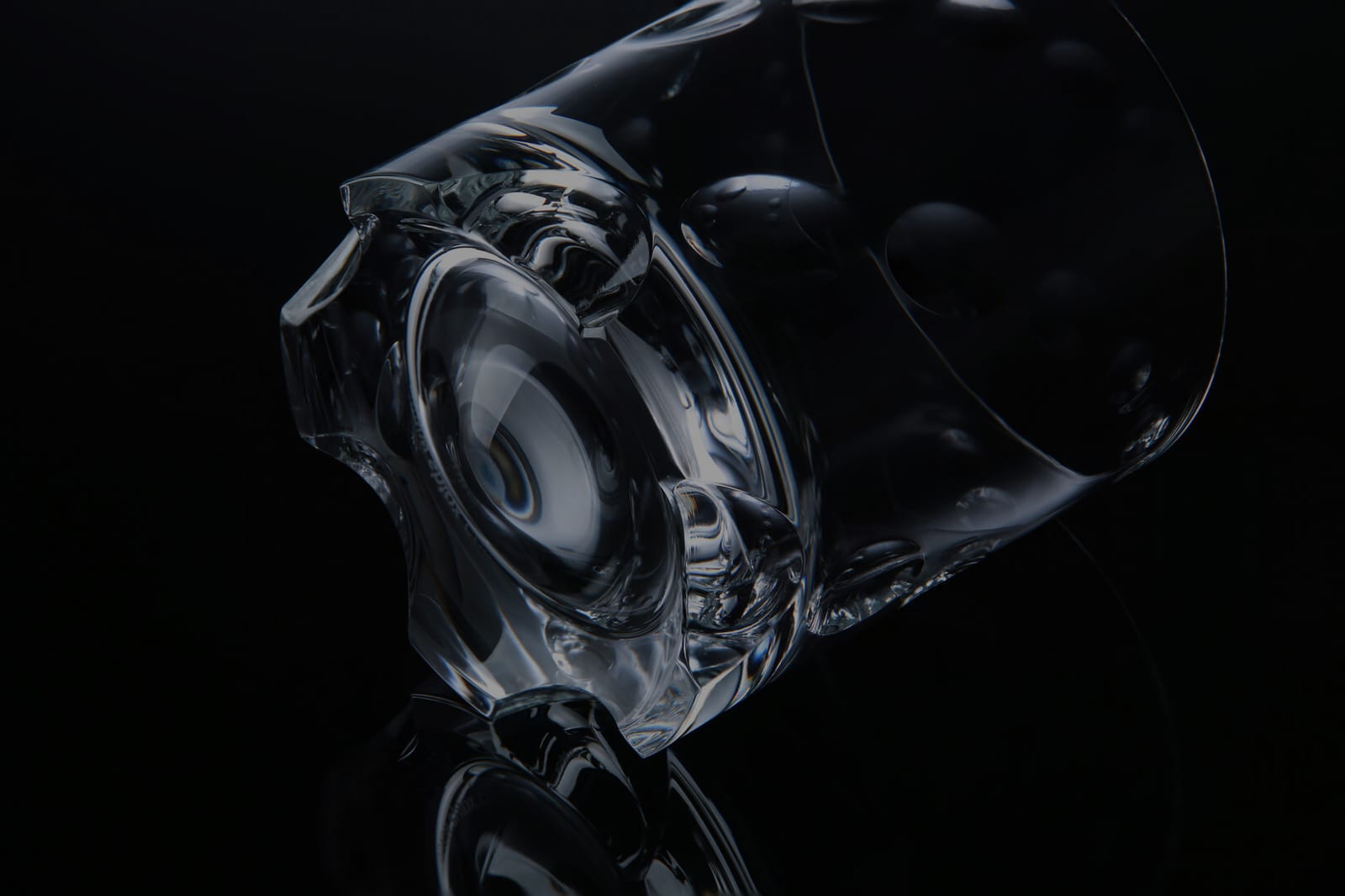
It won't spin just anywhere. Retailers always add the condition: a hard, flat surface. On a tablecloth, a coaster or a rough wooden top it will probably stop quickly. And however well it spins, it does stop eventually.
Who makes it
It's the brand of a German company, Shtox Production UG, which retailers say started in 2008. The glasses themselves are made at Nachtmann, a crystal maker founded in Bavaria in 1834 and part of the Riedel group since 2004. I like that a toy-like idea is being produced by such a traditional factory.
The glass won a Red Dot design award in 2009. One design blog gives the year as 2013, so I emailed SHTOX and asked. They said 2009 is right.
Size and material
Most of the whisky glasses are low tumblers. The 006 model listed by a European retailer holds 320 ml and measures 96 mm tall with an 89 mm rim. That's a good size for whisky on the rocks. A small neat pour just covers the bottom, so it can look a bit lonely.
The material is lead-free crystal. This was the other thing I asked about. A few older listings call it "24% lead crystal", and I wondered whether the material had changed at some point. SHTOX's answer: there is no lead in their glasses at all, and there never was. My guess is that some retailers pasted in a generic crystal description. If you're curious about lead crystal in general, I wrote about it in our piece on crystal and lead.
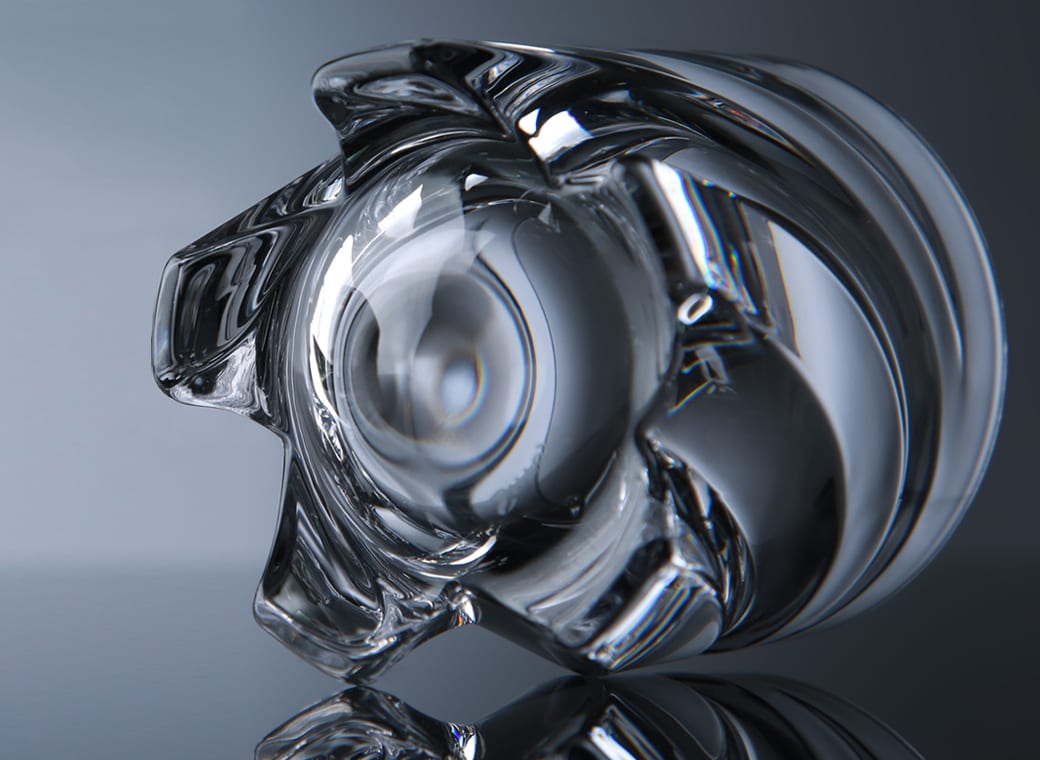
There are more models than you'd expect. Some go by numbers like 001 and 002, others by names like Orbit and Crosswind, and each has its own pattern cut into the base and sides. As the glass turns, the pattern bends the light and sends shapes drifting across the table. The brand compares it to running water, flickering flames and twinkling stars. Reviewers mostly say it shows best when spun quickly right under a lamp.
The models with a spiral pattern add an illusion. Depending on which way the glass turns, the spiral seems to climb or sink, the same trick as a barber's pole. Probably why Grand Illusions, a British shop for optical and science toys, stocks it.
Does it change the whisky?
The official site says the aromas open up and the drink slowly evolves as the glass turns. Just don't expect the same effect as swirling by hand.
When the glass spins, the whisky inside doesn't spin with it. The glass turns and the liquid lags well behind because of inertia. That's a different motion from swirling a glass in your hand. And swirling doesn't do as much for whisky as it does for wine anyway. The alcohol is strong, so a hard swirl mostly pushes ethanol at your nose. I wrote more about that in whisky swirling: do you really need it?.
The rim is wide, too. It was never meant to do what a Glencairn or a copita does, funnelling aroma toward your nose. For picking a whisky apart by smell, a nosing glass is the better fit. For whisky on the rocks or a highball, a tumbler like this one makes sense.
SHTOX doesn't sell it on flavour alone, either. The official site calls the glass "something to observe, not just consume", a glass that slows the moment down a little. Seen that way, just spinning on the table is enough to earn its place.
Before you buy
The official site sells one for around $80, and European shops ask about €60–70. With each base finished by hand, it costs more than an ordinary tumbler.
Search for "spinning whiskey glass" and you'll find plenty at a fraction of that price. Most of them aren't SHTOX. The base shape is patented, so if you want the real thing, check the brand name and the seller first. Quite a few reviews of the cheap ones say they barely spin.
Wash it by hand. The base is the whole point of this glass. A scratch or chip there could stop it spinning well, so store them where the bases won't knock together. Crystal care tips are in cleaning and storing whisky glasses.
I can see why people buy it as a gift. You don't need to know anything about whisky to enjoy watching a glass spin. Many models come in a round gift tube, which saves you the wrapping. Besides the whisky glasses, there are shot glasses and wine glasses that spin the same way, so you can match the gift to the person.
SourcesSHTOX official site (shtox.com) · Astieks product page (SHTOX Rotating Glass 006 specifications) · Vinum Design · Counterpoint Home · Nachtmann company history (Wikipedia) · Grand Illusions
Product photos — courtesy of SHTOX