

Turn round the whisky bottles you have at home. Johnnie Walker Black, Glenfiddich 12, Jameson, Jim Beam. All 40%. Not 39, not 41. Why 40?
Ask a distillery and you will usually hear about balance of flavour. That isn't wrong. But when the number was first fixed, nobody was thinking about flavour. They were thinking about shell production.
Start with proof
To make sense of 40 you need one old British unit: proof.
Before there were instruments for measuring strength, the story goes, you soaked gunpowder in the spirit and tried to light it. If it burned, the spirit was "proved". If it didn't, it had been watered. It's a story, so take it loosely, but that is where the word comes from.
In 1818 Britain made the hydrometer designed by Bartholomew Sikes the legal instrument. On that scale 100 proof is 57.15% alcohol. Anything weaker was "under proof" (UP), anything stronger "over proof" (OP). Thirty under proof is 100 minus 30, so 70 proof, and 70 times 0.5715 comes to 40.0.
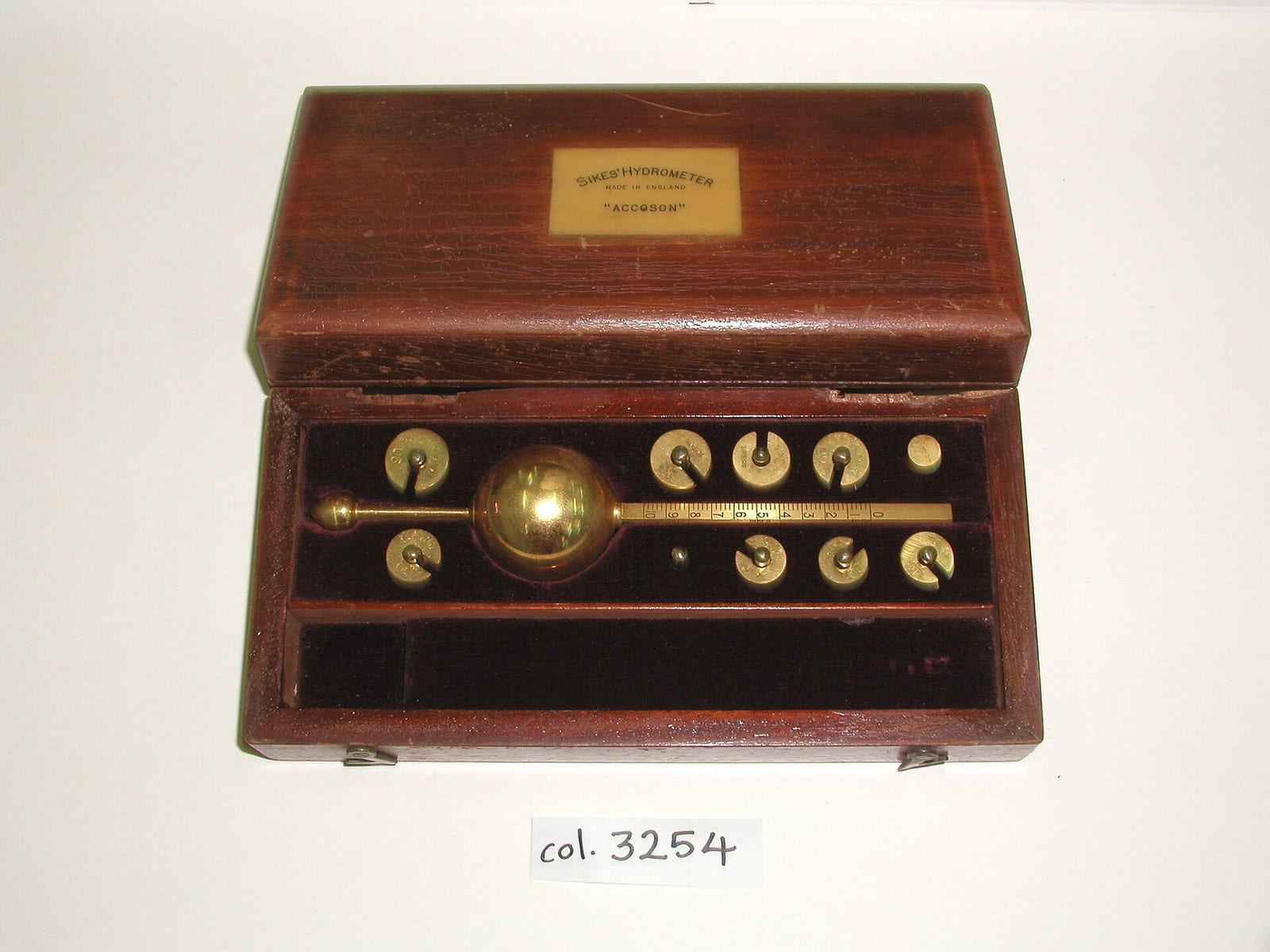
So 40% was never chosen as 40. It is what 70 proof turns into when you convert it to today's unit. American proof works differently: you simply double the percentage. The 80 proof on an American bottle is the same 40% as the old British 70 proof.
Before the war it was stronger
In late nineteenth-century Britain whisky was stronger than it is now. Under the 1879 amendment to the Sale of Food and Drugs Act, whisky diluted below 25 under proof, about 43%, could not be sold without saying so. The law was aimed at publicans who watered their stock. The whisky guide Whiskipedia puts typical bottling strength at the start of the twentieth century between 44.6% and 48.6%.
Within ten years that was turned upside down.
1915 and Lloyd George
When the First World War broke out, Britain ran short of shells. Reports came in that munitions workers were missing shifts because of drink. David Lloyd George, then Chancellor of the Exchequer and a politician close to the temperance movement, said early in 1915: "We are fighting Germany, Austria and Drink; and as far as I can see, the greatest of these three deadly foes is Drink."
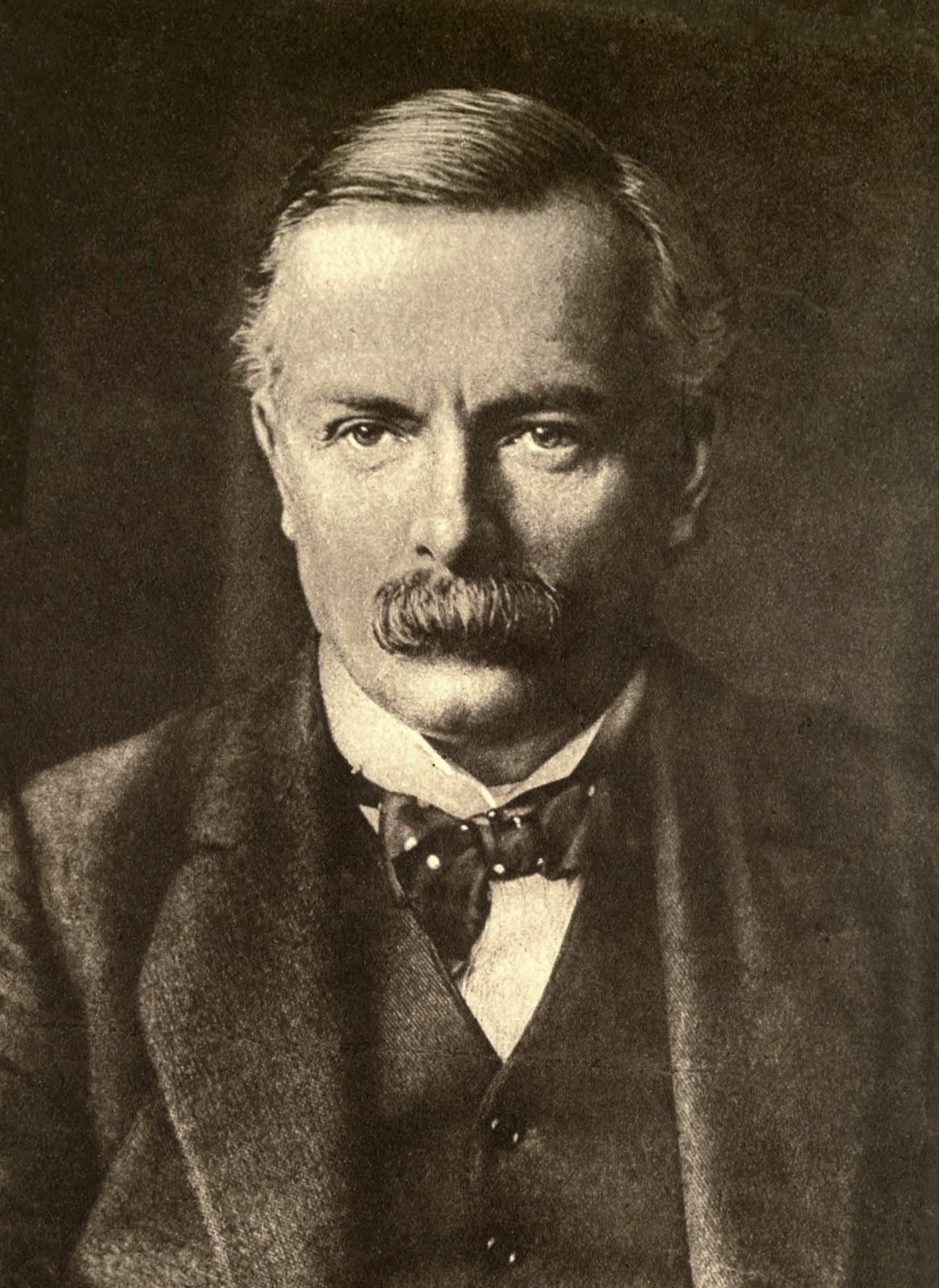
In that year's budget he tried to double the duty on spirits. The trade pushed back and a compromise followed: no doubling, but newly made spirit could no longer be sold straight away. Two years in bond at first, three from the following year. That is where Scotch whisky's three-year minimum comes from. It reads like a quality rule, but the original aim was to cut the amount of spirit reaching the market.
The same year saw the creation of the Central Control Board (Liquor Traffic). It scheduled areas around munitions works and ports, cut pub opening hours, banned buying rounds for others, and started on the strength of the drink itself. The scheduled areas kept growing, and by the later part of the war most of the British population lived inside one.
Strength came down in three steps. Following the Board's orders printed in the London Gazette and the parliamentary record:
-
- In scheduled areas, whisky was allowed to be sold diluted as far as 35 under proof (37.2%). The old floor was lifted.
-
- Nothing stronger than 25 under proof (42.9%) could be sold. Permission became compulsion.
-
- The ceiling was lowered again to 30 under proof. That is 70 proof, 40%. Dilution as far as 50 under proof (28.6%) was allowed.
In three years the pre-war floor of 43% had ended up above the legal ceiling.
The war ended and the number stayed
The war finished in 1918. The limits on strength went too. Whisky did not get stronger again.
The reason was tax. British duty is charged on the alcohol in the bottle, not on the volume of liquid. Spirit duty stood at 14 shillings and 9 pence per proof gallon before the war. In 1920 it was 72 shillings and 6 pence, nearly five times as much. The whisky valuer Mark Littler notes that distillers were also barred at the time from passing the increase on in the price. More alcohol in the same bottle simply meant more tax. There was no longer any reason to bottle above 70 proof.
From the side of whoever adds the water, the sum is even clearer. A litre of spirit drawn from the cask at 60% becomes 1.5 litres at 40% and 1.3 litres at 46%. That is a different number of bottles.
Drinkers had got used to 70 proof in the meantime. British bottles carried the words "70° PROOF" until 1980, when percentage by volume became compulsory in line with European practice and the same whisky was relabelled "40% vol".
The law only caught up after that. The Scotch Whisky Act of 1988 and the European Community's spirit drinks regulation of 1989 fixed the minimum bottling strength of whisky at 40%. A number that had meant "no stronger than this" during the war now meant "any weaker and it isn't whisky". In the same European regulation the floor for gin, vodka and rum is 37.5%.
43, 46 and 105
Most of the numbers that aren't 40 grow from the same root.
43%. The pre-war British floor, 25 under proof or 75 proof, is 42.9%. Ian Wisniewski of Whisky Magazine writes that Scotch was traditionally shipped around the world at this strength, which is why it is sometimes called export strength. South Africa still sets 43% as its minimum for whisky.
46%. This one comes from chemistry, not tax. Below it, whisky can turn hazy when it gets cold, so whisky that skips chill filtration is usually bottled at 46% or more. There is a separate piece on non-chill-filtered whisky.
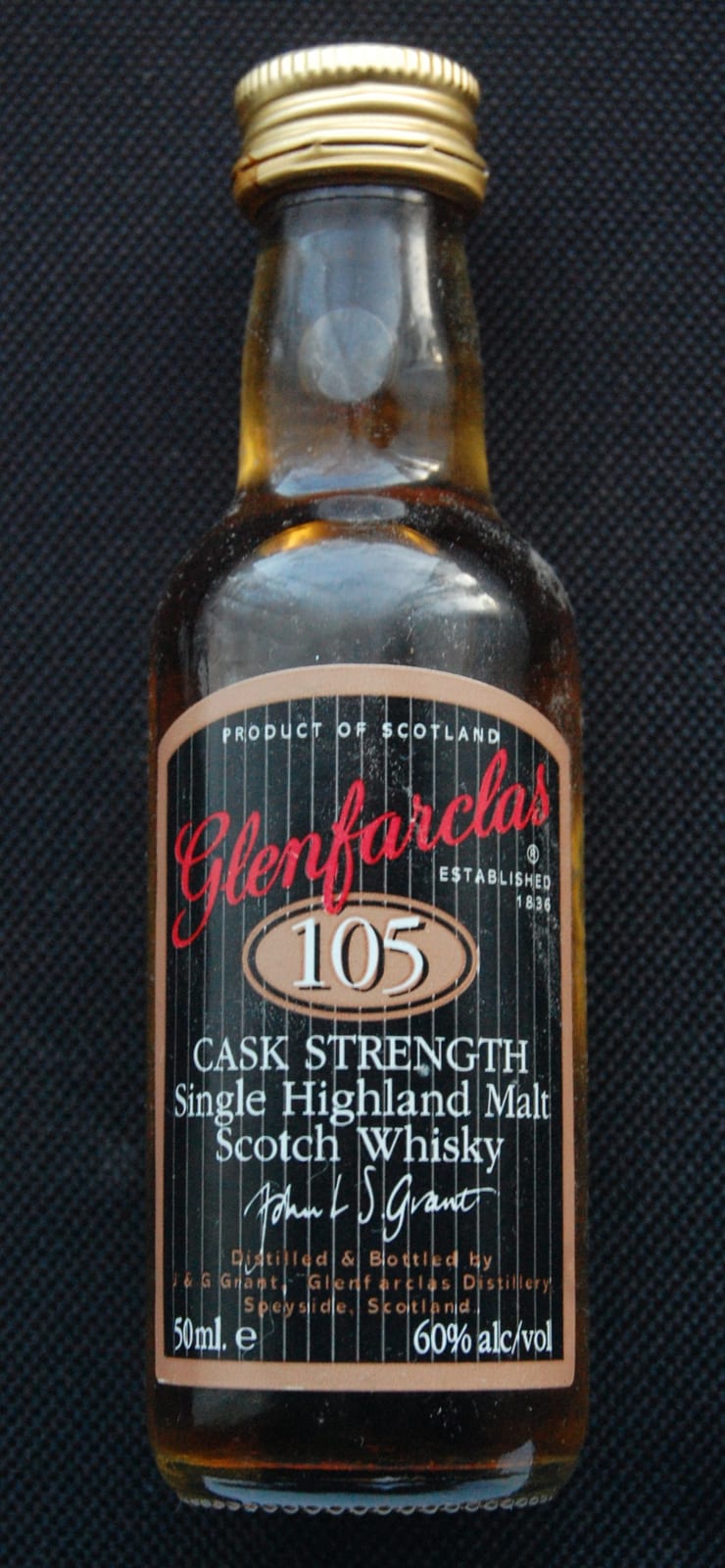
105. Glenfarclas 105 is a case of proof surviving as a name. 105 proof is 60%. American bottled-in-bond bourbon has to be exactly 100 proof (50%) for the same sort of reason: the 1897 law was written in proof.
Countries where it isn't 40
Forty per cent is the law in Scotland, the EU, the United States, Canada and Ireland. It is not universal.
Japan's liquor tax charges whisky a flat amount up to 37% and adds more for each degree above it. That is why cheap whiskies such as Torys Classic and Black Nikka Clear are 37%. The labelling standard for "Japanese whisky" that the Japan Spirits & Liqueurs Makers Association introduced in 2021 does, however, require 40% or more.
South Korea's Liquor Tax Act defines whisky by ingredients and method and sets no minimum strength. That is how Golden Blue, at 36.5%, can be sold there as whisky. Take the same bottle to Europe and it could not carry the word. In 2017 the magazine Hankyung Business covered the argument inside the Korean trade over the phrase "low-strength whisky".
So is 40% bad for flavour?
Not necessarily. Sandy Hyslop, master blender at Chivas Brothers, told Whisky Magazine: "The higher the strength the more intense and concentrated the flavour." In the same article Brian Kinsman of William Grant & Sons says: "As the alcoholic strength reduces, various flavours can show more readily." That is the reason people add a few drops of water to strong whisky.
Think of 40% as whisky with the water already added. It's convenient, but it leaves you little room to dilute further. A 46% bottling or a cask strength one hands that adjustment to the drinker. It is less a matter of which is better than of who adds the water.
For the other numbers and words printed next to the strength, see how to read a whisky label.
Mark Littler, "Scotch Whisky Laws: Power and Quality" · Whiskipedia, "Bottling ABV" · Whisky Magazine, "Strength in Numbers"; Ian Wisniewski, "Does the ABV Really Matter?", 2018 · The London Gazette, orders of the Central Control Board (Liquor Traffic), 1915–1917 · Hansard, HC Deb 29 September 1915 · Hankyung Business, October 2017