
Pick up a bottle in a whisky shop and there is a lot of lettering on it. Big words in gold foil, smaller words underneath, a few numbers. At first it is hard to tell where the information stops and the decoration starts.
The test is simple. Some words have a meaning fixed by law. Others can be printed by anyone. Learn to read the first kind and you can skip half the label.
Let's take one bottle with an unusual amount of text on it and read from the top.
Single Malt Scotch Whisky
This is the first line to look for. The Scotch Whisky Regulations 2009 divide Scotch into five categories and require the category name on the front of the bottle.
- Single malt: made at one distillery, from malted barley only, in pot stills
- Single grain: made at one distillery, but with other cereals or in a continuous still
- Blended malt: single malts from more than one distillery, mixed
- Blended grain: single grains from more than one distillery, mixed
- Blended Scotch: malt and grain mixed. Johnnie Walker, Ballantine's and Chivas Regal are here
The word people trip over is "single". It does not mean one cask. It means one distillery. A bottle of Glenfiddich 12 holds whisky from hundreds of casks. All of it came from Glenfiddich, so it is a single malt.
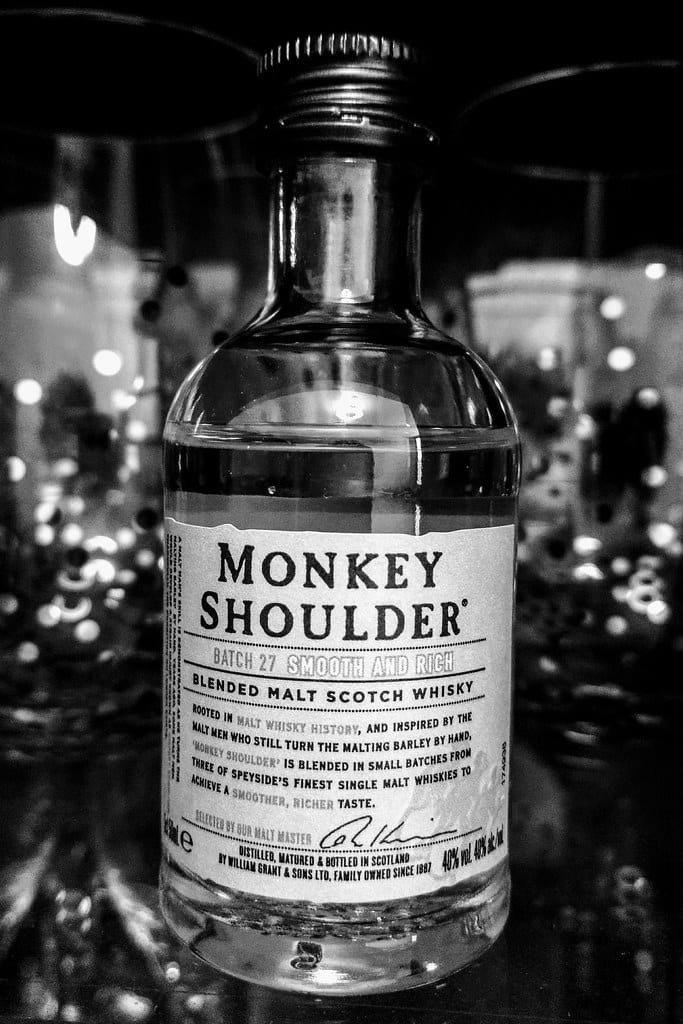
The Monkey Shoulder label says "Blended Malt Scotch Whisky": malts only, no grain whisky. This kind of whisky used to be called "pure malt" or "vatted malt". The 2009 regulations banned those terms because they were too easy to confuse with single malt, so you only see them on old bottles.
"Batch 27" on the same label looks like a production run but is part of the product name. Every bottle says 27.
Highland, Speyside, Islay
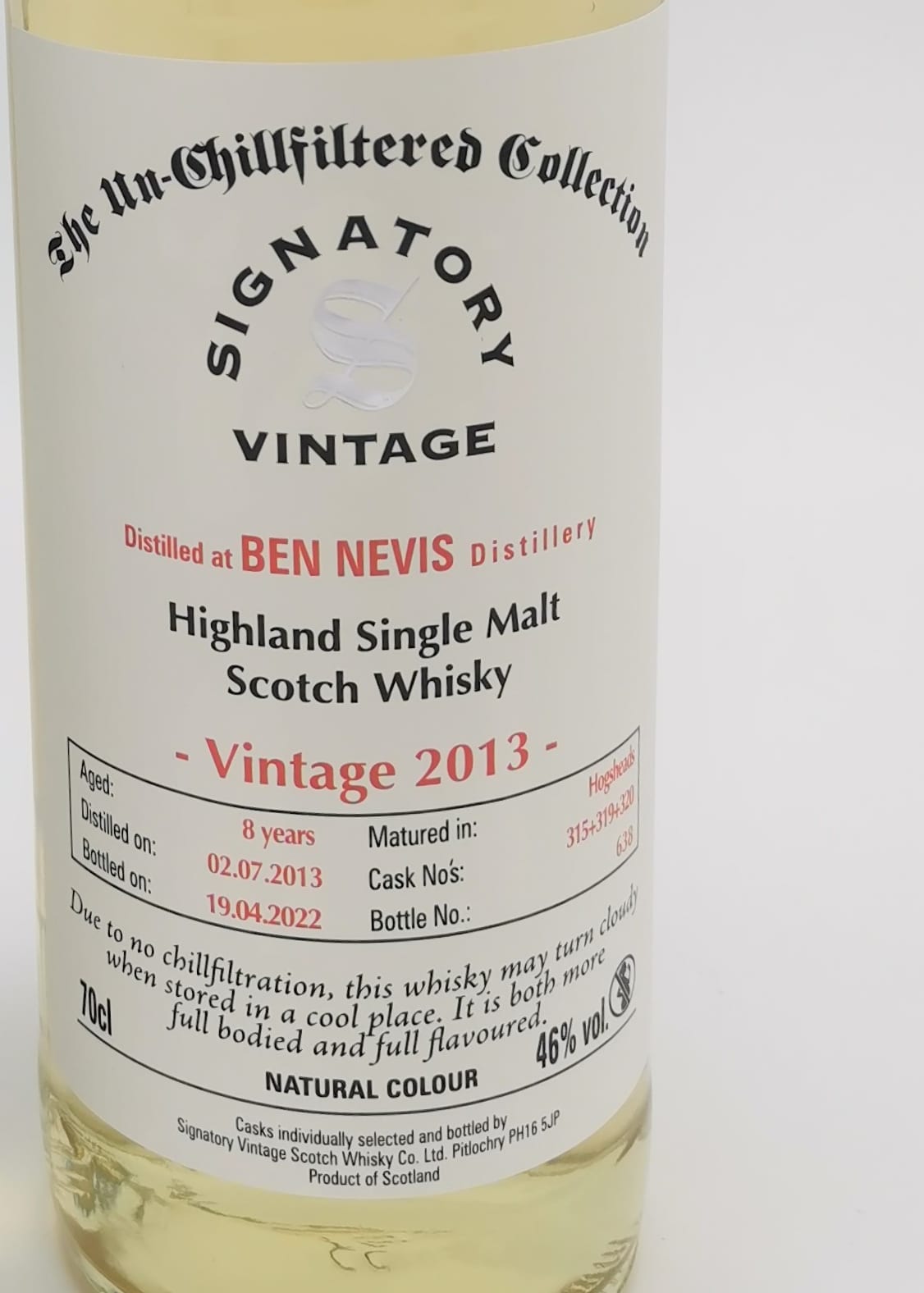
"Highland" on the Ben Nevis label is a place. The regulations protect five regional names: Highland, Lowland, Speyside, Islay and Campbeltown. Only whisky distilled there can use them.
The region doesn't decide the flavour. Islay has distilleries that use almost no peat, and the Highlands have smoky whiskies. Read the regional name as an address and that is enough.
Distilled at, Bottled by
The biggest name on this label is Signatory Vintage, but the place that made the whisky is underneath: "Distilled at Ben Nevis Distillery". At the very bottom a line says the casks were individually selected and bottled by Signatory Vintage Scotch Whisky Co.
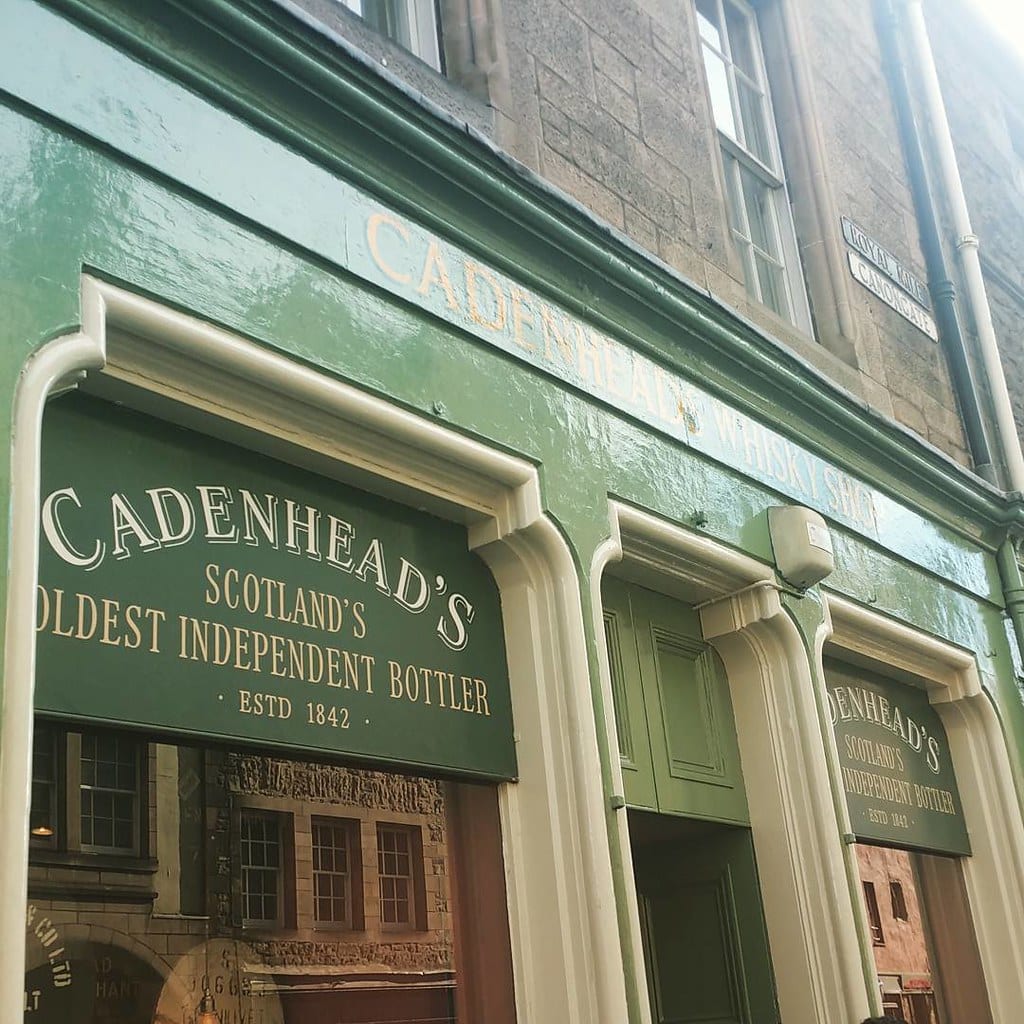
A company like this is an independent bottler. It buys whisky by the cask from distilleries and bottles it under its own name. Whisky from the same distillery can differ from the distillery's official release in cask type, strength and taste. If a name such as Signatory, Gordon & MacPhail or Cadenhead's sits large at the top of the label, it is an independent bottling.
The regulations also restrict how a distillery's name is used. It cannot serve as a brand on whisky that was not wholly distilled there. Hence the spelled-out "Distilled at…" that independent bottlers use.
Numbers: age and year
The label gives "Aged 8 years", a distillation date of 2 July 2013 and a bottling date of 19 April 2022. That works out at eight years and nine months. It still doesn't say nine. An age statement counts only complete years in the cask.
Two things to remember.
First, the number is the age of the youngest whisky in the bottle. A 12-year-old can contain 20-year-old whisky and the label still says 12.
Second, whisky stops ageing once it is in glass. A 12-year-old bottled in 1990 is a 12-year-old today. Maturation only happens in the cask.
Some labels give a year instead, like "Vintage 2013". Under the regulations only one distillation year may be shown, and the year of bottling or the age must appear with it. The rule is there to stop a bare year being used to make whisky look older than it is.
Plenty of whisky carries no number at all. This is NAS, no age statement. It doesn't have to mean young whisky, and there is a longer piece on that in the age statement trap.
Words about casks
"Matured in Hogsheads" and "Cask Nos 315+319+320". Three casks of the size called a hogshead were married together.
Whisky bottled from one cask alone is labelled "single cask", or "single barrel" in America. These bottles often carry a cask number and a bottle number out of the total. One cask yields only a few hundred bottles, so you cannot buy the same thing again.
"Sherry cask", "bourbon barrel" and "port pipe" tell you what the cask held before. "Finish", "double cask" and "double wood" mean the whisky matured in one cask and was moved to another to finish. There is no rule on how long the second stay must be. It could be months or years.
Strength
"46% vol". There is nothing to decode in the figure itself, but which figure it is tells you something.
Forty per cent is the legal minimum. There is a separate piece on why it is 40. Forty-six suggests the whisky has probably not been chill filtered. A high strength given to a decimal place, 57.3% or 60.1%, is probably cask strength: bottled as it came out of the cask. Sometimes the label says "Cask Strength" or "Natural Strength" as well.
Natural Colour, Un-Chillfiltered
This label has both. No caramel colouring was added, and the whisky was not chill filtered.
Neither is a legally defined term. But printing something untrue would be a false description, so you can trust them. The reverse doesn't hold: a label without these words hasn't necessarily been coloured. Whether to say so is up to the producer. More in can you trust the colour of whisky and non-chill-filtered whisky.
Bourbon labels use a different grammar
American whiskey has its own vocabulary.
Straight. Aged at least two years in new oak with no colouring or flavouring added. A legal term. If the whiskey is under four years old the age must be stated, so a "Straight Bourbon" with no number is at least four.
Bottled-in-Bond. From an 1897 law. Distilled at one distillery in one season, aged at least four years in a government-supervised warehouse and bottled at exactly 100 proof (50%). It was a government guarantee at a time when fake whiskey was everywhere.
Small Batch. No legal definition. It can mean ten barrels or a thousand.
Single Barrel. Whiskey from one barrel. Blanton's, launched in 1984, is usually named as the first bourbon to sell itself on the term in its modern sense.
Distilled by, Bottled by. Many American companies buy whiskey from another distillery and sell it under their own brand. "Distilled by" means they made it. If you only see "Bottled by" or "Produced by", the whiskey may have been bought in.
"Sour mash" is the practice of adding spent mash from the previous fermentation to the next one. Nearly all bourbon is made this way. It isn't a mark of anything special.
Words that mean nothing
Reserve, Special, Rare, Finest, Old, Select, Premium, Handcrafted, Master's. None has a legal meaning. A three-year-old whisky can be called "Rare Old Reserve".
Watch the numbers too. A large number on a label isn't always an age. It may be the founding year or part of the product name. It is an age only when "years" or "years old" follows it.
The Korean sticker on the back
Bottles officially imported into South Korea carry a Korean-language sticker on the back giving the food type, ingredients, country of origin, strength, volume and importer. If the front label is all in English or Japanese and you can't tell what the product is, the food type line will say whether it is classed as whisky or as "other liquor".
To sum up, there are five things worth reading on a label: the category, who distilled it and who bottled it, the age, the cask and the strength. You lose nothing by skipping the rest of the gold lettering.
The Scotch Whisky Regulations 2009 (SI 2009/2890), regulations 8, 9, 10 and 12 · Scotch Whisky Association, "Guidance for Bottlers and Producers", 2025 · DLA Piper, "Scotch whisky labelling and bottling", 2024 · U.S. TTB, 27 CFR Part 5 · VinePair, "How to Read a Whiskey Label" · Garden & Gun, "Build Your Bourbon Vocabulary"