Glenfarclas
A sherry single malt still made by one family, six generations on — with older age statements you can actually afford.
Put Glenfarclas in a sentence and it's this: aged whisky that isn't expensive. The 25, the 30, even the 40 are permanent parts of the range, and set beside a Macallan of similar age they cost markedly less. The reason is a family firm that spends little on flashy marketing and has banked stock for decades. Price doesn't jump on the strength of the name, which makes it a rare pick for anyone weighing satisfaction against years in the cask.
The thing you only get from Glenfarclas is the Family Casks. It's a single-cask series bottled by vintage year, reaching all the way back to the 1950s. Being able to choose the year you were born, or a year worth marking, makes it a favourite for gifts and collecting. Worth knowing, though: casks vary a lot, so two bottles both labelled "Family Cask" can be quite different animals depending on the vintage and cask number.
A common misread is that Glenfarclas is just a cheaper stand-in for Macallan. The broad frame — sherry-cask single malt — is the same, but the making isn't. Glenfarclas sticks with direct firing, a flame straight under the still, which draws a heavier spirit than the hotter, more even indirect heat. Cheaper doesn't mean lesser here; it's a different sort of whisky from the start.
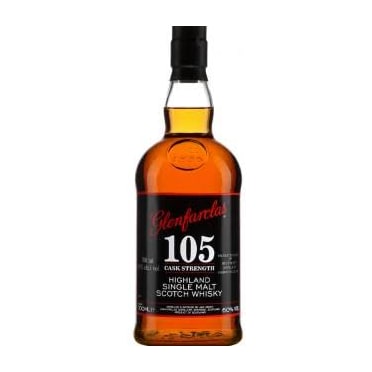
The order to buy in is simple. If sherry is new to you, start on the 12 and see whether it's your thing; move to the 46%, non-chill-filtered 15 and the distillery's muscle comes into focus. If you like strength, the 60% 105 Cask Strength is the value peak. The aged bottles are the next chapter — and even the 25 gives you much of the pleasure of aged Macallan at a fraction of the price.
Glenfarclas's real draw is value at age. Long maturations like the 25, 30 and 40 arrive well below Macallan of comparable age. The Family Casks — single casks by vintage — let you buy the year you were born, which pulls in gift and collector demand.
Retail and auction approximations · not a personal tasting
Glenfarclas comes down to two things — sherry casks and direct firing. Where most distilleries heat their stills indirectly with steam, here a gas flame burns directly beneath them, hotter and less even. That yields a heavy, concentrated spirit. Oloroso sherry casks brought from Spain then layer on dried fruit and nutty sweetness. Some of the largest stills in Speyside are part of the character too.
Robert Hay founded it at Ballindalloch in 1836; John Grant bought it in 1865, and the Grant family has owned and run it ever since — now into a sixth generation. One of the few distilleries never sold to a large drinks group, that family ownership has kept a conservative, consistent house style. The deep bank of vintage stock behind the Family Casks, reaching back to the 1960s, is a product of that long independence.
Glenfarclas is the sherry the enthusiasts buy. It gets less noise than the higher-profile Macallan, but among sherry lovers it enjoys deep loyalty for its value at age. It is especially popular across Europe, Germany above all, and in Korea it has settled in as the path drinkers take once they move past beginner bottles — starting on the 12, 15 and 105 before climbing into the older ages.
The sherry sweetness is dense and the aromas are heavy, so a tulip-shaped glass that gathers them upward — a copita or a Glencairn — suits it best. The 12 and 15 sit at 40–46% and need little or no water, but the 60% 105 Cask Strength opens up dramatically with a few drops. Rather than shutting the aroma down over a big ice cube, sip it neat or lightly watered to keep the sherry layers alive.
Sources · Production and range — glenfarclas.com · history — J&G Grant / trade sources · auction — secondary market · product image — Glenfarclas