
Michter's
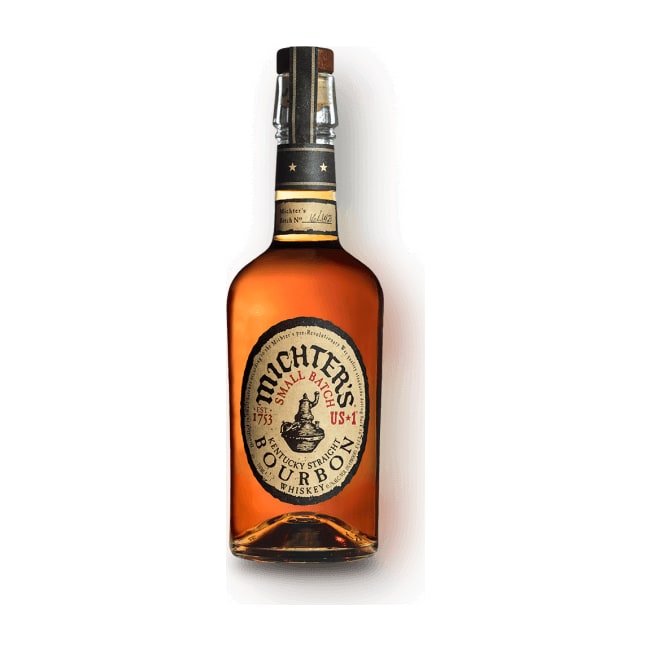
Cost be damned. Small batches made on low barrel-entry proof and a fussy process — the Kentucky whiskey you can't get at retail.
The key to Michter's is supply, not taste. The brand doesn't sell everything it could. It insists on a low, low-yield barrel-entry proof and chooses the more labour-intensive path at every filtration and maturation step. The result is that even the flagship US*1 is perpetually short and rarely available at list price. Being impossible to find has itself become the brand's talking point.
There's some confusion around the name. Michter's was originally an old Pennsylvania distillery; when it closed at the end of the 1980s the trademark was abandoned. Today's Michter's is a modern brand that bought that name in the 1990s and revived it in Kentucky. The name comes from the founder's two sons, Michael and Peter. The marketing line about roots in the 18th century refers to the history of that old Pennsylvania distillery, not an unbroken line down to today's Kentucky whiskey.
How it's made has changed too. In its early revival, Michter's had no distillery of its own and aged and bottled spirit sourced from other Kentucky producers. Only in the 2010s, with its own distillery in Shively, Louisville and then the Fort Nelson distillery downtown, did it become a whiskey it truly makes. So older bottles and recent ones can come from different liquid — worth knowing.
If you want to buy, the order is clear. Rather than chasing the 10- or 20-year at a secondary premium, grab US*1 Bourbon or Rye when you find it at retail. The low entry proof makes it smoother than its strength, and a single bottle of US*1 is enough to see what the fuss is about. The long-aged tiers are a conversation for after your taste and budget are settled.
Michter's value is the result of the brand throttling its own supply. Even US*1 can't meet demand at MSRP, and the 10- and 20-year releases come by allocation with steep secondary-market premiums. Limited bottlings like Celebration Sour Mash launch in the thousands of dollars.
Prices are rough retail / secondary estimates and vary with allocation — not a personal tasting.
Michter's is defined less by how it distills than by how much trouble it takes. Spirit enters the barrel at a lower proof than the norm, and yield is sacrificed at every filtration and maturation step. Alongside the rule-following US*1 Bourbon and Rye sits US*1 American Whiskey, aged in used barrels and therefore not called bourbon. In its early revival it bottled sourced Kentucky spirit; in the mid-2010s it opened its own distillery in Shively, Louisville, followed by the Fort Nelson distillery downtown, to distill for itself.
Michter's is a revived name. It began as an old distillery in Schaefferstown, Pennsylvania that billed itself as America's oldest whiskey distillery and traced its roots to the 18th century, before closing at the end of the 1980s. Joseph Magliocco and Dick Newman bought the abandoned trademark in the 1990s and revived it in Kentucky; the name comes from the founder's two sons, Michael and Peter. After years of selling sourced whiskey, it built its Louisville distilleries in the 2010s and grew into today's cult name.
Michter's became famous for being hard to get before it was famous for how it tastes. Deliberately limited supply means even US*1 rarely appears at MSRP, and that scarcity itself drives the conversation. The whiskey is often called smoother than its proof suggests thanks to the low entry proof, a balanced profile of caramel and vanilla over ripe fruit. In Korea it has climbed to the top of bourbon lovers' want lists in recent years, with sell-out news pushing its searches up.
Smooth for its strength but layered, so a tulip glass that gathers the aroma — a Glencairn or copita — suits it neat, opened slowly. US*1 sits around 45% ABV, so a drop or two of water lifts the vanilla and fruit; higher-proof releases like the barrel-strength rye want a little more. Given the price, drowning it under a big rock closes the aroma — favour neat or a few drops of water over the rocks.
Sources · Production & range — michters.com · History — Chatham Imports / trade sources · Auction — secondary market · Product image — Michter's