
On 26 February 1927, Seattle police raided 2716 Fourth Avenue. A typed list of what they took away that day survives in the Seattle Municipal Archives.
One five-gallon keg of moonshine. Three empty kegs. Six empty beer bottles. Two quart milk bottles full of moonshine. Two pint milk bottles, nearly empty. Four bottles of ginger ale. Eight serving glasses. One syphon hose. One bottle of glycerine.
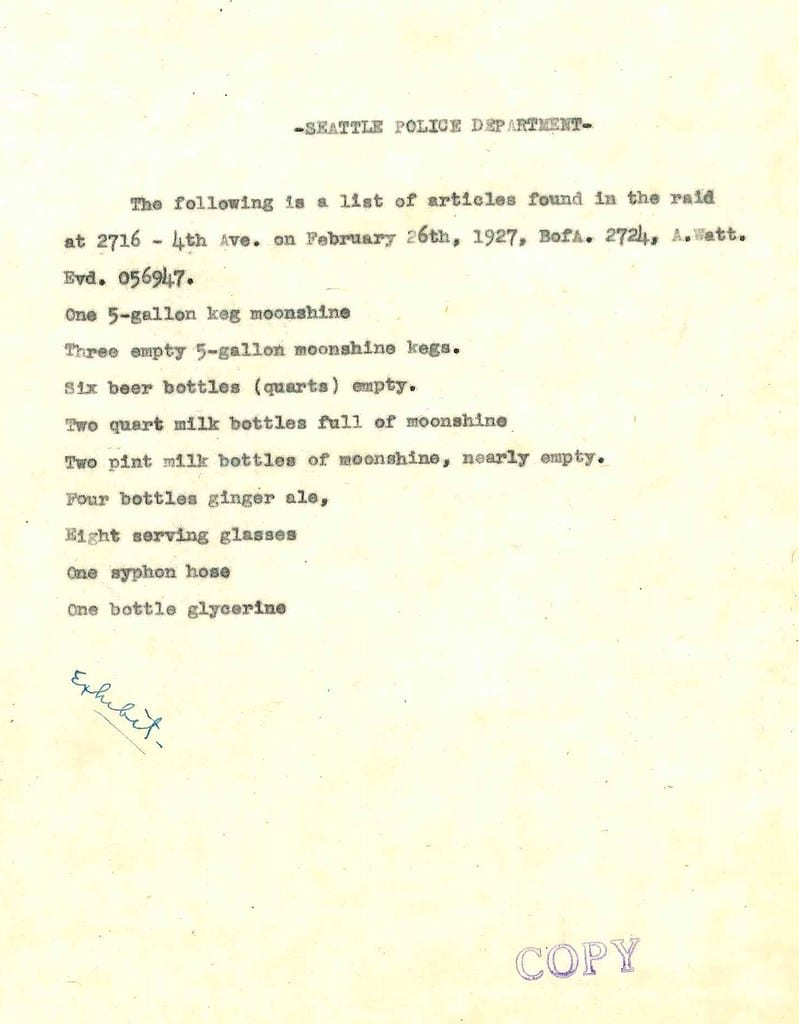
It is a short list, and the whole drinking scene of the time is in it. The liquor was in milk bottles. The ginger ale was there for mixing. Glycerine was what you added to rough moonshine to make it pass as smooth. And the glasses are just glasses. Not whiskey glasses, not cocktail glasses. Eight cups.
National Prohibition began on 17 January 1920 and ended in December 1933. Making, selling and transporting liquor were banned. Drinking it was not. In that gap, the things people kept drink in developed in odd directions.
The teacup story
One scene always comes up with Prohibition. In the speakeasies, the bars that traded in secret, whiskey was poured into teacups. When the agents burst in, the customers pretended to be having tea.
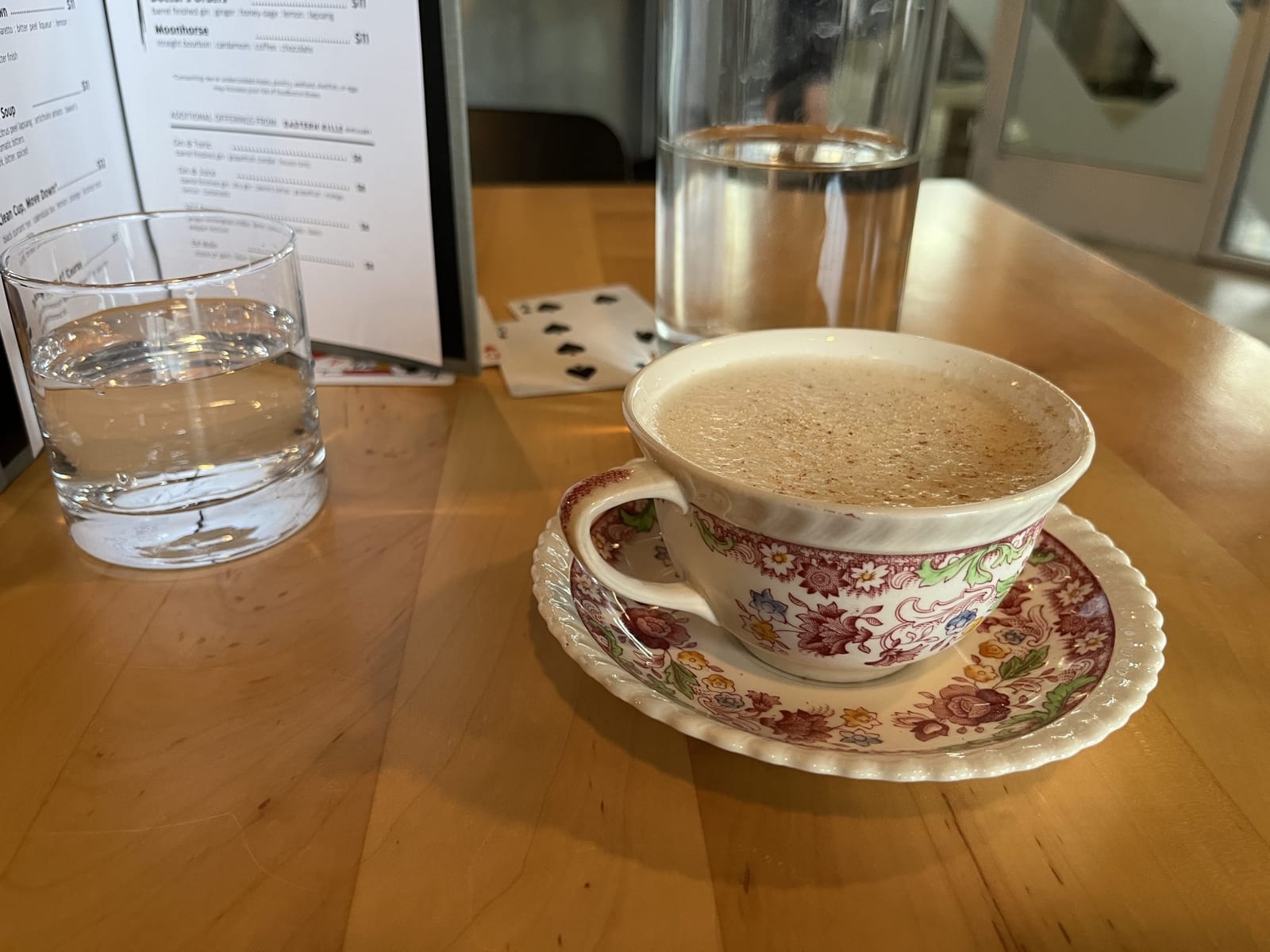
The place named most often is Chumley's in Greenwich Village, New York. It opened in 1922 and traded without a sign. The drinks site VinePair writes that it served liquor in china teacups and brown paper bags throughout Prohibition. The Mount Washington hotel in New Hampshire has a story about a cave by the squash court: guests drank from teacups, and when a raid came they stashed the bottles in the cave and took up the pose of people having tea. The "speakeasy" entry in the Oxford Companion to Spirits and Cocktails also says drinks were sometimes served in a coffee mug or teacup as a disguise in case of a police raid.
Follow the evidence, though, and it is thinner than you'd expect. VinePair admits in the same article that it is hard to pin down which establishment started the practice. The Chumley's story is the bar's own tradition, and the Mount Washington one comes from a preservation body's write-up. In what I was able to find while writing this, I could not locate a newspaper report or raid record from the time describing liquor being caught in teacups.
That doesn't mean it never happened. A business trading illegally was hardly going to keep records. But the evidence doesn't stretch to "every speakeasy used teacups". What turns up in actual records, like the Seattle inventory, is plain glasses and milk bottles.
Why change the container
However common teacups were, the reason for changing containers was clear.
What mattered in a raid was evidence. Seized liquor was used at trial. According to the Mob Museum in Las Vegas, speakeasy owners went to great lengths to keep their stock from being confiscated. New York's 21 Club had its architect build a camouflaged door and a secret wine cellar behind a false wall, along with a bar where the push of a button tipped the shelves so the bottles dropped down a chute, smashed, and drained away into the sewer.
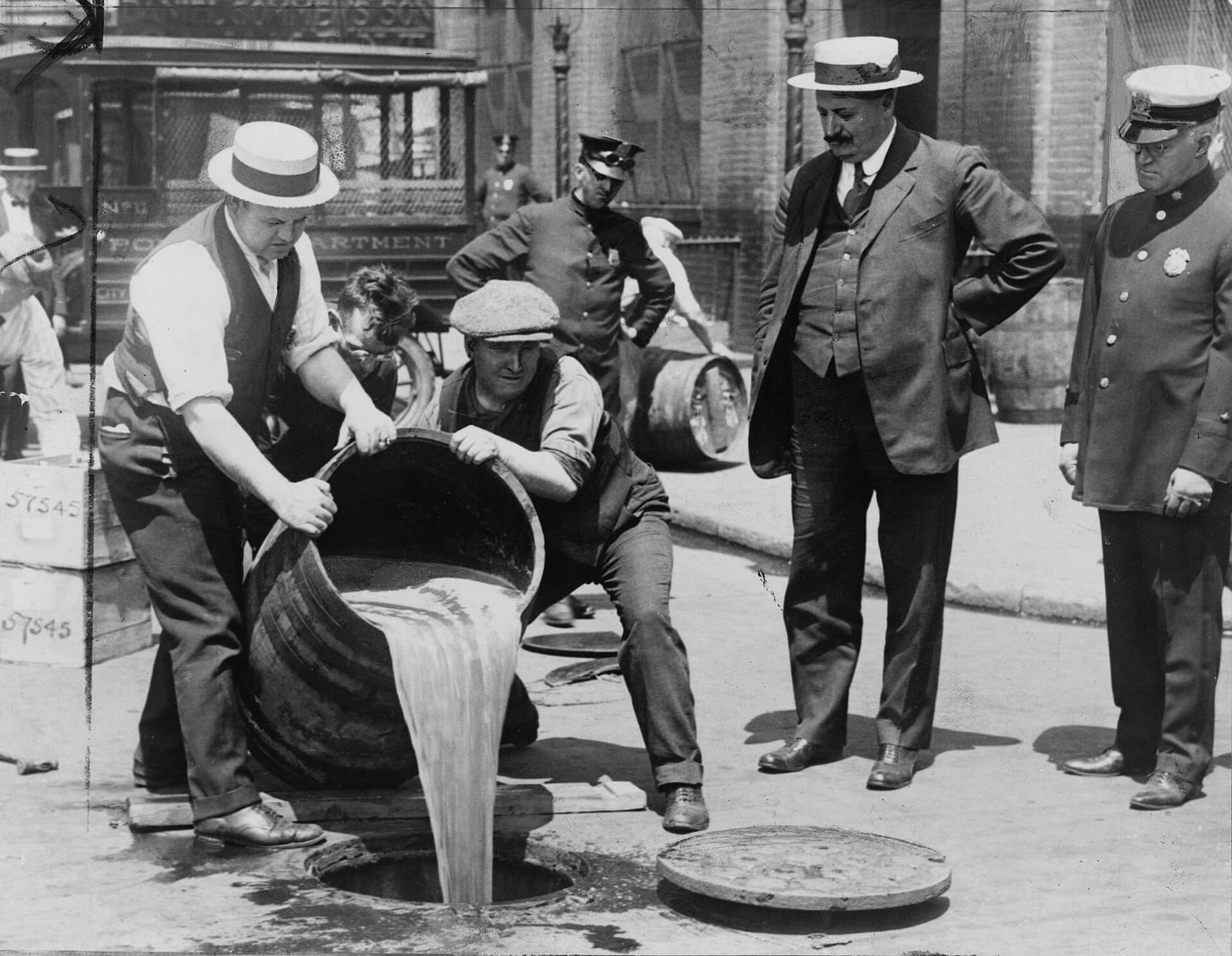
If bottles got that treatment, glasses were no different. A table lined with stemmed cocktail glasses is plainly a drinking party. A table with coffee cups is a restaurant. The same museum says that at the height of Prohibition in the late 1920s there were 32,000 speakeasies in New York alone. Many of them were, on the surface, restaurants, tea rooms or drugstores.
When whiskey became a cocktail
What was in the glass changed as much as the glass.
Properly aged whiskey was hard to find. Moonshine was rough, and a lot of what was sold was industrial alcohol with flavouring. The Mob Museum explains that speakeasies mixed drinks to hide the taste of bad liquor, and that this helped spread the cocktail. The four bottles of ginger ale on the Seattle list are a trace of that. Whiskey and ginger ale is a highball. The highball we now drink by choice was then a way of covering up the liquor.
The glycerine served the same end. Add a little of it, thick and sweet, and rough spirit goes down more smoothly. It was a common bootleggers' trick.
The customers changed as well. The pre-Prohibition saloon was a place for men. Speakeasies let women in. According to the Mob Museum, restaurants that sold liquor offered table service aimed at women who were uncomfortable sitting at a bar. Sitting at a table and having a glass brought to you, the way bars work now, settled in at this time.
Drink you carried
If you couldn't drink in a bar, you carried it. The hip flask, a flat metal bottle made to fit a back pocket, became the emblem of the era.
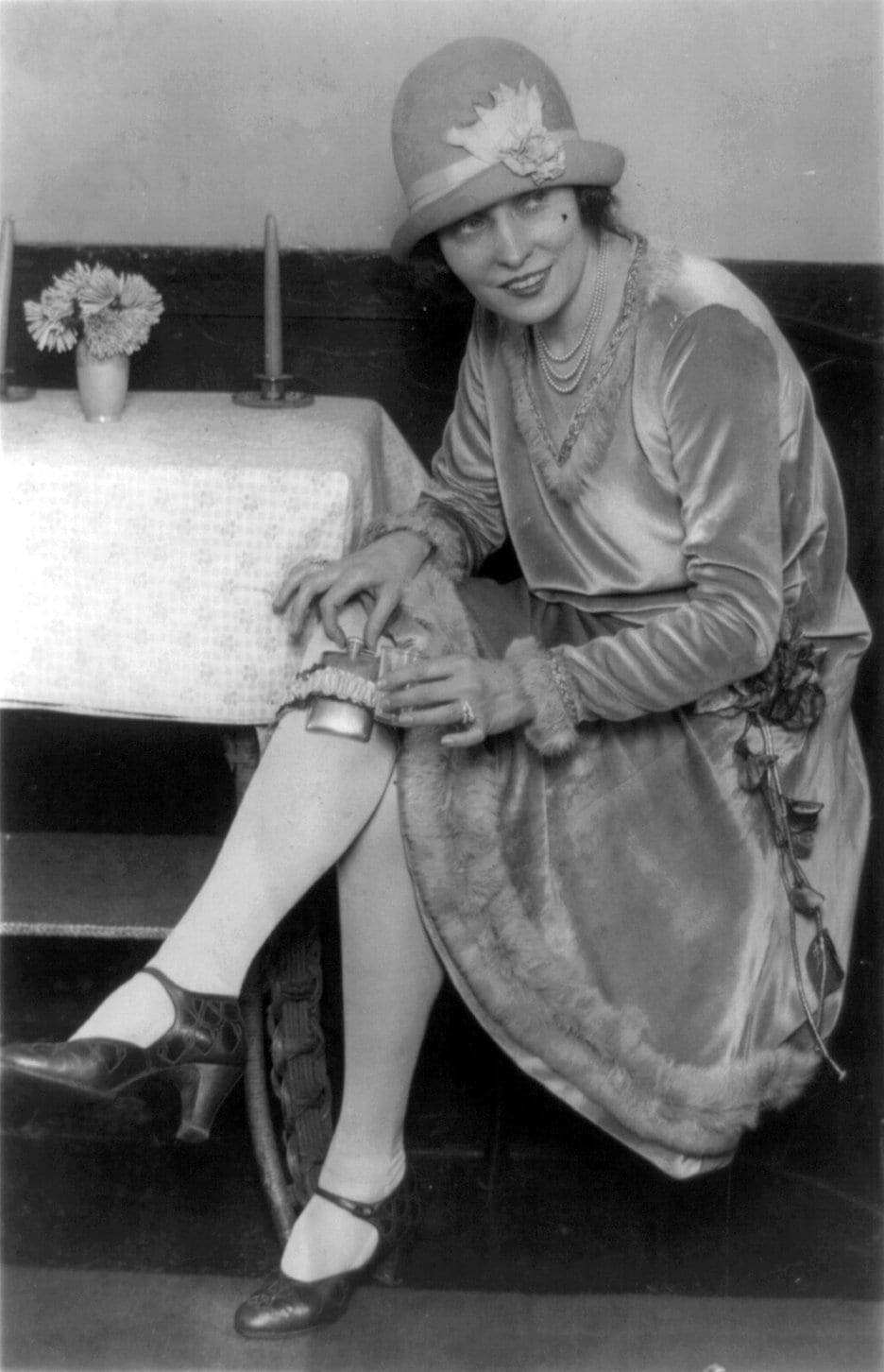
It was hidden in all sorts of places. Garters, boots, hollow canes, fake books. The photograph above was taken by a Washington picture agency in 1926 as the "latest thing". The offence was common enough to be newspaper material.
The flask also changed how whiskey was drunk. You need no glass. There is nothing to nose. You take it out, swallow a mouthful and put it back. It is the opposite of what we do now with a tulip glass held to the nose.
Legal whiskey and the prescription
There was one legal way to buy whiskey during Prohibition: a doctor's prescription.
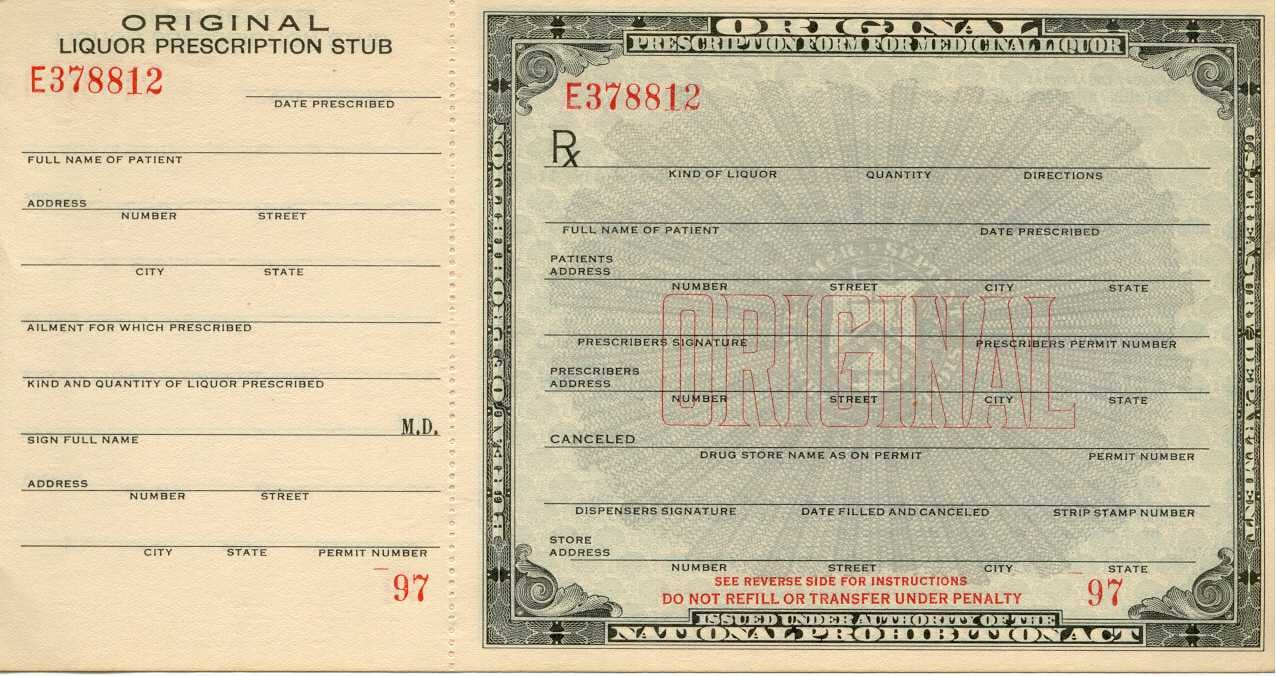
The law made an exception for medicinal liquor. With a prescription from a doctor you could buy whiskey at a pharmacy. The limit was one pint every ten days. The prices drinks writers quote are about three dollars for the prescription and three or four for the pint. A cold, indigestion, nerves: anything would do as grounds. The forms were copied and sold.
Only six companies were licensed to supply this whiskey. Sources give slightly different lists, but the names that recur are Brown-Forman, Frankfort Distilleries, A. Ph. Stitzel, Glenmore, Schenley and American Medicinal Spirits. This licence is why the Buffalo Trace distillery is said never to have closed during Prohibition. When stocks ran down, limited distilling was allowed again in 1929.
Medicinal whiskey always came in a one-pint bottle, in a cardboard or tin box. Most of it was bottled-in-bond, the government guarantee: 100 proof, 50% alcohol. What that term means is covered in how to read a whisky label. The LA Whiskey Society notes that some of these bottles had a cap that doubled as a dosage cup. You "took" your whiskey the way you measure out cough medicine. The most respectable whiskey glass of the period was the cap of a medicine bottle.
Whiskey from across the border
The good whiskey came from outside. Canadian Club crossed the Detroit River from Canada, and Scotch came in by way of Canada and the Caribbean. What these thirteen years did to Irish whiskey is covered in the rise and fall of Irish whiskey.
After 1933
When Prohibition ended, liquor went back into glasses and the teacups went back in the cupboard.
They came out again sixty years later. VinePair credits Angel's Share, a bar that opened in New York in 1993, with setting off the speakeasy revival. An unmarked door, low lighting, and cocktails in teacups. There are now bars like it in cities all over the world.
The curious part is that every version of the teacup story I could confirm for this piece was written long afterwards, not in the 1920s. What was actually on the scene of that Seattle raid in 1927 was milk bottles and eight cups.
Seattle Municipal Archives, "Inventory from Prohibition raid, 1927" · The Mob Museum, "The Speakeasies of the 1920s" · VinePair, "Why You Might Get Served a Cocktail in a Teacup at a Trendy Cocktail Bar"; "Medicinal Whiskey: History and Revival" · The Oxford Companion to Spirits and Cocktails, "speakeasy" · LA Whiskey Society, "Medicinal Whiskey: A Tasting from Prohibition" · Chuck Cowdery, "Who Had Medicinal Whiskey Licenses?", 2014 · Library of Congress, Prints & Photographs Division